
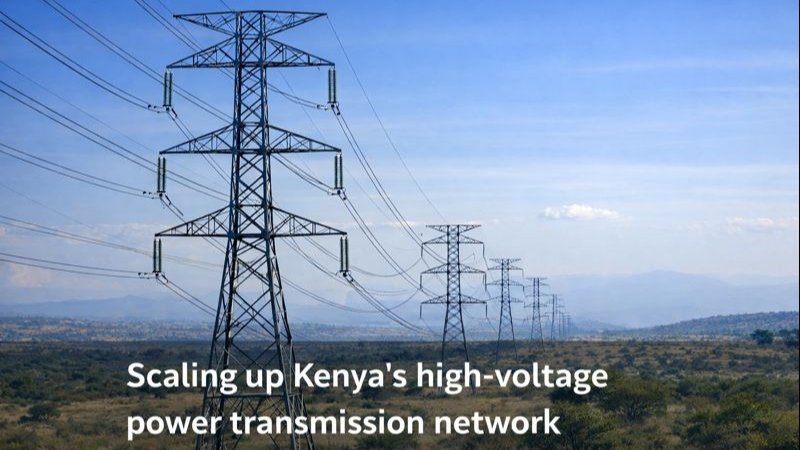

Kenya Electricity Transmission Company, or KETRACO, wrapped up a significant agreement on December 15, 2025, bringing in private partners for a major upgrade to the national power grid. The deal, valued at USD 311 million or roughly KES 40.4 billion, involves Africa50 and the Power Grid Corporation of India Limited, known as POWERGRID. This public-private partnership aims to add 620 kilometers of high-voltage lines, focusing on two corridors in the western and rift valley regions.
The project breaks down into the 400 kV Lessos-Loosuk line, which cuts through Nandi and Samburu counties, and the 220 kV Kibos-Kakamega-Musaga line, extending coverage into western Kenya. New substations at Loosuk, Lessos, Kibos, Kakamega, and Musaga will come online as part of the build. These additions target improved reliability, lower technical losses, and better integration of renewable sources into the system.
Africa50, a platform supported by 33 African governments, the African Development Bank Group, and other institutions, leads the consortium. It specializes in funding infrastructure that drives growth and connectivity across the continent. POWERGRID, handling over half of India's electricity transmission, contributes expertise in building and running high-voltage networks. Their collaboration dates back to a 2022 joint development agreement specifically for this Kenyan initiative.
Under the 30-year concession, the partners will handle design, financing, construction, operation, and maintenance. KETRACO will provide payments tied to performance and availability. This setup shifts some financial burden from public coffers while tapping private sector skills. Kenya's PPP framework, established in 2013 and updated in 2021, has enabled similar ventures, though energy transmission marks a fresh application.
Kenya's power sector has grown steadily. Installed capacity reached about 3,300 MW by 2025, with geothermal at 950 MW, hydro at 820 MW, and wind at 436 MW. Renewables make up over 80 percent of the mix, per Kenya Power data. Yet transmission constraints have led to curtailments, especially from wind farms like the 310 MW Lake Turkana project, connected in 2018 via a 428 km line built by KETRACO and partners.
The new lines should ease such issues. The Lessos-Loosuk route strengthens ties to geothermal hubs in the Rift Valley, while the Kibos-Musaga corridor supports industrial growth in Kisumu and surrounding areas. Kakamega, with its sugar mills and emerging manufacturing, stands to gain from fewer outages. During faults or upkeep, power can reroute, keeping lights on for homes and businesses.
Construction details include lattice towers, conductors, and insulators suited for Kenya's varied terrain. Lines will cross rivers, forests, and farmlands, requiring environmental assessments under the National Environment Management Authority. Past projects faced delays from wayleave acquisitions, where landowners negotiate compensation. KETRACO has streamlined this through community engagements, as seen in the 132 kV Kisumu-Muhoroni line completed in 2024.
Funding mixes equity from the consortium and debt, likely from development banks. Africa50 has mobilized over USD 1 billion for African projects since 2016. POWERGRID's track record includes 170,000 circuit kilometers in India, with exports to Nepal and Bhutan. Their input could introduce tech like high-temperature low-sag conductors to boost capacity on existing routes.
Broader impacts touch on Kenya's Vision 2030, aiming for middle-income status through infrastructure. The Least Cost Power Development Plan 2024-2043 calls for 1,500 km of new lines by 2030 to meet 5,000 MW demand growth. This PPP aligns, potentially saving the government KES 20 billion in upfront costs compared to public funding.
Challenges loom. Security in parts of Samburu, prone to banditry, demands safeguards. Climate risks, like floods eroding tower bases, factor into designs. The 2022 drought slashed hydro output by 30 percent, highlighting grid resilience needs. Integration with East African Power Pool lines to Ethiopia and Tanzania could follow, enabling exports.
Local content rules apply, mandating Kenyan firms for subcontracts in civil works and labor. This builds capacity, as in the Olkaria-Suswa 400 kV line, where locals handled 60 percent of tasks. Jobs during construction could top 1,000, with 200 permanent roles in operations.
KETRACO, formed in 2008, manages over 4,000 km of lines. Recent completions include the 500 kV Ethiopia-Kenya interconnector in 2023, importing 200 MW. The PPP model, successful in roads like the Nairobi Expressway opened in 2022, now extends to energy.
Officials tagged in the announcement include Treasury CS John Mbadi and Energy Ministry figures. Their backing underscores priority. As Kenya pushes electrification to 100 percent by 2030 from 75 percent in 2025, such projects are vital.
The deal reflects global trends. PPPs in African energy have risen, with USD 10 billion invested continent-wide in 2024 per World Bank stats. India's involvement ties into South-South cooperation, following investments in solar like the 50 MW Garissa plant.
As works gear up, timelines aim for commissioning by 2028. Monitoring by the PPP Directorate ensures compliance. If successful, this could pave the way for more private involvement in transmission, easing fiscal pressures amid Kenya's KES 10 trillion debt.
Comments (0)
Leave a Comment
No comments yet. Be the first to share your thoughts!