
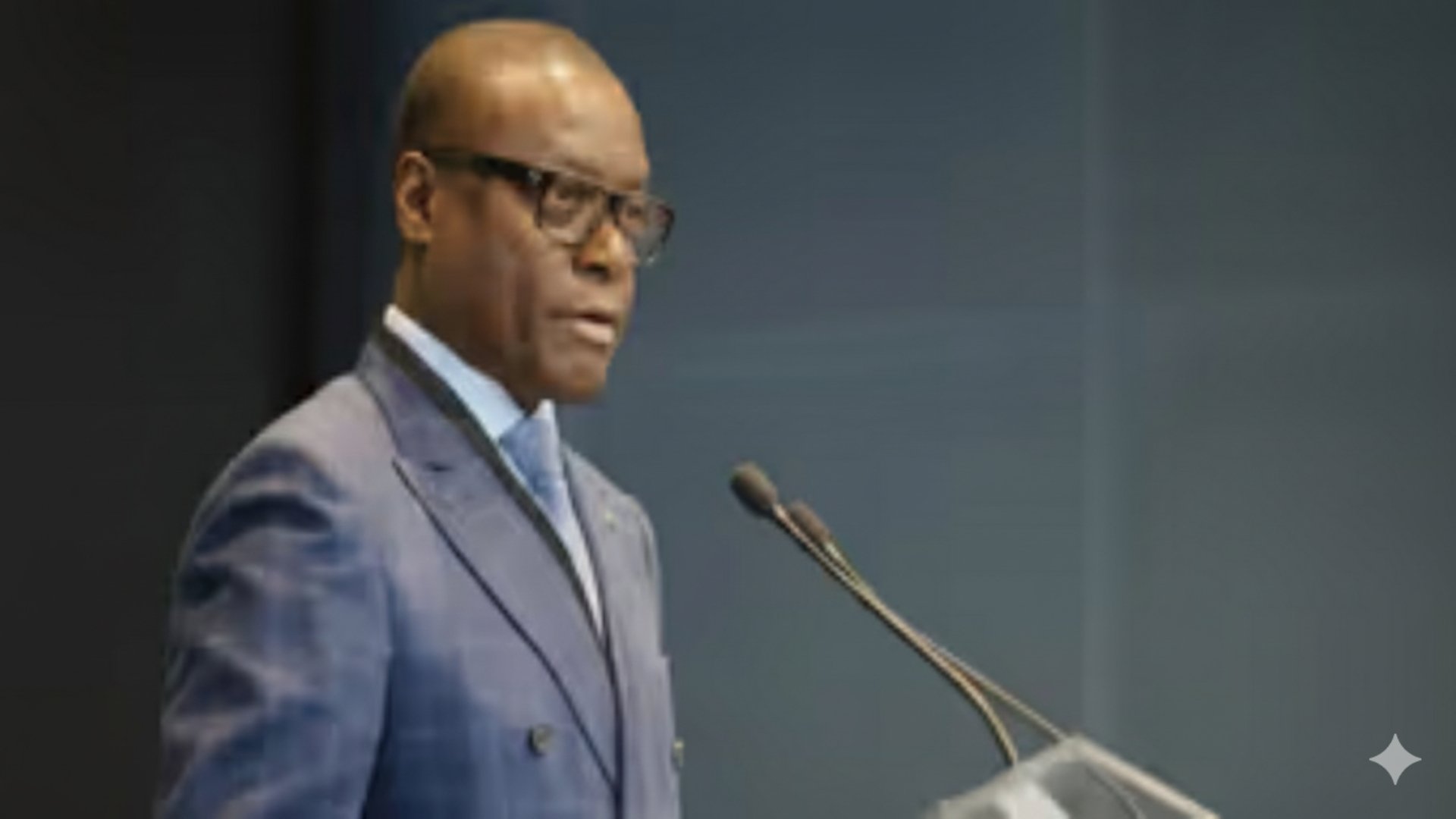

Across the rapidly evolving skylines of the African continent, a powerful name consistently resonates in discussions about contemporary design and urban planning. This figure is Pierre Goudiaby Atepa; his visionary work is extensively profiled by Business Insider Africa as a highly distinguished Senegalese engineer, architect, and successful businessman. He is not merely concerned with erecting new structures. Instead, he is fundamentally shaping the continent’s architectural landscape and economic future. His professional purpose is strikingly ambitious and is centered on fulfilling his desire to make Africa great again. He achieves this through advocating for sustainable urban development, African-centered design principles, and a dedicated push for economic independence.
Born in Ziguinchor in southern Senegal on June 30, 1947, Atepa’s life story is a testament to perseverance, talent, and a strong sense of purpose. He received a scholarship, which enabled him to study in the United States. There, he attended the prestigious Rensselaer Polytechnic Institute in New York and successfully graduated from the program in 1973. His deep passion for constructing architectural masterpieces immediately intensified upon his return home and led him to an early but massive success. He won an international competition to design the BCEAO Headquarters in Dakar. As one of his foremost achievements, this twenty-two-story building became the tallest structure in Senegal at the time.

Yet this significant milestone became a source of profound professional discontent for the architect. He noted that the BCEAO structure remains the tallest skyscraper in Dakar over fifty years later. He drew a sharp contrast between this stagnation and the exponential vertical growth seen in cities like Dubai. In his view, this disparity sadly indicates that Africa has been regressing in its architectural and infrastructural development. To address this persistent continental setback, Pierre Goudiaby Atepa has deliberately taken on extraordinarily ambitious projects. He is certain that Africa’s future must be constructed with bold vision and deep cooperation, and not just simple steel and inert cement.
Atepa now defines his professional identity as the architect of African development. He is profoundly passionate about the continent’s advancement in line with his mission to stop copying foreign models and instead utilize indigenous creativity. This approach is designed to solve the problems unique to the African experience. Currently, his work has expanded far beyond the limits of traditional building design. Among his most revolutionary initiatives is the construction of entirely new cities across Africa. These vast projects are being executed using extremely innovative financial mechanisms with methods designed to significantly reduce or eliminate the need for substantial government funding. He disclosed that his firm has effectively developed the concept of creating new cities that essentially cost nothing to the public purse.
This financial mechanism is rooted in the strategic management of land development. Atepa explained that taking a piece of undeveloped land, perhaps valued at only one dollar per square meter, is the first step. If this specific plot is officially designated as the site for a new administrative capital, its value immediately appreciates. With proper management, this square meter value can skyrocket from one dollar to as high as three hundred dollars. He calculated that if this appreciation is effectively managed, it can generate twenty billion dollars within twenty years. This ingenious wealth creation process completely removes the need for outside borrowing to fund crucial national infrastructure.
The most widely reported project currently underway is the new capital city of Gabon. He has hailed this initiative as a transformative national endeavor. He believes it will greatly boost the Gabonese people’s faith in their own nation’s potential. Similar replication plans are actively being developed for other African nations. This includes the new administrative capital city project in Sierra Leone. He intends to roll out this innovative model in two or three other countries soon.
Atepa’s extensive portfolio contains many other significant African landmarks. After establishing Groupe Atepa, his firm provided consulting and design for major projects all over the continent. His most iconic work is the Monument de la Renaissance Africaine in Dakar. This massive forty-nine-meter bronze figure was unveiled in 2010 and serves as a striking symbol of Africa’s resilience and subsequent regeneration. Other notable accomplishments include the Porte du Troisième Millénaire and the Centre de Conférences et Villas Présidentielles in Equatorial Guinea. His work embodies a deep dedication to pan-Africanism, while his aesthetic and practical vision places a high premium on African heritage and continental ambition. Pierre Goudiaby Atepa's journey is a powerful story of vision, fortitude, and clear purpose. He continues to construct, not merely buildings but the very foundations of Africa's future greatness.
Comments (0)
Leave a Comment
No comments yet. Be the first to share your thoughts!