
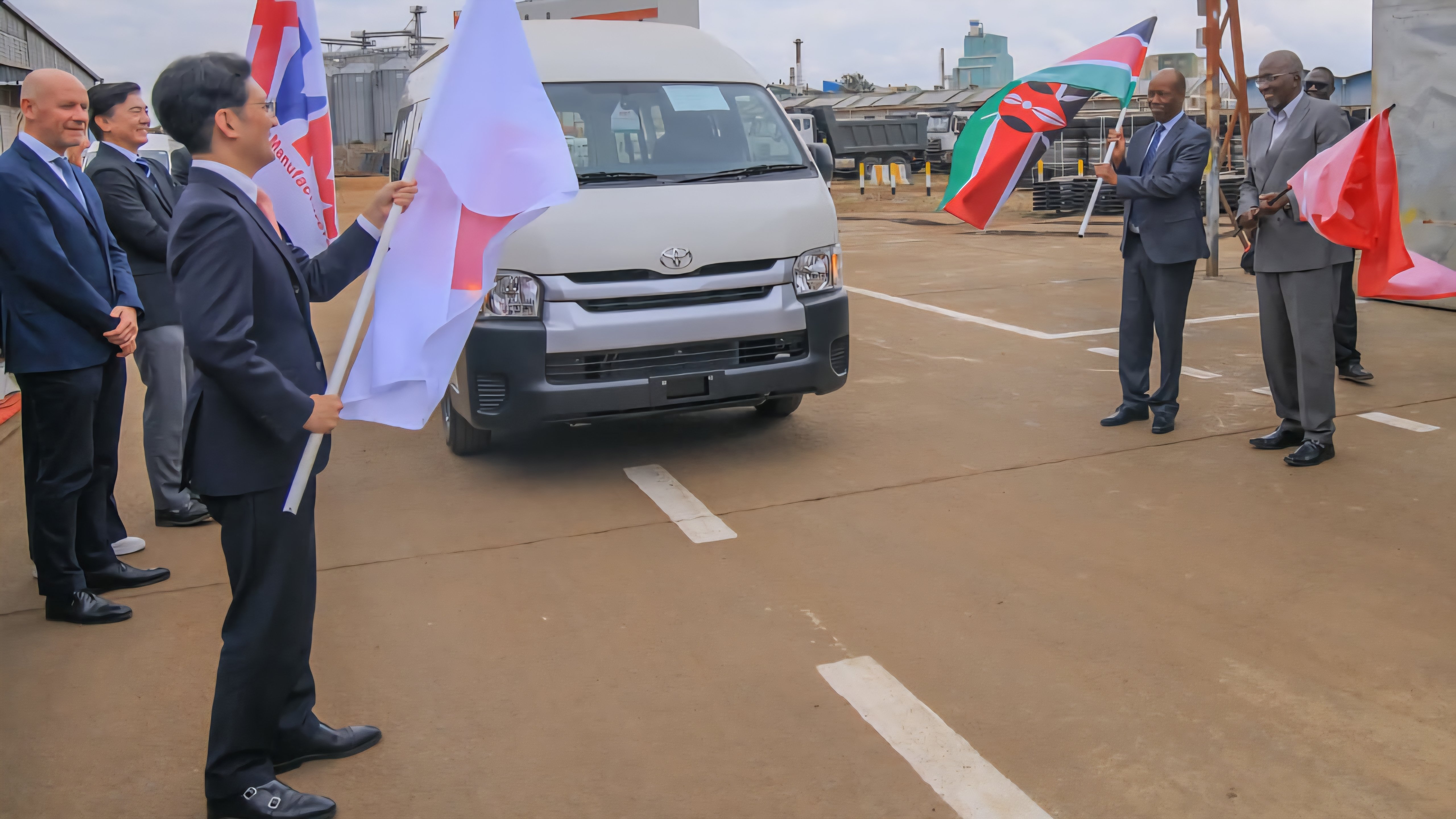

CFAO Mobility Kenya has taken a controlling stake of 99.4 percent in Thika-based Kenya Vehicle Manufacturers after investing Sh2.4 billion in the assembler. The capital injection has left the National Treasury and CMC Holdings with just 0.3 percent each.
For decades the government's stake stood at 35 percent. CMC Holdings and DT Dobie each held 32.5 percent. DT Dobie and Toyota Kenya merged in April 2023 to form CFAO, which inherited the original stake. In 2024 the new entity invested Sh882 million, followed by another Sh1.6 billion.
Arvinder Reel, CFAO chief executive, confirmed the ownership shift. "We own a 99.4 percent stake in KVM. The government and CMC own 0.3 percent each," he told Business Daily. "Our initial investment in KVM was Sh882 million. We then added Sh1.6 billion."
CMC Holdings had already signalled its exit from vehicle assembly. In January 2025 it announced it was shutting down operations to concentrate on agricultural equipment. Its former franchise partners scrambled for new distributors.
The deal signals the government's willingness to step back from direct ownership in vehicle manufacturing. Officials appear ready to support the sector mainly through policy incentives and the forthcoming National Automotive Policy.
CFAO intends to position KVM as the hub of its assembly activities. The company currently produces vehicles at Mombasa-based Associated Vehicle Assemblers, owned by rival Simba Corp. On Friday it commissioned a new Toyota Hiace line at the Thika facility, giving the popular van a second local production site.
The Hiace serves public service operators, small traders moving light cargo, and tourism companies ferrying visitors. CFAO sold 1,176 units in the year to December 2025, up 65.1 percent from 712 the previous year, according to Kenya Motor Industry Association figures.
Other models assembled locally by the dealer include Hino trucks, Toyota Hilux pick-ups and the Toyota Fortuner SUV. These vehicles routinely appear on Kenyan construction sites, carrying workers, materials and equipment across road projects, housing developments and rural infrastructure works.
Plant utilisation at KVM had fallen to as low as two percent in 2017. The fresh investment forms part of a broader modernisation drive. CFAO says the programme will support technology transfer, skills development and job creation while feeding into Kenya's industrial agenda.
Local assemblers still run well below capacity, mostly under 30 percent. Most vehicles on Kenyan roads arrive fully built, including used imports from Japan. Government incentives, such as exemptions on import duty and excise for completely knocked down kits, have encouraged recent expansions. Assemblers source some components locally, including batteries, suspension parts and upholstery.
CFAO's strengthened presence at KVM could lift output over the medium term. Kenya remains East Africa's largest new vehicle market, with formal dealer sales reaching 13,295 units last year. Regional exports to Uganda and Tanzania have also grown.
The Thika plant's expansion arrives as contractors and public works agencies continue to demand reliable, locally supported transport solutions for major infrastructure corridors and urban projects. Whether the increased local assembly capacity will translate into lower costs or faster parts availability for the construction sector remains to be seen.
Comments (0)
Leave a Comment
No comments yet. Be the first to share your thoughts!