
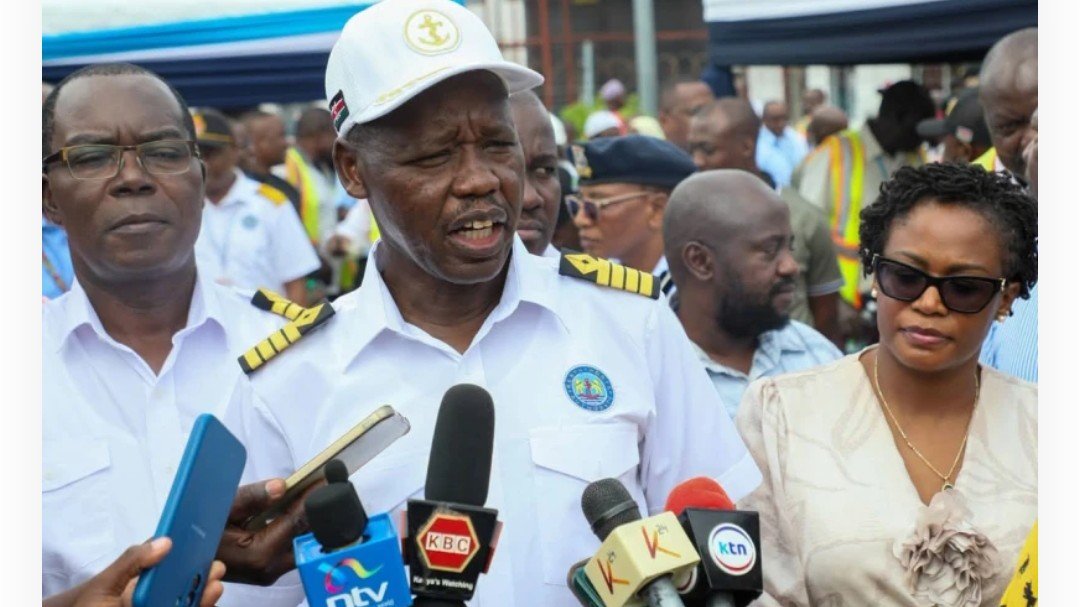

Kenya Ports Authority (KPA) Managing Director Captain William Ruto has defended the authority's decision to invest billions of shillings in infrastructure projects, including an Sh8.3 billion port access road and the procurement of a helicopter valued at approximately Sh400 million.
Speaking amid growing public scrutiny over the expenditure, Captain Ruto said the investments are aimed at improving efficiency at the Port of Mombasa and strengthening Kenya's position as a leading maritime and logistics hub in the region.
The Sh8.3 billion road project is expected to ease traffic congestion around the port, which has for years been a major challenge for transporters and businesses relying on the facility. Heavy truck traffic has often caused delays, increasing transport costs and affecting the movement of cargo.
According to KPA, the new road infrastructure will provide a smoother flow of cargo from the port to inland destinations, reducing turnaround time for trucks and improving overall efficiency within the supply chain.
Captain Ruto noted that improving connectivity around the port is necessary as cargo volumes continue to increase. The Port of Mombasa handles millions of tonnes of cargo annually and serves not only Kenya but also several landlocked countries in East and Central Africa.
He argued that without proper supporting infrastructure, the gains made through port expansion projects could be undermined by bottlenecks outside the port gates. The authority believes the road project will help support future growth in trade and shipping activities.
The KPA boss also defended the purchase of a helicopter, saying it would play a critical role in maritime surveillance, emergency response operations and security monitoring along Kenya's coastline and territorial waters.
He explained that the aircraft would enhance the authority's ability to respond quickly to incidents at sea, including accidents, environmental emergencies and security threats that may affect maritime operations.
Kenya's coastline and shipping routes are vital to the country's economy, with the Port of Mombasa acting as a gateway for imports and exports. Maintaining security and efficient operations remains a priority for both the government and port authorities.
Critics, however, have questioned the timing and cost of the projects, arguing that such expenditures should be carefully justified, especially at a time when the country faces financial pressures and demands for increased spending in social sectors.
Some stakeholders have called for greater transparency regarding the procurement processes and the expected returns from the investments. Questions have also been raised on whether alternative and less costly options could have achieved similar objectives.
Despite the concerns, KPA insists that the projects are strategic investments that will deliver long-term benefits to the economy. The authority maintains that improved road infrastructure and enhanced surveillance capabilities are essential for supporting trade growth and ensuring the port remains competitive.
The Port of Mombasa has in recent years undergone major modernization efforts, including the expansion of container terminals, acquisition of new cargo handling equipment and digitization of services to improve efficiency.
Industry analysts note that transport infrastructure and security are important components of a successful maritime sector. They argue that investments that reduce cargo delays and strengthen safety measures can contribute significantly to regional trade and economic development.
As debate continues over the spending, attention is likely to remain on how the projects are implemented and whether they deliver the expected benefits. The success of the road project and helicopter acquisition may ultimately be measured by their impact on port operations, trade efficiency and economic growth in the years ahead.
Comments (0)
Leave a Comment
No comments yet. Be the first to share your thoughts!