
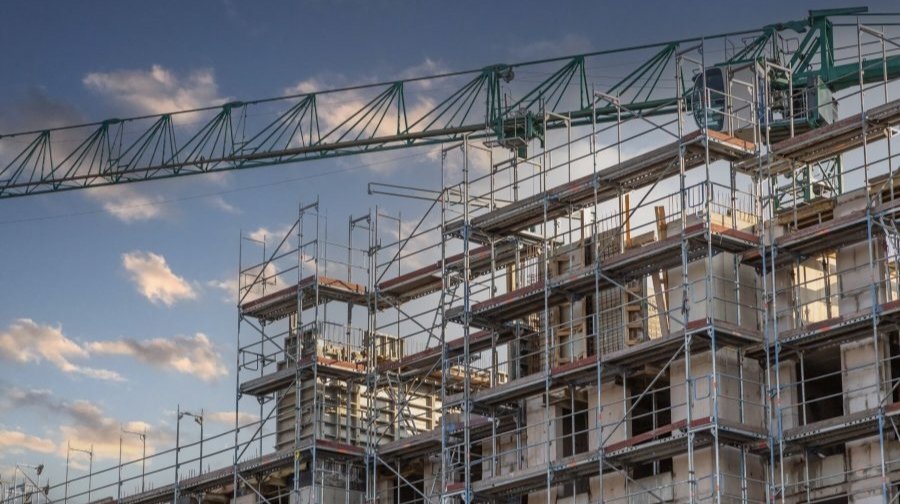

Australia's push to build 1.2 million new homes by 2029 is running into competition from an unexpected rival: the country's own artificial intelligence infrastructure boom. Data centres and housing projects are increasingly drawing from the same limited pool of trades workers, land, energy and planning capacity.
Infrastructure Australia projects a peak shortage of 300,000 construction workers by mid-2027, while the Housing Industry Association estimates the country needs 83,000 more tradespeople just to meet the National Housing Accord target. Treasury has already conceded that the 1.2 million homes goal will not be met under current conditions.
Electrical trades sit at the centre of the strain. Residential electrical work typically pays between $60,000 and $80,000 a year, while hyperscale data centre projects lock in high-voltage electricians for 18-month contracts at premium industrial rates, according to analysis published by industry outlet The Good Builder. Once committed to those contracts, those workers become structurally unavailable for home building.
Seek's AI Gauge report, published in February 2026, found that job advertisements for construction and site management roles tied to data centres now outnumber IT job listings for the same sector, with electricians, electrical technicians and HVAC technicians representing the largest category of data centre labour demand, the same trades already flagged on the national skills shortage list.
Simon Croft, chief executive of industry and policy at the Housing Industry Association, warned that fast-track planning mechanisms are letting data centre projects clear approvals well ahead of housing developments. He said it is entirely conceivable that a data centre spanning many hectares could be approved faster than a single home.
Croft added that a single large-scale data centre can consume resources equivalent to tens of thousands of homes, and is pushing for stronger federal and national commitments to ensure data centre operators, rather than households, bear the cost of managing that consumption.
In Sydney, local councils have raised concerns that the pace of data centre development is crowding out housing while straining water and power networks. The National Growth Areas Alliance has noted that the same councils expected to deliver 26 percent of Australia's new homes are also absorbing most of the city's data centre pipeline.
Global AI data centre power capacity grew from around 0.15 gigawatts in early 2022 to 29.56 gigawatts by the end of 2025, according to the Stanford AI Index 2026, a roughly 200-fold increase in under four years that helps explain the scale of the competing infrastructure now rising alongside Australia's housing sites.
Comments (0)
Leave a Comment
No comments yet. Be the first to share your thoughts!