
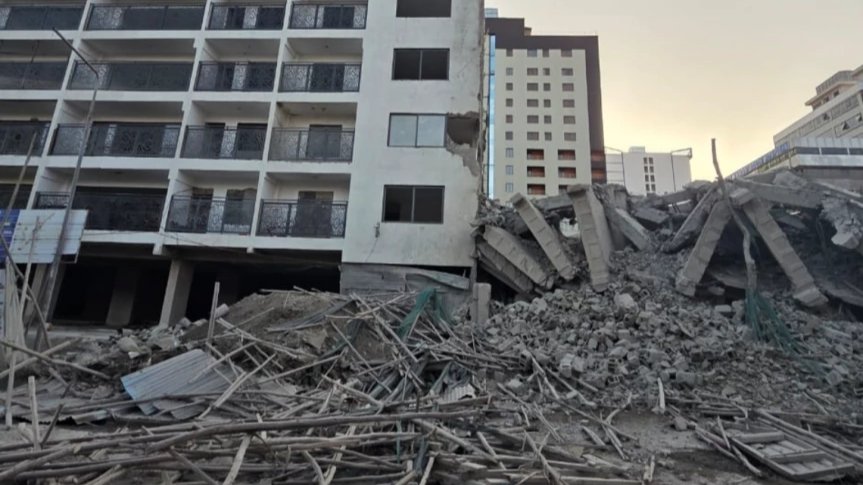

The Director of Public Prosecutions has approved charges against dozens of people over the collapse of Manzil Towers in Nairobi's South C area. The move targets senior county officials, developers, engineers and architects connected to the project that failed on January 2, 2026.
In a statement released on Friday, the Office of the Director of Public Prosecutions said it reviewed an investigation file from the Directorate of Criminal Investigations. Prosecutors found enough evidence to support convictions on multiple counts.
The charges focus on the approval, oversight and regulatory steps taken before the building came down. Four individuals will face manslaughter charges under Sections 202 and 205 of the Penal Code. They are Daniel Alphonse Odhiambo, Gideon Chege Mwangi, Abdishakur Muse Mohamed and Yussuf Mohamed Yussuf.
These same four also face accusations of starting construction without an Environmental Impact Assessment licence, in breach of the Environmental Management and Co-ordination Act. Such licences form a core requirement for larger projects to assess potential risks to people and the environment.
Nairobi County Chief Officer for Urban Planning Patrick Analo Akivaga is among those approved for prosecution. He will answer to abuse of office and neglect of official duty. The timing is notable, coming days after his arrest by the Ethics and Anti-Corruption Commission in a separate graft probe.
The full prosecution list includes 37 people charged with abuse of office and a similar number facing neglect of official duty counts. County officials, regulatory officers and professionals involved in planning, approval and implementation of the project are named.
Several suspects will also confront document-related offences. Architect Gideon Chege Mwangi, along with Abdishakur Muse Mohamed and Yussuf Mohamed Yussuf, face charges of making false documents. Mohamed and Yussuf face additional counts of uttering false documents.
The Office of the Director of Public Prosecutions listed the range of offences as manslaughter, abuse of office, neglect of official duty, making and uttering false documents, and proceeding without required environmental approvals. Prosecutors stressed that the decision followed Article 157 of the Constitution, the Office of the Director of Public Prosecutions Act and the Decision to Charge Guidelines. Evidence alone drove the outcome.
Those charged are expected to appear in court soon. The collapse itself triggered public alarm about construction practices across the city. Nairobi has seen repeated incidents where buildings failed, often raising issues around enforcement of the National Building Regulations and planning approvals.
Construction in Kenya operates under a layered system. County governments handle building permits while national bodies like the National Environment Management Authority oversee environmental clearances. Professional bodies register engineers and architects, but enforcement gaps have surfaced in past tragedies.
The Manzil Towers case highlights how regulatory failures can turn deadly. When approvals bypass proper checks or documents are falsified, the risks multiply on urban sites where structures rise quickly amid high demand for housing.
Public reaction to the collapse centred on accountability. Residents and industry observers called for tighter scrutiny of who signs off on projects and whether those approvals hold up under real conditions. The DPP's decision marks a rare push to test such questions in criminal court rather than leaving them to internal reviews or civil suits.
Kenya's construction sector continues to expand rapidly, driven by both public infrastructure and private developments. Yet incidents like this one underscore the human cost when corners are cut. The upcoming court proceedings will test whether the evidence can sustain the serious charges now approved.
For the affected families and the broader industry, the case carries weight beyond individual guilt. It could set expectations for how seriously authorities treat safety lapses in future projects. Arraignment dates will likely draw close attention from engineers, developers and regulators alike.
Comments (0)
Leave a Comment
No comments yet. Be the first to share your thoughts!