
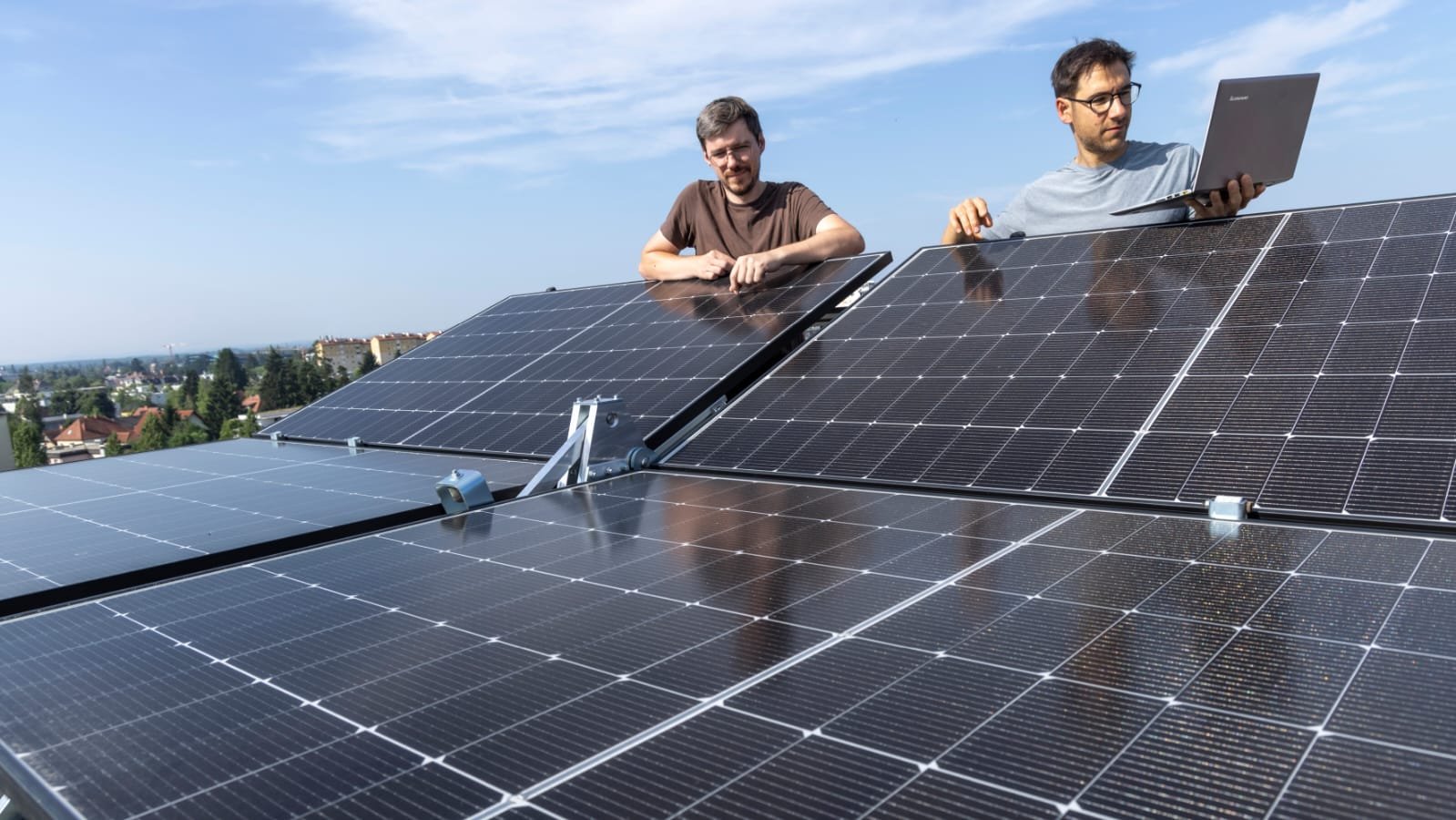

Researchers at Graz University of Technology in Austria have built a solar panel system that folds itself flat before hailstorms and heavy snow, while also tracking the sun to raise daily electricity output. The system is called FLAPTrack, short for Face-to-Face Lay-Down Anti-Degradation Protection.
A 1.8 kilowatt-peak prototype is already running on the roof of an office building at the university's Inffeldgasse campus, developed by the Institute of Electrical Measurement and Sensor Technology.
Solar panels generate the most power when sunlight strikes them at a 90 degree angle. FLAPTrack uses dual-axis tracking, a belt drive for horizontal movement and a vertical actuator for tilt, to keep panels facing the sun throughout the day rather than sitting fixed in one position.
That tracking lifts average energy yield by nearly 40 percent compared with fixed panels, with peak gains reaching 56 percent on favourable days. Armin Buchroithner of the research team said the system delivers more than twice the electricity of conventional panels during the high-demand morning and evening hours.
The same linear actuator that drives daily tracking also powers the panels' protective folding sequence, a design choice intended to keep installation and running costs down. Connected to local weather stations and forecasting models, the system receives early warning of incoming storms or hail.
When severe weather threatens, the panels fold face to face and lie flat on the ground, reducing wind resistance and protecting the internal silicon wafers from cracking. A heavy-duty net shields the exposed backs of the panels while they are down.
The folding position also keeps the panels clear of snow accumulation, addressing one of the main causes of efficiency loss for solar installations during winter months. Researchers say the approach performs best at higher latitudes, where the sun stays low on the horizon for much of the year.
The Graz rooftop installation is being used to gather data on wind resistance and weather response, part of a wider effort to design solar systems capable of adapting to shifting power demand as extreme weather events become more frequent.
Comments (0)
Leave a Comment
No comments yet. Be the first to share your thoughts!