
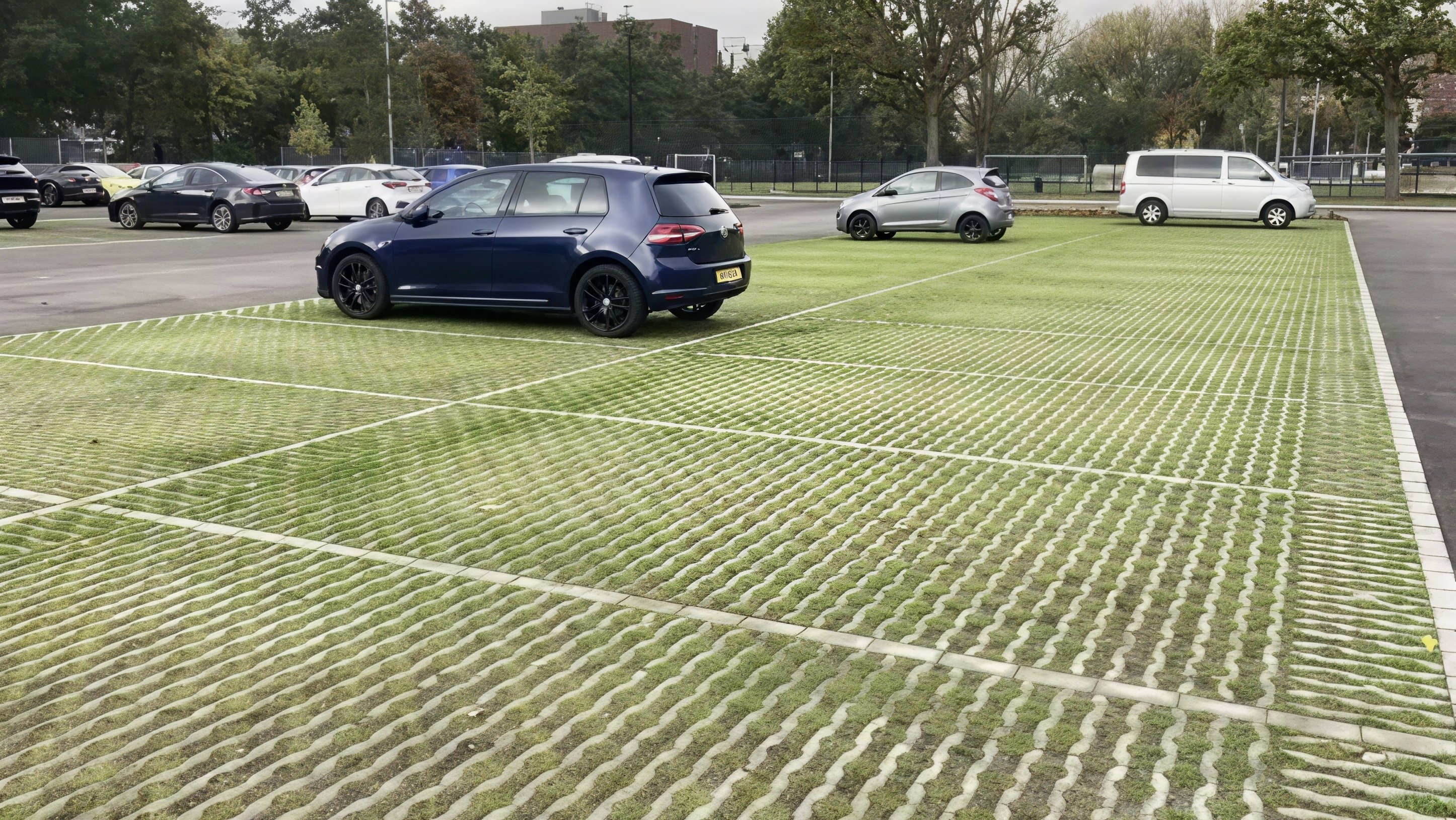

Cities across the Netherlands are replacing solid concrete surfaces with grass-filled paving blocks designed to absorb rainwater and reduce urban heat, part of a wider push to adapt low-lying Dutch cities to a changing climate. Permeable pavements of this kind are now installed at more than a thousand locations nationwide.
The blocks use a grid or ring pattern with open sections between the concrete, typically filled with soil and grass rather than left as bare concrete. Rainwater passes through the gaps into the ground below instead of running off into storm drains.
A study measuring infiltration rates across 33 grass-filled paving sites in six Dutch cities found rates ranging from 50 to 1,400 millimetres an hour, with a median of 344 millimetres. Conventional concrete or asphalt pavement, by comparison, typically absorbs only 3 to 10 millimetres an hour.
The cooling effect comes from a similar mechanism. Concrete and asphalt absorb and store heat throughout the day, radiating it back into the surrounding air well into the evening, while grass and soil retain moisture that cools the surface through evaporation as it dries.
Arnhem has taken one of the more ambitious approaches, targeting a 10 percent reduction in asphalt cover under a ten-year plan meant to help the city absorb 90 percent of rainwater into the soil rather than the sewer system. City alderman Cathelijne Bouwkamp said rising temperatures were most severe in areas dominated by stone and concrete.
The shift extends beyond municipal roadworks into residential gardens. An annual competition called NK Tegelwippen, or tile-flipping, encourages residents to remove paving stones from their own gardens and replace them with plants, with organisers reporting several million stones lifted since the contest began.
Dutch water management specialists have linked the paving stone removal directly to flood prevention at the neighbourhood level, noting that fully tiled properties leave rainwater with nowhere to go during heavy downpours, a problem that compounds quickly across densely built Dutch cities.
Roughly a quarter of the Netherlands lies below sea level, making the country especially exposed to the combined effects of heavier rainfall and rising urban temperatures, a dynamic that has pushed both city planners and residents toward permeable, vegetated surfaces as a practical alternative to concrete.
Comments (0)
Leave a Comment
No comments yet. Be the first to share your thoughts!