
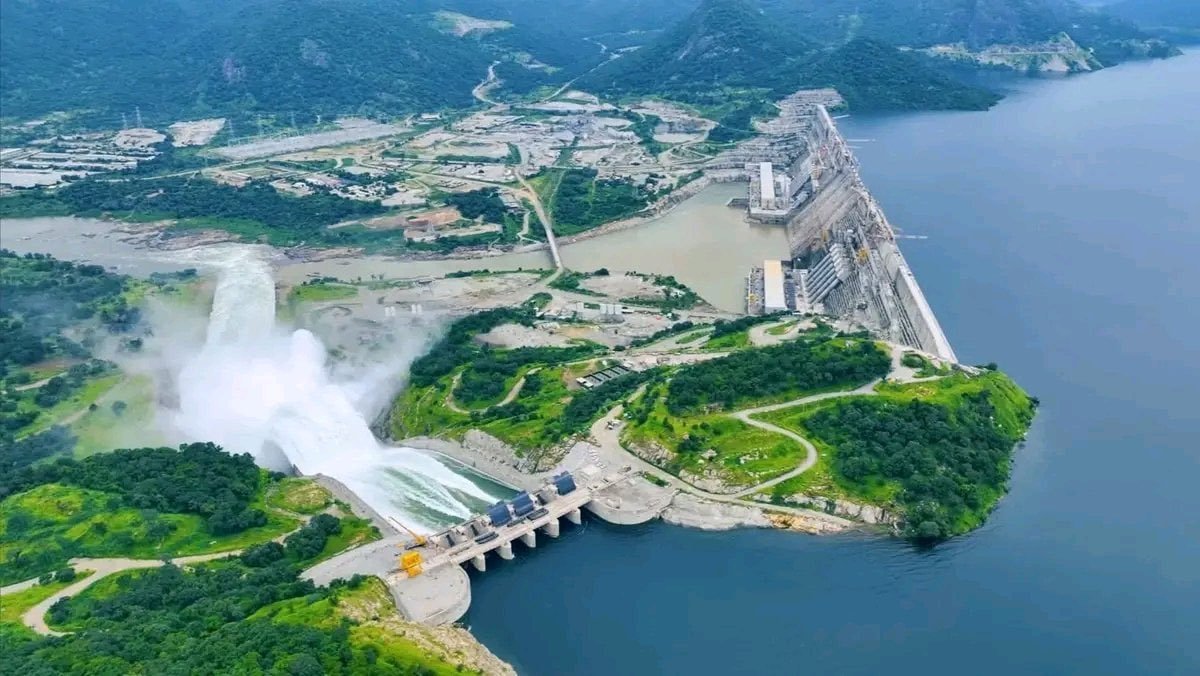

The Grand Ethiopian Renaissance Dam (GERD) on the Blue Nile River has officially been inaugurated, marking a historic milestone for Ethiopia and Africa’s energy future. The project highlights the country’s determination to achieve energy independence and demonstrates the continent’s ability to deliver large-scale, self-financed infrastructure.
The GERD was launched on April 2, 2011, with Italian firm Salini Impregilo (now Webuild Group) as the main contractor. Built at an estimated cost of 5 billion dollars, the project was almost entirely financed through domestic resources. Ethiopians at home and abroad contributed by purchasing bonds and making donations, transforming the dam into a national symbol of unity and resilience.
Construction took more than a decade. In 2013, the Blue Nile was diverted to allow work on the dam’s foundation. The first filling of the reservoir began in 2020, followed by subsequent stages in the following years. Early power generation started in 2022 when the first turbines went online. The final filling in 2024 cleared the way for the official commissioning in 2025.
At full capacity, the GERD will generate 5,150 megawatts of electricity and produce around 15,700 gigawatt-hours annually. The main structure is a 170-meter-high, 1,800-meter-long gravity dam that holds a reservoir of 74 billion cubic meters of water. This makes it the largest hydroelectric power plant in Africa, with an output comparable to three medium-sized nuclear plants.
The project has also stirred diplomatic debates. Egypt and Sudan have voiced concerns about possible reductions in Nile water flow. Ethiopia insists that the dam will not cause harm and argues that regulated flows will instead reduce flooding, minimize sediment buildup, and bring long-term regional benefits.
To put the scale of the GERD into perspective, Kenya’s largest dam, Masinga, generates only 40 megawatts and holds 1.56 billion cubic meters of water. In comparison, the GERD produces over 125 times more power and has a reservoir nearly 47 times larger.
Kenya is already set to benefit. Under a 25-year power purchase agreement, Ethiopia will export electricity to Kenya through the 1,045-kilometer Eastern Electricity Highway, a High Voltage Direct Current (HVDC) transmission line. This will help stabilize Kenya’s grid with affordable clean energy, especially during drought periods when its own hydropower generation is low.
The GERD represents more than Ethiopia’s energy security. It is a symbol of African self-determination, a foundation for regional cooperation, and a powerful example of how infrastructure can be funded and delivered locally. By completing this project, Ethiopia has secured its place as a key regional energy exporter and strengthened prospects for a more interconnected and prosperous East Africa.
Comments (0)
Leave a Comment
No comments yet. Be the first to share your thoughts!