
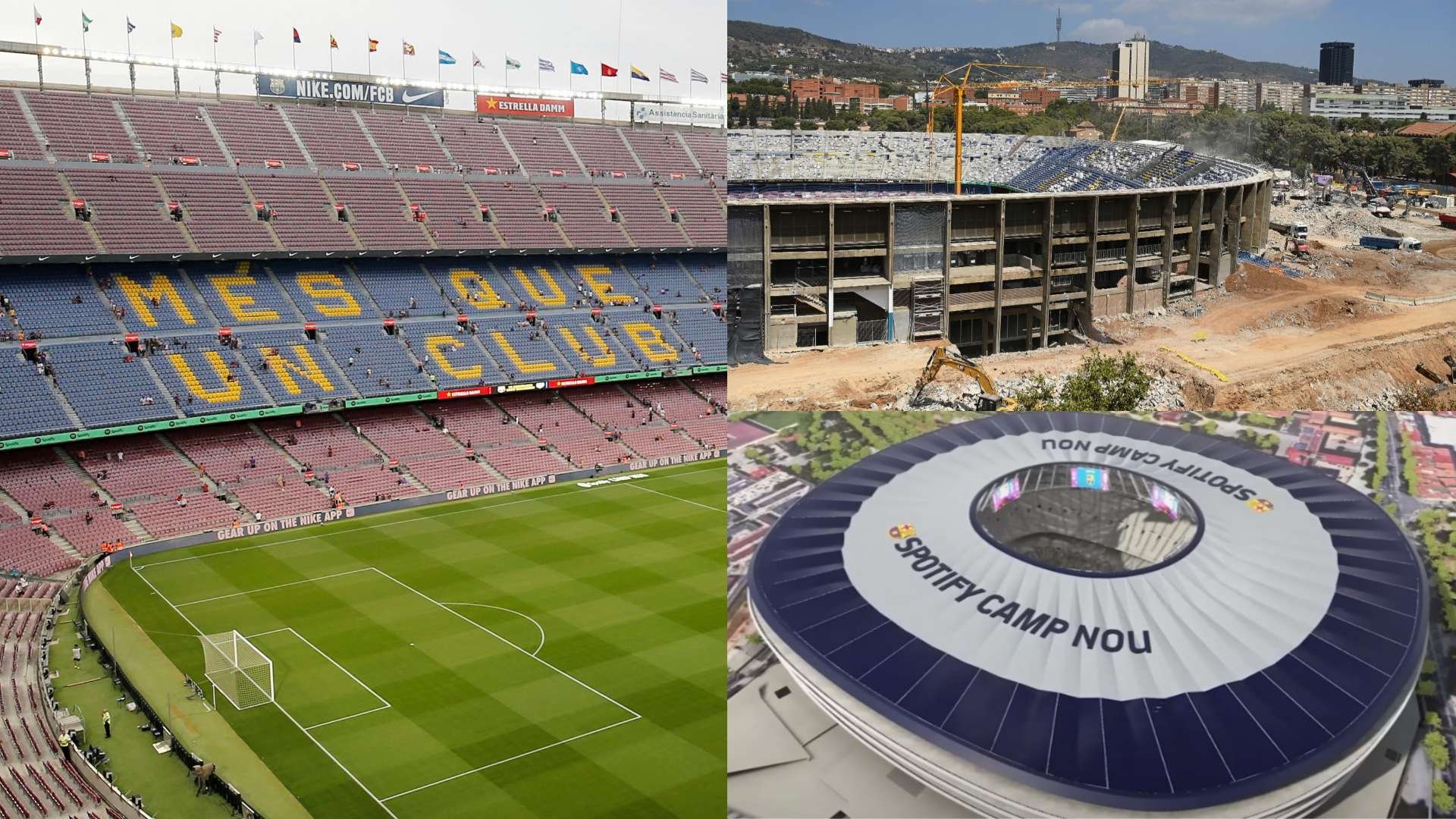

Football's world governing body has confirmed the 23 stadiums expected to host matches at the 2030 World Cup, a tournament that will span three continents for the first time. Eleven venues are in Spain, six in Morocco and three in Portugal.
Uruguay, Argentina and Paraguay will each host one of the tournament's three opening games, marking the centenary of the first World Cup, held in Uruguay in 1930. Four of the 23 stadiums are entirely new builds, while 11 others are undergoing renovations, some of them major overhauls.
Recurring design trends run through the projects, including stands moved closer to the pitch, new roofs, added hospitality zones, and LED-integrated facades intended to make venues adaptable for concerts and other events beyond football.
Key venues include:
Camp Nou, Barcelona: FC Barcelona's home is undergoing a 1.5 billion euro renovation led by Nikken Sekkei with IDOM and B720 Fermín Vázquez Arquitectos, expanding it to 105,000 seats and making it Europe's largest stadium once complete.
Santiago Bernabéu, Madrid: Real Madrid's ground finished a major renovation in 2024 that raised capacity to 83,000 and added a retractable roof and a pitch that separates into six sections stored underground.
Grand Stade Hassan II, Casablanca: Under construction specifically for the tournament, this Populous and Oualalou and Choi design is planned for 115,000 seats, which would make it the world's largest football stadium.
Estadio Centenario, Montevideo: Built in 1930 for the first World Cup, it will host the tournament's opening match again as part of the centenary celebrations, alongside a renovation from SB Arquitectos and Vigliecca and Asociados.
Monumental Stadium, Buenos Aires: River Plate's home ground is being expanded from 85,000 to 101,000 seats under a project led by Schlaich Bergermann Partner with Fernandes and Arquitetos Associados.
Osvaldo Domínguez Dibb Stadium, Asunción: A brand-new 46,000-seat stadium in Paraguay, designed by Path Urban and Nicole Hellmers Arquitectura, though construction delays have pushed its completion from 2027 to 2029.
Two Spanish venues, Nou Mestalla in Valencia and Balaídos Stadium in Vigo, are not yet confirmed as hosts, with the sport's governing body expected to decide later in 2026. Balaídos still needs its capacity expanded to meet the required 40,000-seat threshold.
The scale of construction reflects a tournament unlike any before it, with more venues in play than at any previous World Cup and stadium designers across several continents working simultaneously toward the same 2030 deadline.
Comments (0)
Leave a Comment
No comments yet. Be the first to share your thoughts!