
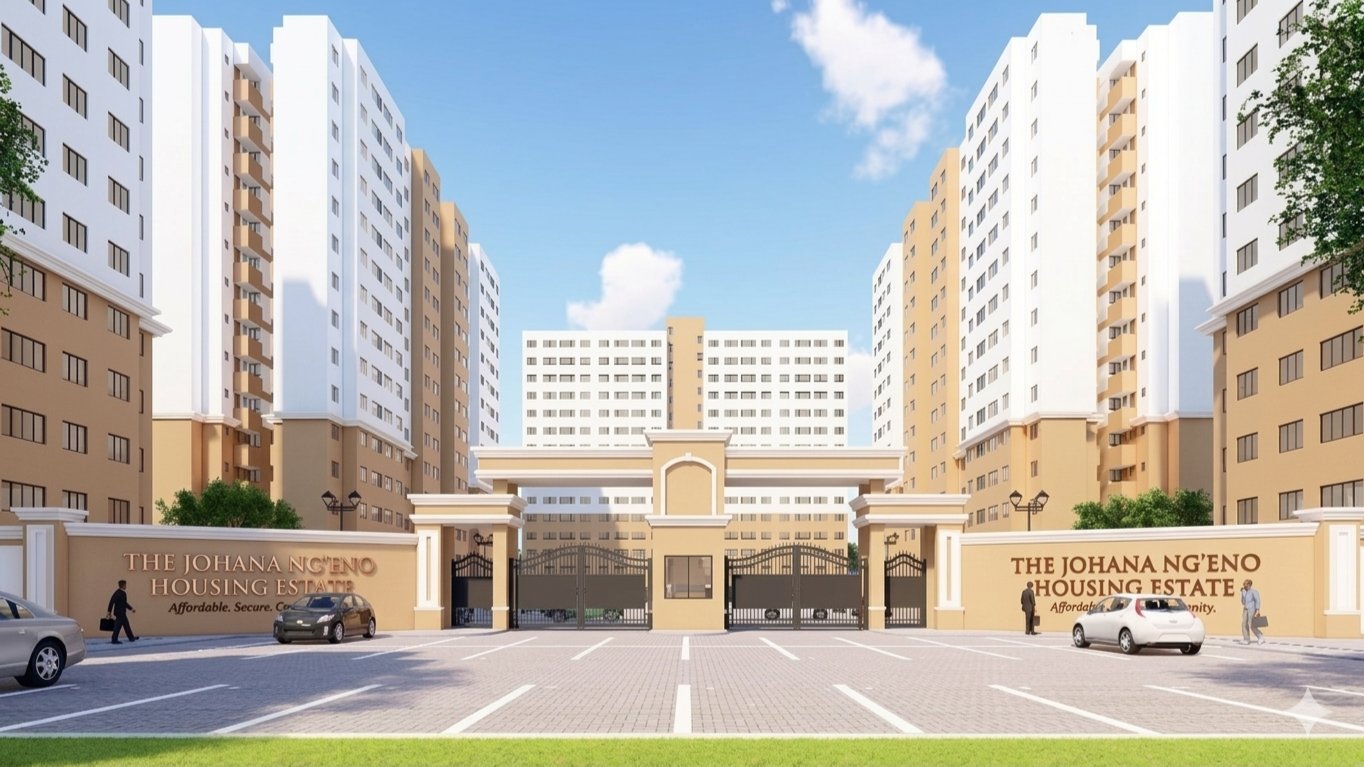

President William Ruto has directed the Ministry of Housing to rename the Shauri Moyo Affordable Housing Estate in Nairobi after the late Johana Ng’eno. The announcement came during Ng’eno’s funeral service in Emurua Dikirr on March 6, 2026. Ruto explained that Ng’eno had chaired the committee overseeing development of the estate, which now houses 4,500 residents.

The Late Johana Ng'eno
“Because Johana Ng’eno was on the committee for one of the largest estates in Nairobi, which accommodates 4,500 residents and is called Shauri Moyo, they recommended it be named after Johana Ng’eno,” Ruto said at the service. “I am directing the Ministry of Housing to rename it Johana Ng’eno.” The president highlighted Ng’eno’s encouragement to push forward with Kenya’s affordable housing agenda despite criticism.
Ng’eno, who served as MP for Emurua Dikirr, died recently, prompting tributes from political figures. Ruto recalled how Ng’eno urged him not to abandon the housing levy and related projects. “Some people told me to stop talking about housing and the housing levy, but today, housing is transforming Kenya,” Ruto added.
The Shauri Moyo estate sits in Nairobi’s Eastlands, an area long marked by informal settlements and aging government housing. Efforts to redevelop it began under Ruto’s administration as part of a national push for affordable homes. In January 2023, Ruto broke ground on the Shauri Moyo project, initially planned for 3,000 units at a cost of Sh10 billion. The development features 25-storey apartments designed to maximize space in the densely populated neighborhood.
By March 2025, Ruto inspected the site, where construction of 4,500 units was underway. The expansion reflects growing demand for modern housing in urban centers like Nairobi, where rapid population growth has strained existing infrastructure. The project aims to replace outdated structures with contemporary blocks, improving living conditions for low- and middle-income families.
Kenya’s affordable housing program, launched in 2018 under the previous administration but accelerated by Ruto, targets building 500,000 units nationwide by 2027. It relies on a housing levy deducted from salaries, which has faced public pushback over economic burdens. Still, projects like Shauri Moyo demonstrate tangible progress in urban renewal.
In Shauri Moyo, the redevelopment displaced some residents temporarily. In August 2023, 299 families in government-owned houses were asked to vacate and surrender allocation letters to make way for new builds. Officials promised priority in the new units, though relocations often spark concerns about fairness in such initiatives.
The estate’s renaming adds a personal layer to the infrastructure story. Ng’eno, known for his vocal support of development in rural and urban areas alike, represented Emurua Dikirr since 2017. His involvement in the Shauri Moyo committee stemmed from his advocacy for equitable housing distribution across regions.
Ruto’s directive aligns with a pattern of honoring key figures through public projects. Similar renamings have occurred in other Kenyan developments, tying legacy to tangible assets. The Ministry of Housing is expected to formalize the change soon, updating records and signage at the site.
Beyond Shauri Moyo, Nairobi’s housing push includes sites like Makadara, where Ruto launched another phase in recent years. These efforts form part of a broader strategy to modernize slums and reduce urban poverty. Critics, however, question the affordability of units, with prices starting at Sh3 million for two-bedroom apartments in some projects.
Construction at Shauri Moyo has created jobs, with Ruto noting employment opportunities during his 2025 visit. Workers on site include locals trained in building trades, contributing to skill development in the area. The project uses local materials where possible, supporting Kenya’s manufacturing sector.
As the estate nears completion, the renaming serves as a reminder of individual contributions to national goals. Ng’eno’s legacy now extends from his rural constituency to Nairobi’s skyline. Residents of the soon-to-be Johana Ng’eno Estate may see the change as a nod to leadership in housing reform.
The affordable housing initiative has drawn international attention, with partnerships from bodies like the World Bank for funding urban upgrades. In Nairobi alone, over 50,000 units are in various stages of construction, addressing a deficit estimated at two million homes countrywide.
Challenges persist, including delays from legal disputes over land and environmental concerns in dense areas. Shauri Moyo’s transformation, though, stands as an example of what sustained government focus can achieve in infrastructure.
Ruto’s comments at the funeral underscore the program’s resilience. Despite early skepticism, sites like this one continue to rise, reshaping Kenya’s cities one block at a time.
Comments (0)
Leave a Comment
No comments yet. Be the first to share your thoughts!