
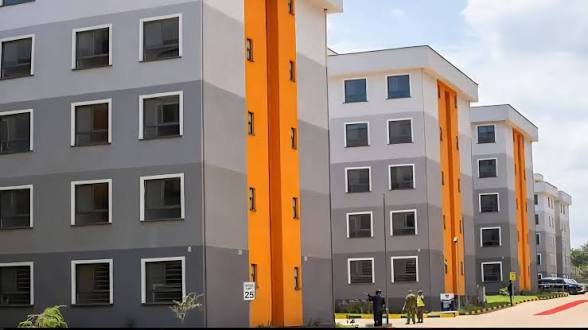

Taxpayers have poured Sh206.46 billion into the Affordable Housing Programme (AHP) over a three-year period. The government initiative represents one of the largest dedicated infrastructure funding pools in the history of the country.
The revenue collection highlights the massive financial resources allocated toward expanding national residential infrastructure. Construction activities under the fund continue across multiple municipal regions and county sites.
Official records confirm that over 205,000 housing units are currently under active construction. The entire nationwide portfolio carries an estimated development cost of Sh500 billion.
The State Department for Housing and Urban Development (SDHUD) oversees the execution of these residential projects. Private developers and local contractors are erecting high-density apartment blocks for low-income citizens, who need structured urban shelter.
President Ruto has prioritized the national housing strategy since assuming office. The head of state maintains that structural expansion generates employment, although public discussions surrounding mandatory levy deductions remain ongoing.
Funding for these ongoing civil developments relies heavily on payroll deductions managed by Kenya Revenue Authority (KRA). The national tax agency collects the statutory housing levy, which is deposited directly into the central fund.
Contractors operating on these housing estates report increased demand for domestically manufactured construction materials. Cement suppliers, steel distributors, and local hardware merchants are delivering supplies, but logistics planning remains essential for timely delivery.
A substantial portion of the building work targets densely populated urban centers. National Housing Corporation (NHC) plays a key execution role alongside private real estate companies, which participate through public-private partnership agreements.
The steady financial inflows reflect consistent monthly remittances from both formal sector workers and employers nationwide. Treasury officials anticipate continued growth in capital collections, as registration compliance improves among business entities.
Major urban hubs including Nairobi, Mombasa, Kisumu, and Nakuru host multiple active housing sites. Construction workers on these sites maintain structured schedules, which help keep progress aligned with established building targets.
Civil society organizations and independent auditors continue monitoring the allocation of project funds. Industry analysts stress that rigorous financial oversight remains vital, if public trust is to be sustained throughout execution.
Beyond standard residential blocks, the overall project scope encompasses primary municipal infrastructure. Civil engineering teams are installing drainage systems, clean water connections, and paved access roads, which link new estates to existing municipal networks.
The ministry plans to hand over finished housing units in structured phases across participating counties. Local county governments are supporting the exercise by providing land, while regional planning boards handle necessary spatial approvals.
Financial institutions and commercial lenders are designing specialized mortgage products for prospective buyers. Advisory firms are encouraging citizens to evaluate long-term financing options, which accommodate both salaried employees and self-employed buyers.
Active construction sites across the country provide direct engagement for thousands of local skilled and unskilled workers. Site supervisors enforce strict building standards during daily operations, where structural concrete pouring and wall masonry work continue without pause.
Material suppliers continue to expand their production capacity to meet project specifications. Local manufacturers are delivering pre-cast concrete panels and roofing materials, which support faster assembly on high-density residential developments.
The housing programme continues to alter the broader landscape of Kenya's real estate sector. Infrastructure experts will monitor how effectively the accumulated Sh206.46 billion is utilized, as contractors advance construction across ongoing housing sites.
Comments (0)
Leave a Comment
No comments yet. Be the first to share your thoughts!