
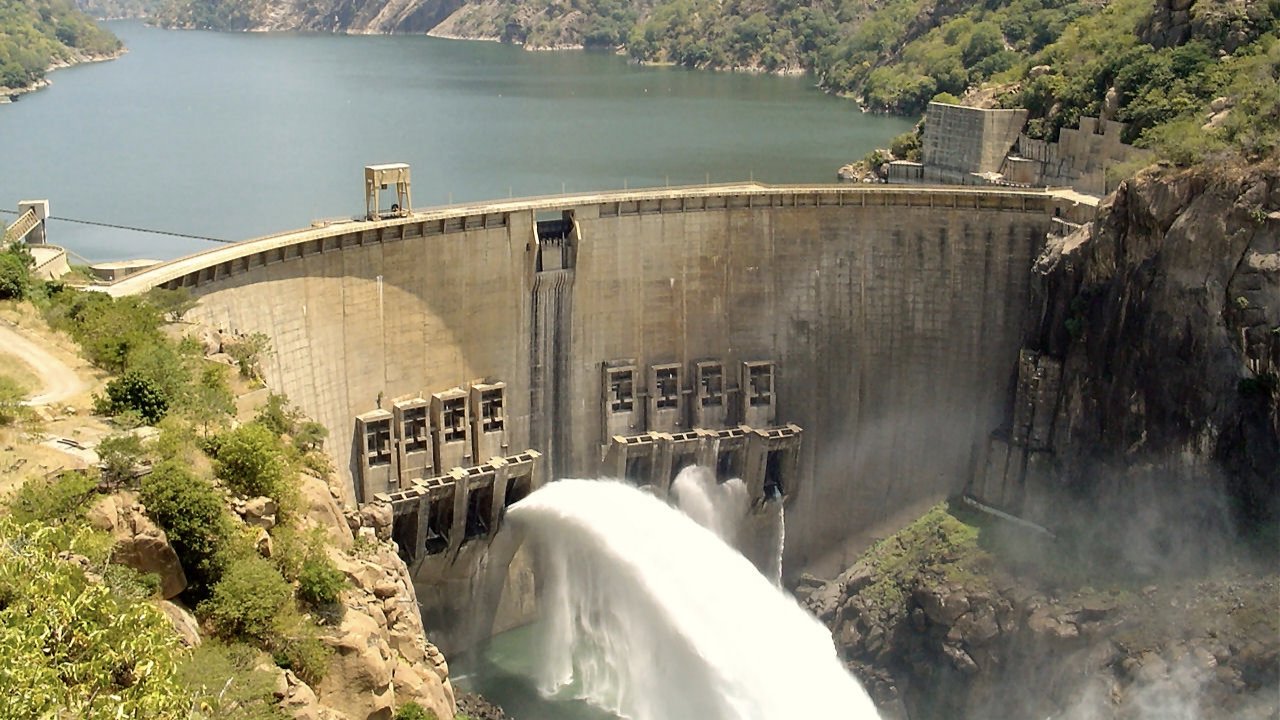

The reservoir at Mozambique's Cahora Bassa dam has recovered to 56 percent of its water storage capacity, rebounding sharply after a prolonged drought pushed levels to historic lows. Hidroeléctrica de Cahora Bassa (HCB), which operates the dam, said the recovery could push 2026 production beyond earlier forecasts.
At the end of the 2024-2025 rainy season, storage stood at just 26.01 percent. HCB responded with a restriction and recovery programme that lifted levels to 27.23 percent by December 31, 2025, compared with 21.19 percent over the same period the previous year, signalling a gradual turnaround.
By March 2026, HCB chairman Tomás Matola said the reservoir was approaching 50 percent capacity, recovering from a low of 20 percent driven mainly by rainfall upstream of the reservoir. Tributaries feeding into the Zambezi River proved decisive in restoring water levels, he said.
The drought forced steep production cuts in 2025, with output falling 30 percent year-on-year to 10,921 gigawatt-hours, the worst rainfall record in the Zambezi basin in 43 years. With storage now at 56 percent, HCB expects 2026 output could exceed its planned target of 11,716.76 gigawatt-hours, a rise of more than 7.29 percent compared with 2025.
Cahora Bassa is one of Africa's largest hydroelectric plants, with an installed capacity of 2,075 megawatts generated by five Francis-type turbines. Its reservoir ranks as the fourth largest on the continent, stretching 270 kilometres in length and 30 kilometres between banks, covering 2,700 square kilometres.
Despite the difficult year, HCB reported 2025 revenues of 344 million dollars and a net profit of 112 million dollars, alongside a contribution of roughly 300 million dollars to the Mozambican state through taxes, fees and dividends. The company described the results as reflecting prudent management of water and financial resources through the crisis.
The plant supplies electricity to Mozambique's national utility, Electricidade de Moçambique, along with South Africa's Eskom, Zimbabwe's ZESA and other regional buyers, underscoring its role as a key power source across Southern Africa. HCB is 85 percent owned by Mozambique's state firm Companhia Elétrica do Zambeze, with Portugal's Redes Energéticas Nacionais holding a 7.5 percent stake.
Matola has said HCB aims to expand capacity to as much as 4,000 megawatts by 2034, alongside plans for a new power station and a solar park. The neighbouring Mphanda Nkuwa dam, also under development on the Zambezi River in Tete province, is expected to add a further 1,500 megawatts to the region's energy hub.
Comments (0)
Leave a Comment
No comments yet. Be the first to share your thoughts!