
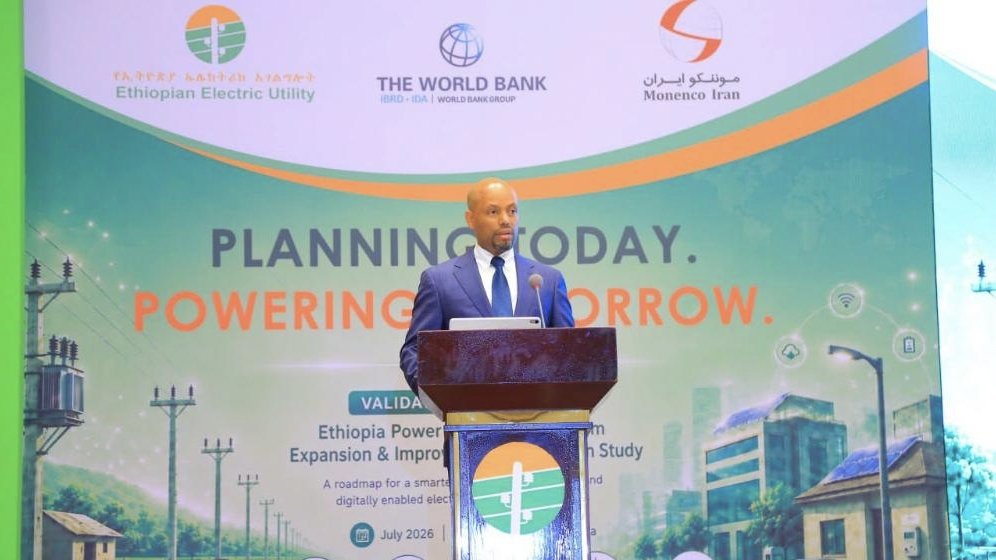

Ethiopia's state-owned power distributor has unveiled a 25-year national master plan to expand and modernise the country's electricity distribution network, running through 2049. The Ethiopian Electric Utility launched the roadmap in Addis Ababa on July 27, 2026.
EEU Chief Executive Officer Getu Geremu described the plan as a landmark effort to modernise, digitise and strengthen grid reliability. He said upgrading distribution infrastructure is essential to Ethiopia's long-term economic growth and social transformation.
Under the plan, peak power demand is projected to climb to 39,327 megawatts by 2049, driven by population growth, urban expansion, industrialisation and the rise of electric mobility. To meet that demand, the utility plans to build 128 new power substations over the next quarter-century.
The plan follows the September 2025 commissioning of the Grand Ethiopian Renaissance Dam, Africa's largest hydropower project, which added more than 5,000 megawatts of generation capacity and positioned Ethiopia as a regional leader in renewable energy production.
That generation boost has not yet translated into universal access. According to the National Energy Compact published under the World Bank's Mission 300 initiative, only about 44 percent of Ethiopians currently have basic electricity service, a gap largely attributed to weaknesses in the distribution network rather than a shortage of power at the source.
Ethiopia's existing grid spans 20,390 kilometres of transmission lines and 179,000 kilometres of distribution lines, still insufficient to cover the entire country. System losses compound the access problem, with transmission losses running at 6 percent, distribution losses at 22 percent and commercial losses at 10 percent.
The government has set a target of reaching 75 percent electrification by 2030, connecting more than nine million additional households through a mixed approach combining grid extension with off-grid solutions such as mini-grids and solar home systems for rural communities.
With generation capacity now substantially expanded through the GERD, Ethiopian authorities have signalled that distribution infrastructure, rather than power generation, represents the country's next major bottleneck in achieving universal electricity access.
Comments (0)
Leave a Comment
No comments yet. Be the first to share your thoughts!