
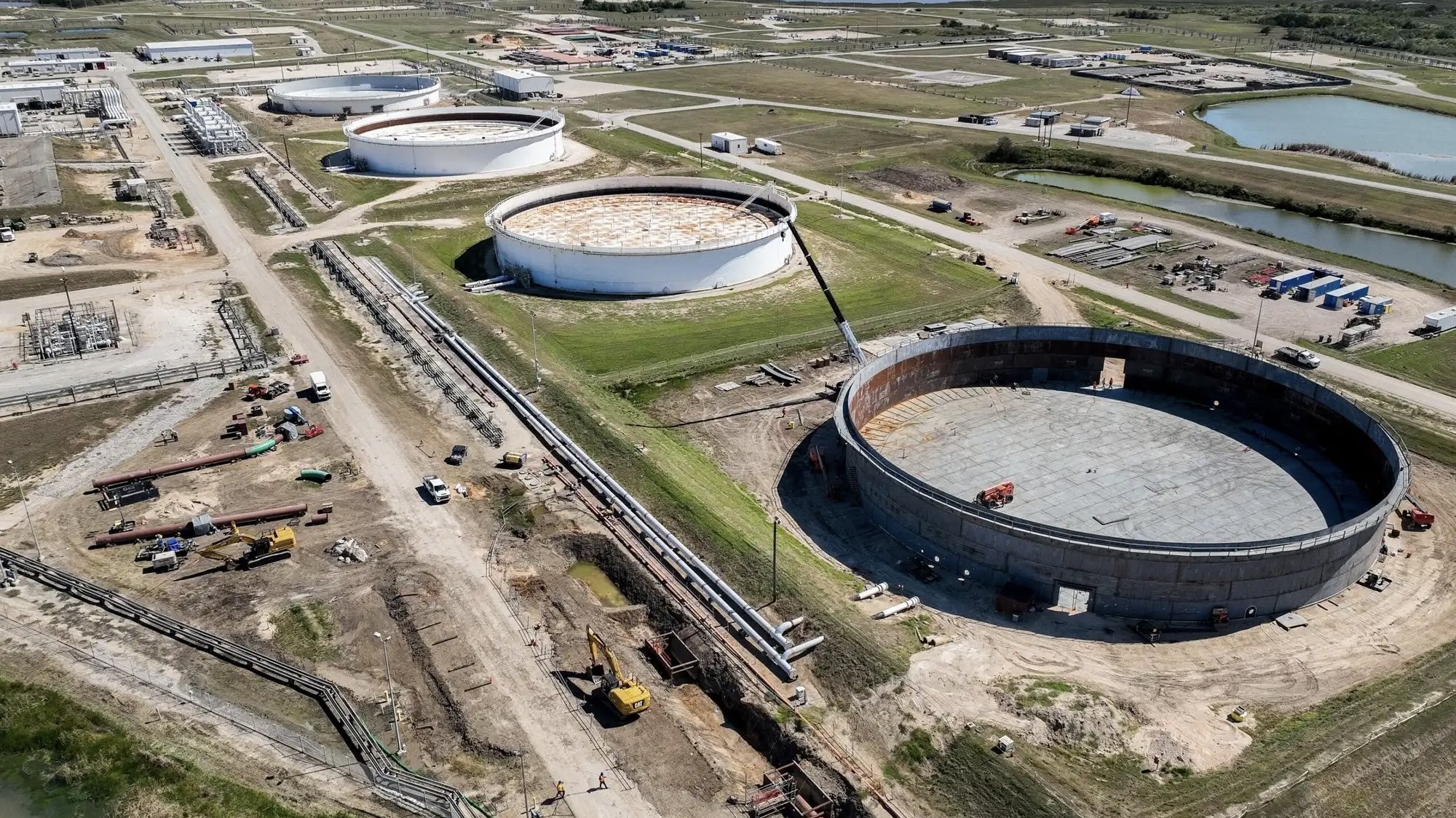

The US Strategic Petroleum Reserve is showing signs of strain from repeated emergency releases, as ageing infrastructure struggles to keep pace with the drawdowns ordered since Iran choked off oil exports through the Strait of Hormuz earlier this year.
President Donald Trump ordered the release of 172 million barrels from the reserve in March, after Iran's actions in the strait triggered what officials have described as the largest oil supply disruption in history. Government inventories fell by 3.7 million barrels last week alone, bringing the total to roughly 308 million barrels, according to Energy Department data.
Once Trump's ordered release is fully executed, the reserve is expected to fall to about 243 million barrels, according to the Energy Information Administration. The stockpile has an authorised storage capacity of 714 million barrels, according to the Department of Energy, underscoring how far current levels sit below the system's full capacity.
The reserve's decline traces back to February 28, 2026, when the United States and Israel began attacking Iran, prompting Iranian retaliation using drones, ballistic missiles and small attack boats against vessels attempting to transit the Strait of Hormuz. Insurance has since become unavailable or prohibitively expensive for ships crossing the strait, effectively closing it to normal traffic.
Iran continued exporting roughly 2 million barrels of crude oil a day through the strait until the United States imposed a naval blockade on Iranian oil exports on April 13, 2026. The reserve stood at 415 million barrels in late March, meaning it has lost more than 100 million barrels over four months of sustained drawdowns.
The International Energy Agency has coordinated similar emergency releases among member countries, whose government-controlled oil stocks are required to equal 90 days of net imports. IEA government-controlled stocks totalled more than 1.2 billion barrels at the end of the fourth quarter of 2025, of which roughly 415 million barrels sat in the US reserve at the time.
Analysts have noted that strategic reserves are designed as short-term tools to buy governments time during a crisis rather than a lasting solution, with their usefulness diminishing the longer a disruption continues. More than 75 percent of the world's spare crude production capacity sits in Middle Eastern countries that export through the same strait now affected by the conflict, limiting how much that capacity can offset the shortfall.
With commercial and emergency inventories both nearing levels that stress physical extraction and pipeline logistics, the reserve's declining volumes point to a system built for shorter, sharper disruptions now being tested by a conflict that has stretched on for months.
Comments (0)
Leave a Comment
No comments yet. Be the first to share your thoughts!