
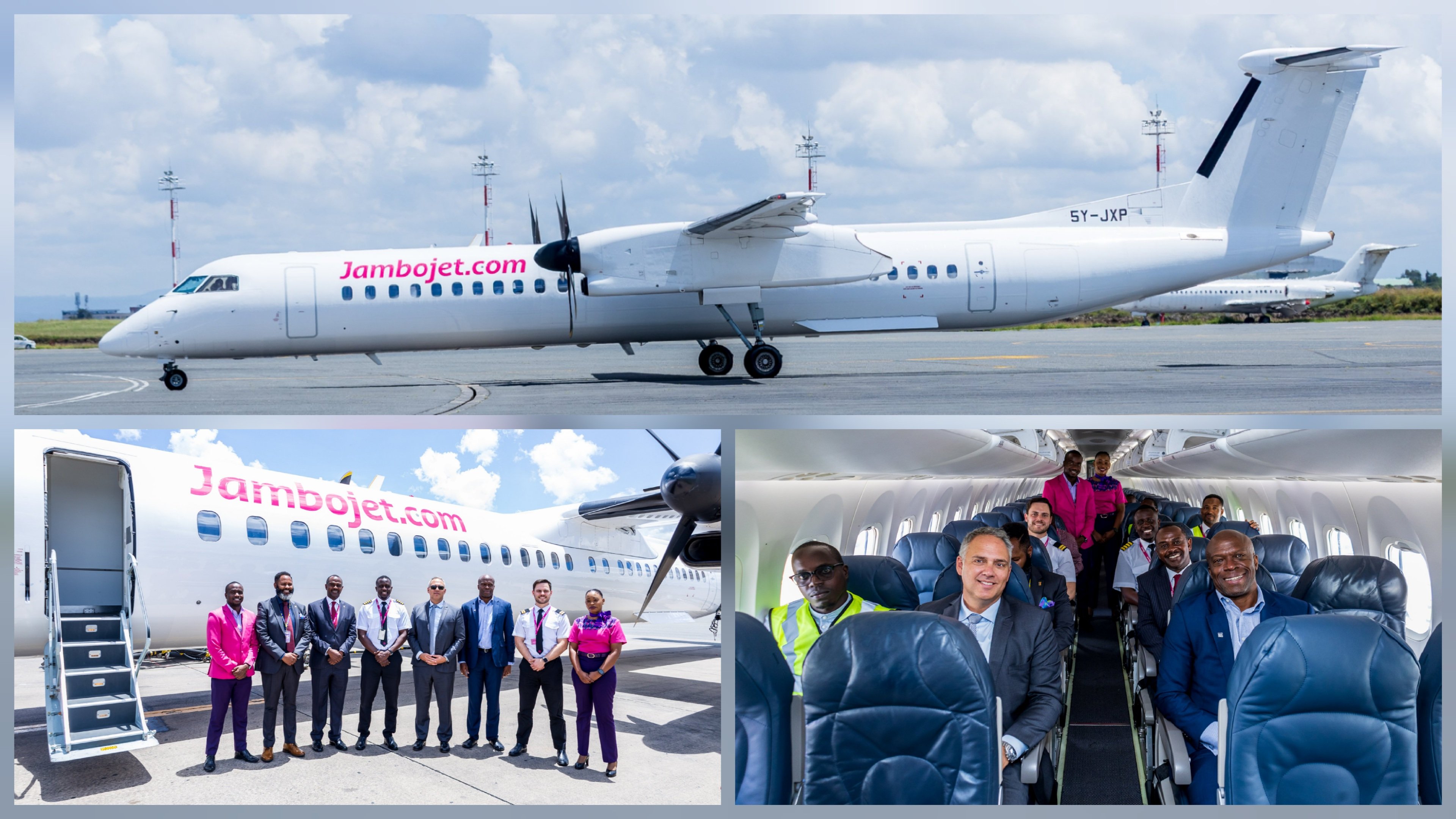

Jambojet has formally integrated its 11th aircraft into its regional fleet, marking a strategic increase in capacity as the Kenyan government prepares to break ground on the massive expansion of Jomo Kenyatta International Airport (JKIA). The arrival of the De Havilland Canada Dash 8-400, registered as 5Y-JXP and nicknamed Njiwa, comes as the airline celebrates its 12th year of operations.
The fleet expansion coincides with a pivotal shift in Kenya's aviation infrastructure. Davis Chirchir, the Cabinet Secretary for Roads and Transport, recently confirmed that construction for the JKIA expansion is slated to begin in June 2026. This project is intended to modernize facilities and solidify Nairobi’s position as a regional hub through a phased master plan developed by the Kenya Airports Authority.
Jambojet Managing Director and CEO, Karanja Ndegwa, indicated that the new aircraft will support the airline's goal of increasing domestic frequencies and expanding its footprint into East Africa. The carrier has already identified potential route resumptions to Entebbe and new services to Dar es Salaam by early 2027. The current fleet growth has already reportedly boosted operational capacity by 11 percent, facilitating more frequent flights to Kisumu, Mombasa, and Eldoret.
To support this growing fleet, the airline recently launched an Integrated Operations Control Centre (IOCC) at its Nairobi hub. The facility centralizes key operational functions, such as flight dispatch and maintenance planning, into a single environment. Ayisi Makatiani, Chairman of Jambojet, noted that the investment in the IOCC is designed to strengthen the operational system as the airline scales toward a long-term goal of 20 aircraft.
The broader infrastructure environment at JKIA is also changing. President Ruto has confirmed that the airport expansion will be a flagship project financed through the National Infrastructure Fund. This multi-phase development includes the construction of a new passenger terminal, a second parallel runway, and the development of an "Airport City" covering hundreds of hectares.
The first phase of the airport works, running from 2026 to 2027, will focus on immediate upgrades to existing terminals and airfield facilities. These improvements are necessary to handle the projected surge in passenger traffic, which is expected to be serviced by the expanding local carriers. Jambojet currently holds a 53 percent share of the domestic market and remains a critical player in the logistics and tourism sectors.
Industry stakeholders expect the combination of fleet growth and terminal expansion to create thousands of jobs. Government estimates suggest the first phase of the JKIA project alone could generate between 9,520 and 13,080 jobs annually. As the airline adds more capacity, the synergy between updated aviation infrastructure and modern aircraft like the Dash 8-400 is expected to improve schedule reliability across the region.
Comments (0)
Leave a Comment
No comments yet. Be the first to share your thoughts!