

A version of this article appeared on The Conversation Africa.
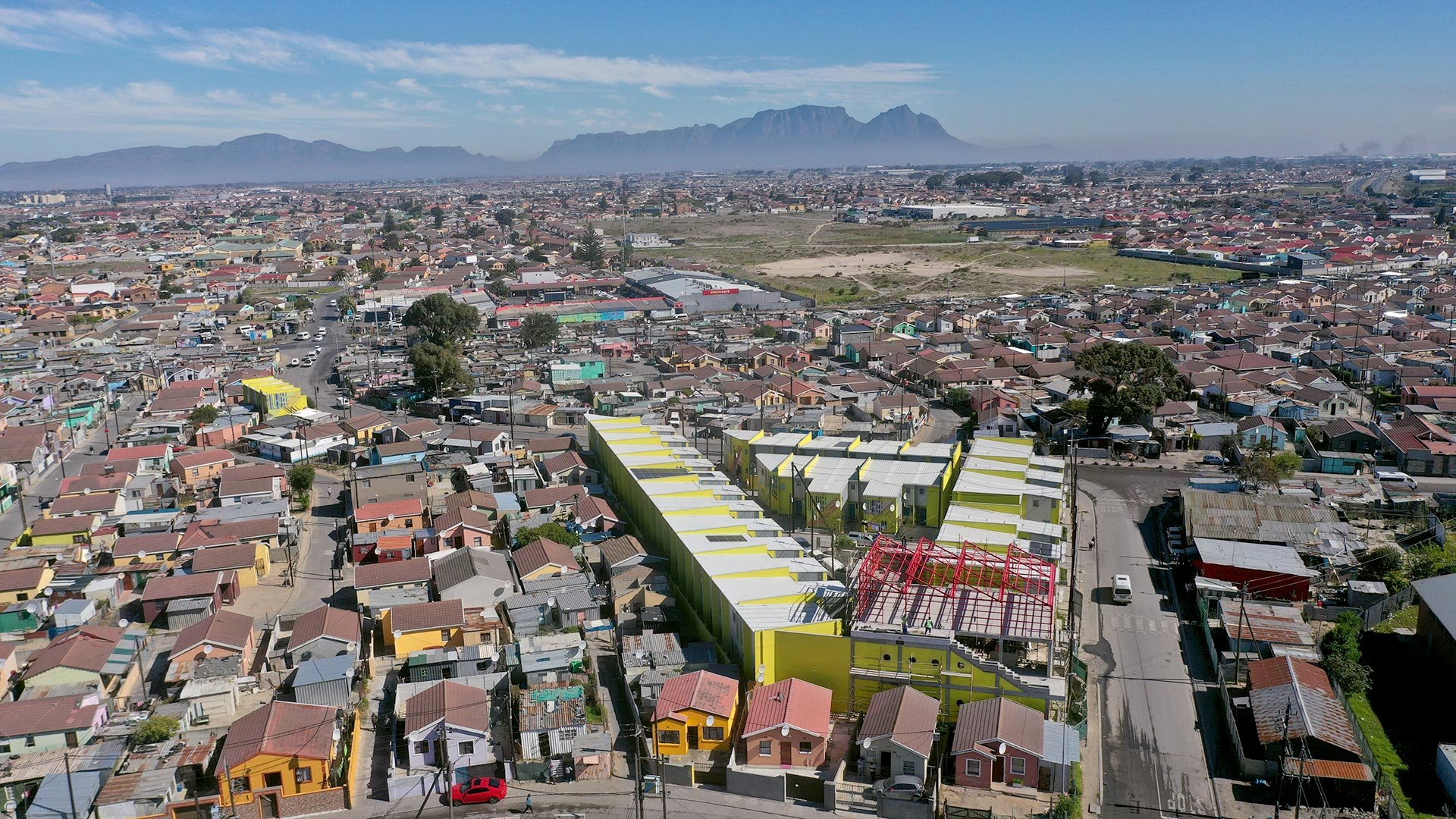
South Africa is currently short of at least 2.6 million homes, a backlog affecting more than 12 million people, according to the analysis. State supply of new, subsidised housing has declined steadily over the past decade, even as the government's housing policy shifts toward positioning the private sector as the primary provider of affordable housing.
The Banking Association of South Africa defines the affordable housing market as households earning up to R34,400 gross per month, equivalent to roughly $2,111. Yet most South African city residents earn well below that threshold. The national median household income stood at R7,980, or about $490, in 2023, leaving a wide gap between what the market considers affordable and what most households can actually pay.
The country has seen substantial state-sponsored housing delivery over the years, much of it low-density ownership stock. Despite that rollout, the housing backlog and the scale of informal settlements have continued to grow. Delivery of subsidised rental housing and higher-density, mixed-income apartment developments has remained comparatively slow.
The researchers point to Vienna, Austria, as a useful comparison, arguing that at least three aspects of the city's social housing policy carry relevance for South African cities. The first is sustained political commitment, meaning policies, laws, and regulations backed consistently by adequate financial and institutional investment over time, rather than short-term programmes tied to political cycles.
Vienna's extensive social housing stock is the product of roughly a century of continuous political commitment, dating back to the Red Vienna period between 1919 and 1934. That commitment persisted, with interruptions during Austro-fascism and the Nazi era, through to the present day. The city's social democratic government treated housing as central to urban welfare policy rather than as a revenue-generating asset.
Housing projects in Vienna were historically built as part of broader social infrastructure, integrated alongside clinics, transport links, schools, creches, libraries, and employment opportunities. These developments, colloquially known as people's palaces, symbolised a political commitment to providing high-quality living conditions for working-class residents. Subsidised rental housing was deliberately distributed across different areas of the city to encourage social mixing rather than concentrating lower-income residents in isolated zones.
Translating that level of political commitment into results required an active, capable state willing to shape land and property markets in ways that maximised public value, whether acting as a direct housing provider, a regulator, or a collaborator with other developers. Crucially, unlike many other European cities, Vienna never sold off its municipal housing stock during the late twentieth century, preserving its capacity to manage supply directly rather than depending entirely on the private market.
The researchers argue that as South Africa's government leans further into private sector delivery to address its housing shortfall, the Vienna model offers a reminder that affordable housing at scale has historically required sustained state involvement, not simply market incentives, to succeed over the long term.
Comments (0)
Leave a Comment
No comments yet. Be the first to share your thoughts!