

A version of this article appeared on The Daily Nation.
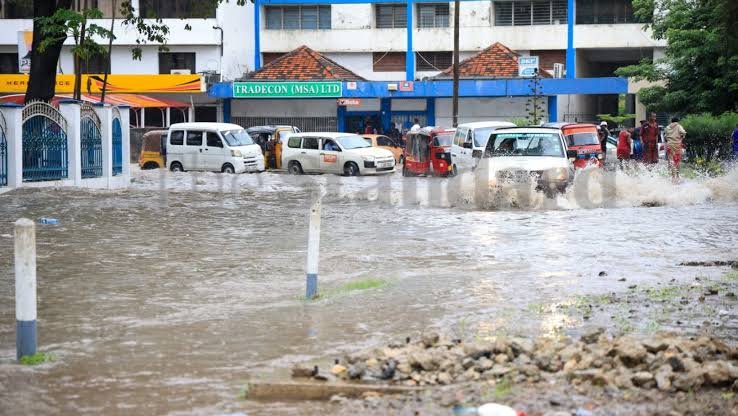
Recurrent heavy rainfall in Mombasa has once again brought the city’s aging and inadequate drainage infrastructure into sharp focus. Over the last 48 hours, several neighborhoods have been left grappling with rising water levels, as existing systems fail to channel storm-water toward the ocean effectively.
In Likoni Sub-county, the Inuka Police Station became a casualty of the deluge when floodwaters partially submerged the facility. The flooding was severe enough to destroy vital records and evidential exhibits, forcing the emergency evacuation of detainees. Officers reported that operations have been temporarily shifted to alternative locations while cleanup efforts begin.
The situation is equally dire in Junda Ng’ombeni, where entire households have been displaced. Residents in this low-lying area reported that water entered their homes during the night, forcing families to abandon their property. Many locals have blamed the lack of proper drainage planning for the recurring crisis.
Public health facilities have not been spared either. Both the Jomvu Model Hospital and the Tudor Sub-County Health Facility were rendered inaccessible on Thursday. These disruptions highlight the vulnerability of critical public infrastructure when faced with seasonal weather patterns that the current systems are not built to handle.
Mombasa County officials have deployed emergency teams to the Central Business District to unclog blocked channels and remove silt. Authorities noted that solid waste dumped into open drains is a primary cause of the blockages. They have urged residents to stop using drainage wayleaves as disposal sites.
Transport and Disaster Management CECM Daniel Manyala confirmed that disaster response teams are now active across all sub-counties. The county has also activated a dedicated emergency hotline to coordinate rescues. However, for many residents in areas like Kisauni and Nyali, these reactive measures feel insufficient against the scale of the problem.
President Ruto has previously acknowledged the nationwide need for improved infrastructure to mitigate such climate-related disasters. While the national government has pledged to support recovery efforts, the immediate reality in Mombasa remains one of impassable roads and waterlogged settlements.
The Kenya Meteorological Department warns that heavy rains may persist through the end of April. With over 100 households already affected in the coastal region, the pressure is mounting on local authorities to move beyond emergency repairs. Engineers and urban planners argue that only a total overhaul of the drainage master plan will prevent Mombasa from sinking every time it rains.
Comments (0)
Leave a Comment
No comments yet. Be the first to share your thoughts!