
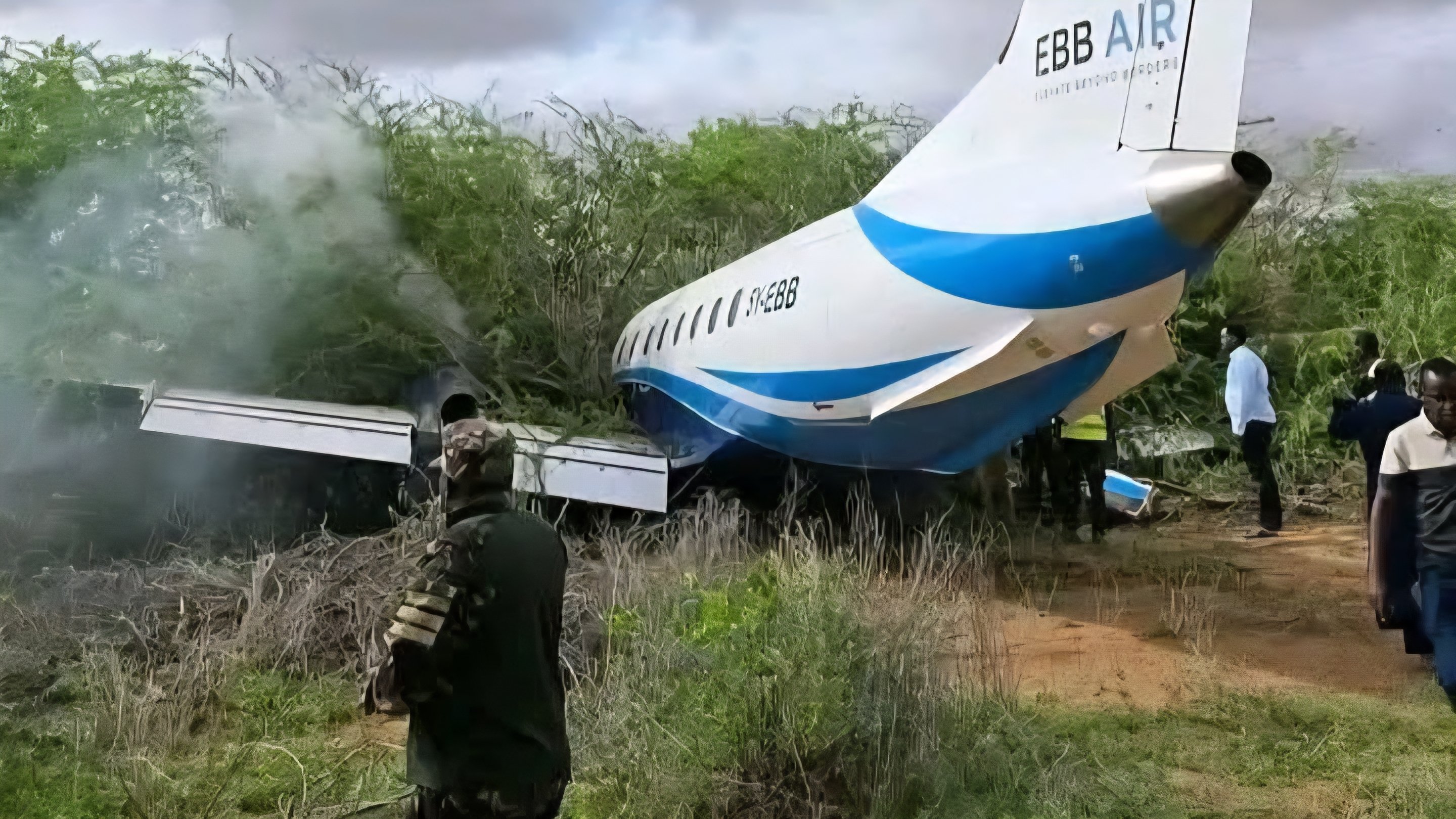

An EBB Air Embraer aircraft, registration 5Y-EBB, overshot the runway at Mandera Airstrip during a landing operation on the Mandera-Nairobi route. The incident, classified as a runway excursion, saw the aircraft come to rest in nearby vegetation after failing to stop within the designated landing distance.
Emergency response teams were quickly deployed to the scene to secure the area and assess the structural integrity of the aircraft. Official reports confirm that all passengers and crew on board were evacuated safely without injuries. Recovery operations are currently underway to move the aircraft and clear the airfield for operations.
This incident occurs at a time when the state of aviation infrastructure in North-Eastern Kenya is under intense scrutiny. Mandera Airstrip, which serves as a vital link for the region, continues to operate with a surface that many pilots and safety experts describe as inadequate for modern commercial turboprop operations.
The current runway at Mandera is situated within a military installation and is surrounded by dense residential and commercial developments. During the rainy season, the unpaved surface often becomes treacherous, leading to mud accumulation that frequently forces the suspension of flights or compromises braking efficiency for arriving aircraft.
This safety lapse follows recent high-level visits to the county. President Ruto, during a visit to Mandera on April 18, 2026, reiterated the national government's commitment to delivering a modern airport for the region. The proposed Karo Airport project, intended to replace the existing airstrip, has faced years of delays due to legal disputes and community concerns regarding land use.
Aviation operators have been issued a general advisory to strictly adhere to safety procedures, particularly when operating at smaller or remote airstrips where surface conditions are susceptible to weather and maintenance limitations. Pilots are encouraged to conduct thorough assessments of runway friction and length before attempting landings.
The Kenya Civil Aviation Authority and the Kenya Airports Authority are expected to investigate the specific cause of the 5Y-EBB excursion. Early assessments suggest that surface limitations at the Mandera facility may have played a role, although human factor and mechanical inspections remain standard protocol for such incidents.
The failure to upgrade Mandera's aviation infrastructure has forced a reliance on rugged aircraft types like the Fokker 50 and the Embraer 120, which are better suited for harsh environments. However, the recurring nature of these excursions suggests that equipment choice alone cannot mitigate the risks posed by an outdated and constrained runway.
For the construction sector, the incident underscores the economic and safety imperative of the Karo Airport project. While pastoralist communities have raised valid concerns regarding grazing land, the continued use of the current airstrip presents a growing risk to the regional transport network and the safety of the flying public.
Comments (0)
Leave a Comment
No comments yet. Be the first to share your thoughts!