
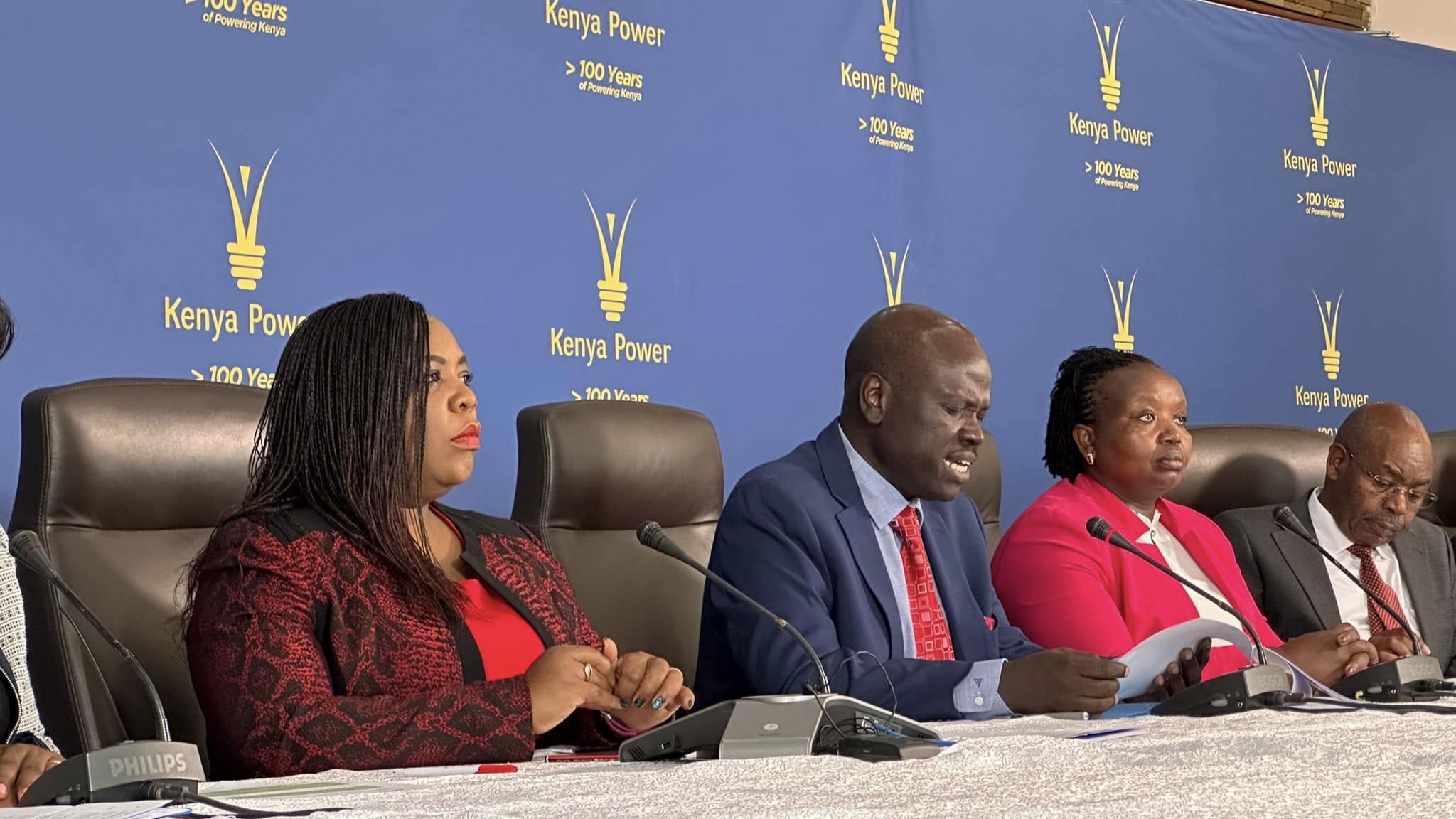

Kenya Power has called for a more measured approach to integrating wind and solar into the national grid, warning that their rapid growth is straining grid stability and pushing up electricity costs.
The utility said the intermittent nature of variable renewable energy (VRE) makes it difficult to hold consistent frequency and voltage, particularly when output from wind and solar swings suddenly.
VRE sources currently supply 34 percent of the energy mix during peak daytime demand of about 1,900MW, and that share climbs to 36 percent during low-load periods of roughly 1,200MW.
That level of penetration leaves the grid exposed whenever wind and solar generation fluctuates, the utility said, forcing it to bring additional plants online to cushion the swings. Kenya Power is urging policymakers to weigh those stabilisation costs when approving new renewable projects.
Managing Director Joseph Siror said global benchmarks point to a VRE limit of around 15 percent of a grid's total firm capacity. He said Kenya's take-or-pay power purchase model has pushed VRE penetration past 20 percent, well above that recommended threshold.
"Given the intermittent nature of wind and solar, we have no option but to dispatch and pay for generators, increasing the overall cost of power," Siror said, noting that the utility must despatch and pay for backup plants whenever renewable output drops.
Siror added that battery storage could help manage intermittency but would not fully resolve the challenge, especially during periods when renewable generation falls sharply. He said stronger investment in geothermal and hydroelectric capacity would give the grid more stable power and a better ability to recover when intermittent sources go offline.
Kenya has the highest VRE dependence in the Eastern Africa Power Pool, well ahead of Egypt at 10.4 percent, Ethiopia at 5.3 percent, Uganda at four percent and Tanzania at 1.2 percent.
Geothermal, hydro, electricity imports and thermal generation together make up about 80 percent of Kenya's current energy mix, providing the baseload the utility says needs strengthening.
Kenya Power has recommended a set of baseload additions, including Olkaria 1 Unit 6 at 61MW, Olkaria 7 at 80MW, Globeleq Menengai at 35MW, Orpower 22 Menengai at 35MW, Ethiopia power imports of 200MW, the Paka-Silali project at 100MW and Nabuyole at 28MW.
Raising the Masinga Dam's water level by 1.5 metres is separately expected to add 83GWh of generation annually.
Other projects in the pipeline include a proposed 300MW liquefied natural gas power plant, the 700MW High Grand Falls project and the 90MW Karura Falls project.
Comments (0)
Leave a Comment
No comments yet. Be the first to share your thoughts!