
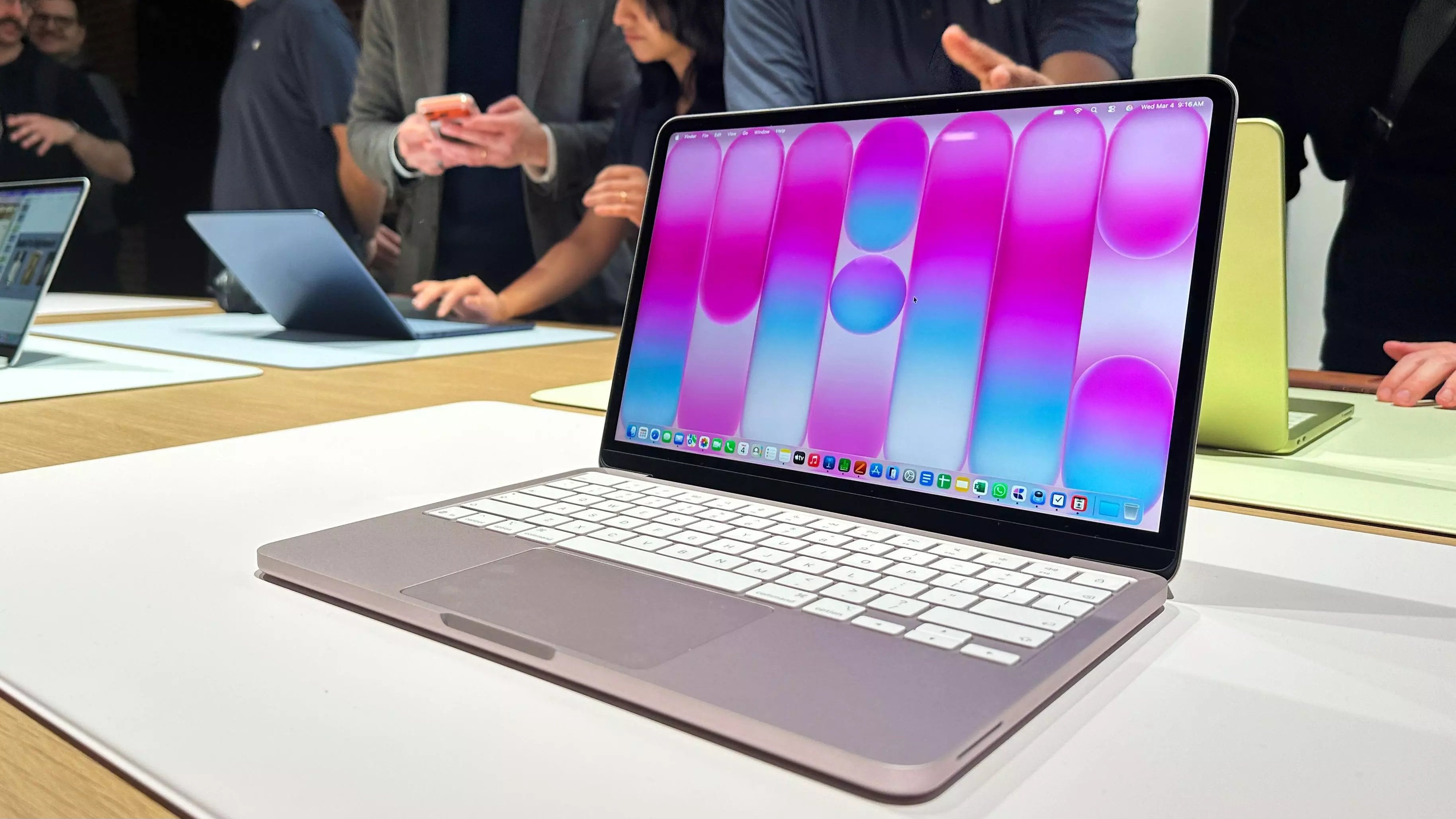

Apple is restructuring its silicon development strategy, prioritizing Artificial Intelligence (AI) capabilities over incremental hardware upgrades. According to Bloomberg News, the company plans to release only the base model of its upcoming M6 processor before jumping directly to the next-generation M7 family.
This decision means that the high-end M6 Pro, M6 Max, and M6 Ultra versions are being skipped entirely. The shift highlights how heavily AI is reshaping internal priorities, moving the focus away from traditional metrics like general Central Processing Unit (CPU) speed, battery efficiency, and thin designs.
Historically, the company has skipped individual top-tier chips, but abandoning all high-end variants of a single generation represents an unprecedented move. Work on the M7 design was finalized just six months after completing the M6, showcasing the intense speed at which Apple is now operating.
The accelerated timeline is driven by a desire to deploy advanced neural-processing upgrades. The base M7 chip is expected to arrive in the first half of 2027, which will be followed by the M7 Pro and M7 Max variants towards the end of that year.
By 2028, Apple plans to debut the M7 Ultra. This premium processor is being designed to support up to 1.5 terabytes of unified memory, which represents double the capacity planned for the older M5 Ultra. This massive memory configuration, however, will depend on global memory supply constraints.
Engineering teams want the M7 Ultra to approach the performance class of dedicated AI accelerators like the Blackwell architecture from Nvidia Corporation. This chip will also serve as the foundation for a new class of secure, hardware-native AI servers planned for deployment around 2029.
Before the M7 server infrastructure goes online, Apple intends to utilize a powerful AI server based on the M5 Ultra, which carries the internal designation J246. These efforts are aimed at establishing an independent computing infrastructure, which reduces reliance on third-party cloud providers.
The current hardware surge traces its roots back to the canceled self-driving vehicle project. Although that automotive effort was canceled in 2024 after more than 10 billion dollars in spending, the machine learning and custom silicon work laid the physical foundation for the modern Neural Engine.
The base M7 chipset is reported to support a unified memory bandwidth of 240 gigabytes per second. This is a 56 percent increase over the 153 gigabytes per second limit on the current M5 chip, allowing for much faster on-device calculations.
Looking further ahead, Apple is already designing the M8 generation. This 2028 lineup is expected to use a cutting-edge 1.4-nanometer manufacturing process, which will be fabricated by Taiwan Semiconductor Manufacturing Company (TSMC) to ensure extreme power savings and performance gains.
Two projects within the M8 generation have already received internal codenames. One processor is currently known as Soko, while another high-end Mac silicon design is referred to as Cardinal.
This aggressive roadmap demonstrates that local AI processing has become the core organizing principle for future Apple hardware, as the tech giant seeks to turn consumer devices into workstation-class powerhouses. The strategy reflects a broader industry race where raw computing architecture must evolve rapidly to support complex local workloads.
Comments (0)
Leave a Comment
No comments yet. Be the first to share your thoughts!