

Federal safety officials have launched an investigation into a collision where a vehicle breached a residential building in Texas, which resulted in a fatality. The incident has drawn attention from structural and transport authorities, who are reviewing the circumstances.
The National Highway Traffic Safety Administration (NHTSA) confirmed the commencement of a special crash investigation on Monday. The move follows a severe incident on Friday evening near Houston, where a vehicle left the roadway and collided with a house.
Local law enforcement officials from the Harris County Sheriff's Office (HCSO) reported that a Tesla Model 3 traveled off the road in Katy. The vehicle failed to negotiate a turn, before it crashed directly into a two-story brick home.
The impact caused extreme structural compromise to the property, which was occupied by several family members at the time. Martha Avila, a 76-year-old resident, was standing in a front room used as a playroom when the car broke through the wall.
Emergency teams transported Avila to a medical facility via a helicopter service, but she succumbed to her injuries shortly after arrival. The driver of the vehicle, identified as 44-year-old Michael Butler, survived the impact and co-operated with local traffic investigators.
Structural assessment of the building revealed deep architectural failure, with surveillance footage showing the car traveling across the front lawn at a high rate of speed. Images from the scene showed the vehicle encased inside the front room amid split wooden beams.
Mounds of crumbling plaster, broken furniture, and shattered brickwork surrounded the vehicle after it came to a rest. The extensive damage rendered the residential structure entirely uninhabitable, forcing the surviving family members into temporary housing.
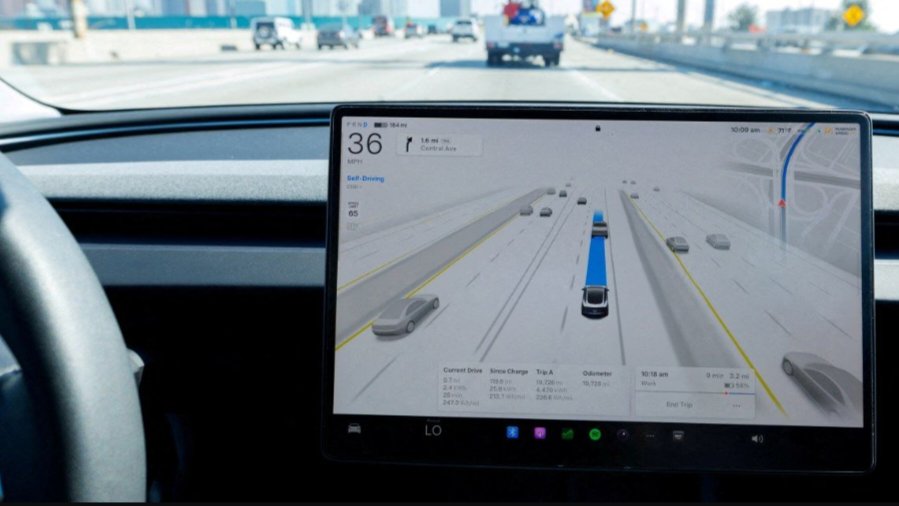
According to initial statements given to deputies, the operator claimed that an Advanced Driver Assistance Systems (ADAS) feature was active during the transit. The driver stated that he was utilizing automated features, which are designed to control steering and acceleration.
Spokespersons for the automotive manufacturer contested the claim on social media, asserting that data logs indicate manual inputs overrode the computer software. They claimed the accelerator pedal was pressed fully, which brought the vehicle to 73 miles per hour.
Federal investigators are working to retrieve the onboard logs and the event data recorder from the wreckage to verify these conflicting accounts. The examination will determine if the Full Self-Driving (FSD) package or standard Autopilot systems were engaged before impact.
This investigation is part of a broader federal look into automated vehicle systems and their interactions with stationary environments. The regulatory agency previously upgraded its review of similar software packages to an Engineering Analysis (EA), affecting over three million vehicles.
Over the past decade, federal regulators have initiated dozens of special crash investigations involving automated systems, several of which involved fatal outcomes. This latest incident highlights ongoing debates surrounding residential safety, zoning protections, and the regulation of autonomous vehicular technology.
Sgt. Alex Turman of the local vehicular crimes division stated that authorities are evaluating what caused the operator to lose control of the speed. The driver showed no signs of intoxication, and no criminal charges have been filed as the inquiry continues.
Civil engineers note that modern residential walls are not designed to withstand high-velocity vehicle impacts, which often leads to immediate catastrophic collapse. The force of the impact breached the outer brick facade and compromised the interior structural load-bearing elements.
The federal safety probe comes at a critical time for the automotive industry, which faces increased scrutiny over the naming and marketing of self-driving features. Critics argue that these promotional terms can cause complacency, leading operators to misjudge the capabilities of the system.
The agency previously mandated a major recall involving more than two million vehicles to implement additional software safeguards ensuring operator attentiveness. This latest Texas crash will provide critical data for regulators deciding whether to enforce further hardware or software modifications.
Comments (0)
Leave a Comment
No comments yet. Be the first to share your thoughts!