
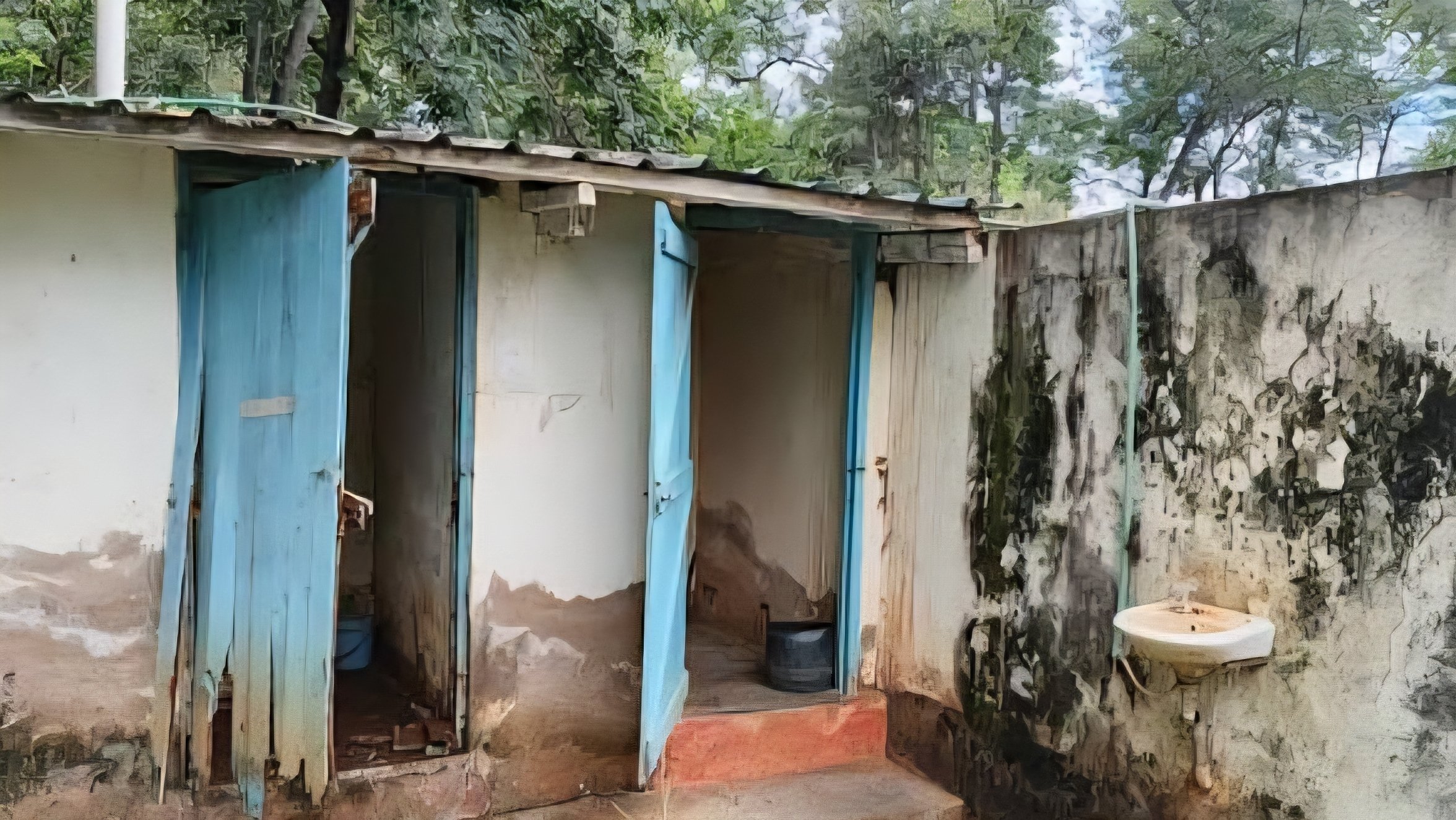

The physical state of Ishiara Level 4 Hospital in Embu County has reached a breaking point. Recent site observations reveal a facility struggling with deep structural neglect, where the basic promise of a sterile medical environment has been replaced by visible decay.
Large cracks now run through the walls of various wards. In several sections of the hospital, the roofing has deteriorated, leading to leaks that compromise the interior during rainy periods. The paintwork is peeling away, exposing damp masonry that has not seen maintenance in years.
Sanitation at the facility has become a primary concern for residents of Mbeere North. The outdoor latrine blocks, intended for public use, are in a state of advanced disrepair. Wooden doors are rotting off their hinges, and the concrete structures show signs of severe weather damage and lack of hygiene.
Plumbing failures are evident across the grounds. A broken washbasin, detached from its fittings and lying shattered on the floor, serves as a stark visual of the current maintenance budget. Such gaps in basic infrastructure make it difficult for staff to maintain standard infection control protocols.
Staff members, speaking on condition of anonymity, describe a workplace that has become increasingly hazardous. Beyond the crumbling walls, the hospital lacks essential medical equipment required for a level 4 status. This forces many patients to seek transfers to Embu Level 5 Hospital, located over 60 kilometers away.
The crisis has sparked a wave of rage among the local community. Residents argue that the hospital, which serves a vast catchment area in the semi-arid region, has been abandoned by the county leadership. Many feel that the right to quality healthcare is being denied through systemic negligence.
The Embu County Government has faced mounting pressure to explain how the facility reached this state. Budgetary allocations for health infrastructure have been a point of contention in recent county assembly sessions. Critics point to a disconnect between official reports and the reality on the ground.
While some efforts have been made to address staffing, the physical environment remains the biggest hurdle. A hospital cannot function effectively if the buildings themselves pose a risk to the people inside. The lack of reliable running water in certain blocks further complicates daily operations.
Local leaders have called for an emergency audit of the facility. They want a clear timeline for renovations and a commitment to restoring the hospital to its former capacity. For now, the people of Ishiara must rely on a facility that appears to be falling apart at the seams.
Addressing these structural failures will require more than just a coat of paint. It demands a total overhaul of the drainage, roofing, and wall stability across the entire compound. Without immediate intervention, Ishiara Hospital risks becoming a monument to failed public works.
Comments (0)
Leave a Comment
No comments yet. Be the first to share your thoughts!