
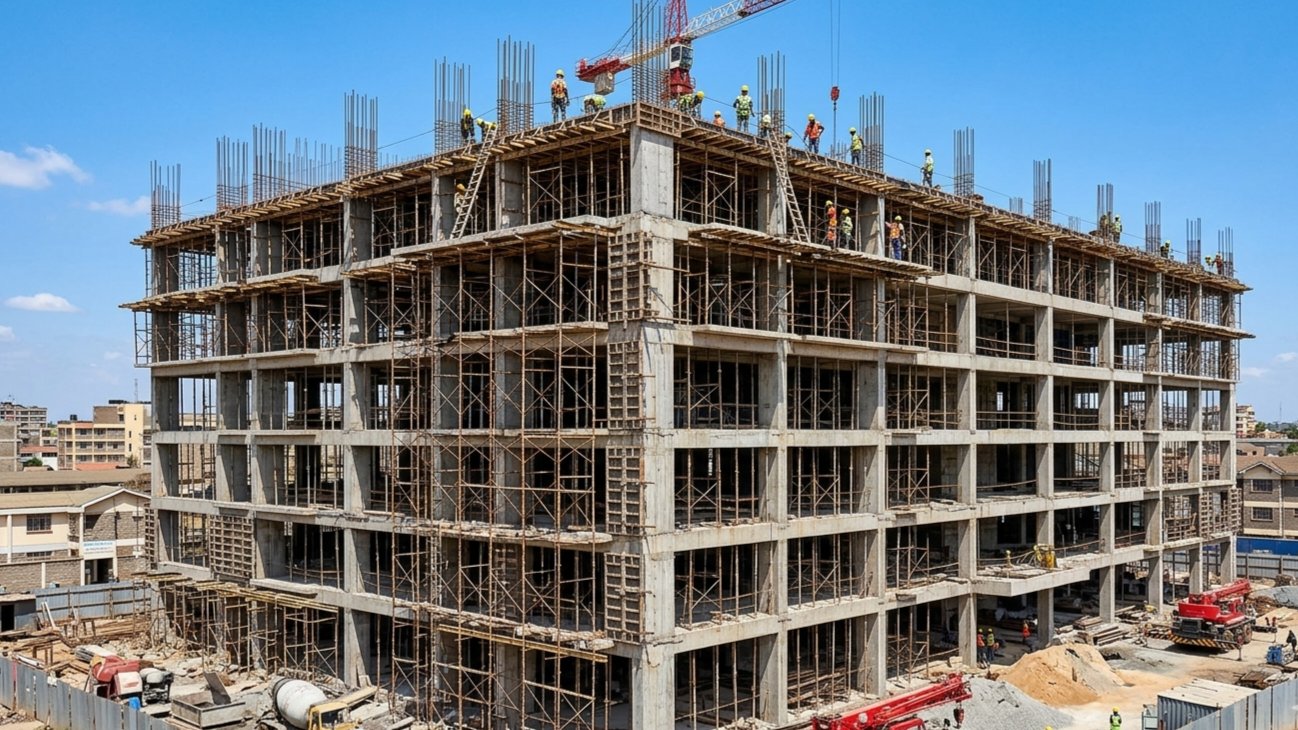

A version of this article appeared on LinkedIn.
Structural safety in the built environment rests on a singular principle: the balance of equilibrium, strength, and stability. While modern engineering provides the mathematical framework to ensure these conditions are met, a dangerous disconnect frequently emerges during the transition from blueprints to the physical site.
Engineers emphasize that every structure must maintain equilibrium, where all forces and moments are balanced. It must possess adequate strength to resist applied loads safely and remain stable to prevent buckling or overturning. In the design phase, rigorous calculations are applied, involving complex load combinations that account for dead, live, and wind loads.
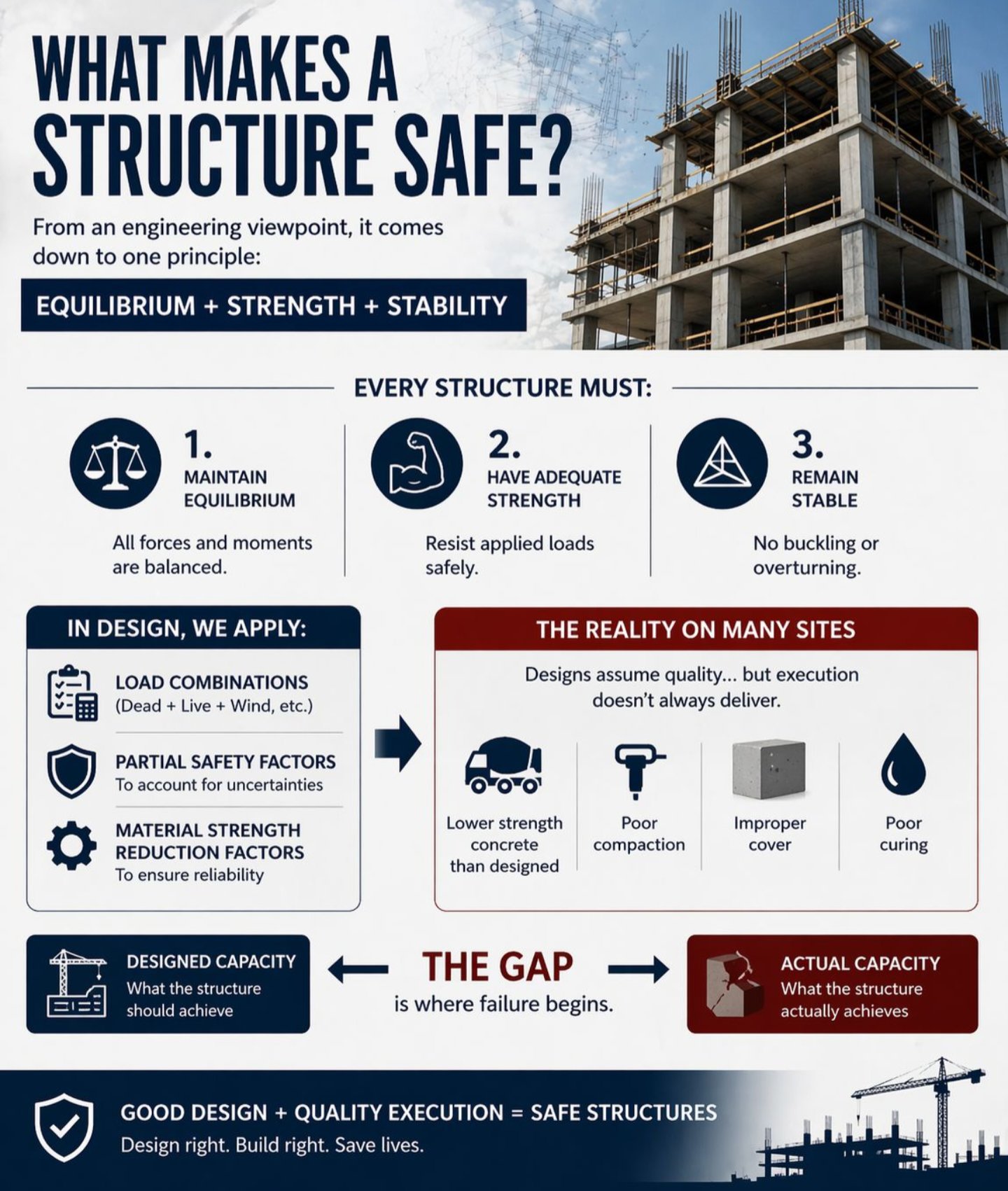
To mitigate uncertainty, designers utilize partial safety factors and material strength reduction factors. These safeguards are intended to create a reliable buffer between the calculated load and the point of failure. However, the integrity of this system is only as strong as the execution on the ground.
The reality on many construction sites is that execution often fails to deliver what the design assumes. While a plan may specify a concrete strength of 25 MPa, the actual material poured may be significantly weaker due to poor quality control. This creates a measurable gap between the designed capacity and the actual capacity of the building.
Common site failures include poor compaction of concrete, which introduces voids and weakens the structural matrix. Improper placement of reinforcement bars and inadequate cover can lead to premature corrosion and loss of load-bearing capability. Furthermore, poor curing practices often prevent concrete from reaching its intended chemical strength.
When the actual capacity of a structure falls below the designed capacity, the safety margins provided by engineers are eroded. This gap is where failure begins. For a structure to be truly safe, the industry must pair good design with quality execution.
The civil engineering community continues to push for stricter oversight to ensure that site reality matches design expectations. Without closing the gap between what a structure should achieve and what it actually achieves, the risk of structural instability remains a persistent threat to public safety. Building right is not just a matter of following a drawing, but of ensuring that every material and method used on site meets the engineer's original specification.
Comments (0)
Leave a Comment
No comments yet. Be the first to share your thoughts!