
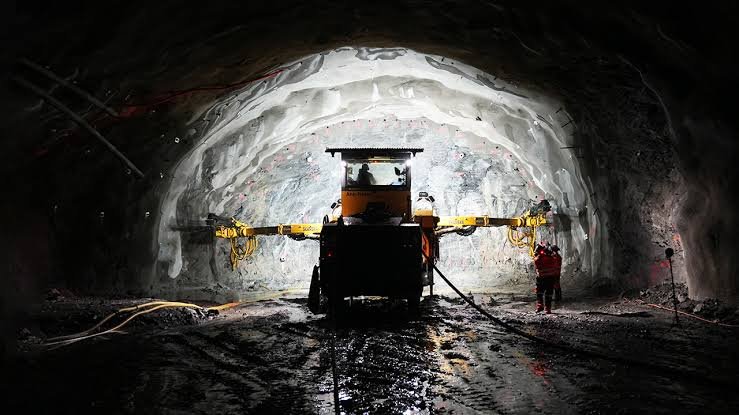

Norway is moving forward with the construction of the Rogfast tunnel, an infrastructure project designed to establish the longest and deepest subsea road tunnel in the world. The project under the management of Statens Vegvesen (SV), the Norwegian Public Roads Administration, crosses the Boknafjord along the western coast of the country. This regional link will serve as a permanent fixture on the E39 highway, which connects Trondheim in the north to Kristiansand in the south.
The existing 1,100-kilometer route takes approximately 21 hours to navigate, because drivers must board nine different ferries to cross various waterways. The western region hosts critical economic pillars, including fishing, oil, and natural gas, which collectively contribute more than 20 percent of the gross domestic product of Norway. Heavy freight traffic relies heavily on this single-lane highway, which experiences frequent closures due to accidents.
The Rogfast fixed link consists of a twin-tunnel system stretching 26.7 kilometers. At its lowest point, the roadway will sit 388 meters below sea level, routing traffic through rock formations instead of relying on marine vessels. Work is currently progressing across three main construction zones. The southern leg extends outward from Stavanger, while the northern segment burrows toward the deepest underwater point.
The third and most complex section is located beneath the island of Kvitsoy, which has a local population of 500 residents. Engineers are building a multilevel underground interchange 250 meters beneath the island surface. This subsea junction features two roundabouts, a ring road, a bridge, and a network of slip roads that connect to a 4.1-kilometer link tunnel leading up to the island.
Unpredictable subsurface geology represents the primary challenge for the engineering teams. The tunnel route cuts through shifting rock bands, including soft phyllite and heavily fractured gneiss. These geological fault zones contain highly pressurized water. Crews recently encountered a significant inflow that reached between 5,000 and 6,000 liters of water per minute, exerting a pressure of 33 bars. Emergency pumping gear is permanently stationed on-site to handle these high-pressure leaks.
Due to the fractured nature of the rock and the risk of sudden water inundation, project engineers opted against using a Tunnel Boring Machine (TBM). A large TBM would face significant operational delays if trapped by shifting ground or flooding. Instead, contractors are deploying the specialized Norwegian Tunneling Method, which relies on a flexible cycle of drill and blast excavation.
The front-line work utilizes specialized robotic drill jumbos equipped with four mechanical arms. Operators use laser-guided total stations to align a precise drilling grid on the rock face. Before blasting occurs, crews form a protective waterproof shield around the excavation zone using automated grouting equipment. This machine injects a precise computer-controlled blend of micro-cement, water, superplasticizer, and silica fumes into the rock under 100 bars of pressure.
Once the grout sets, engineers drill five-meter holes, pack them with explosives, and execute the blast. After clearing the resulting rubble, the newly excavated area is secured with a waterproof membrane, sprayed with shotcrete, and reinforced using steel bolts. The structure is then finished with concrete panels, which require about 60,000 individually designed segments to line the parallel tubes.
The long subterranean route requires continuous air circulation, which is managed by 245 jet fans and shoreline ventilation towers. Beneath Kvitsoy, crews completed two massive ventilation shafts that descend 200 meters into the interchange. These vertical lifelines were created by drilling a pilot hole downward, pulling a 2.5-meter drill bit back up, and then blasting a 9.5-meter-wide shaft. Rock extracted from the excavation is being repurposed to reclaim 1.2 kilometers of new land from the sea for the local community.
Comments (0)
Leave a Comment
No comments yet. Be the first to share your thoughts!