
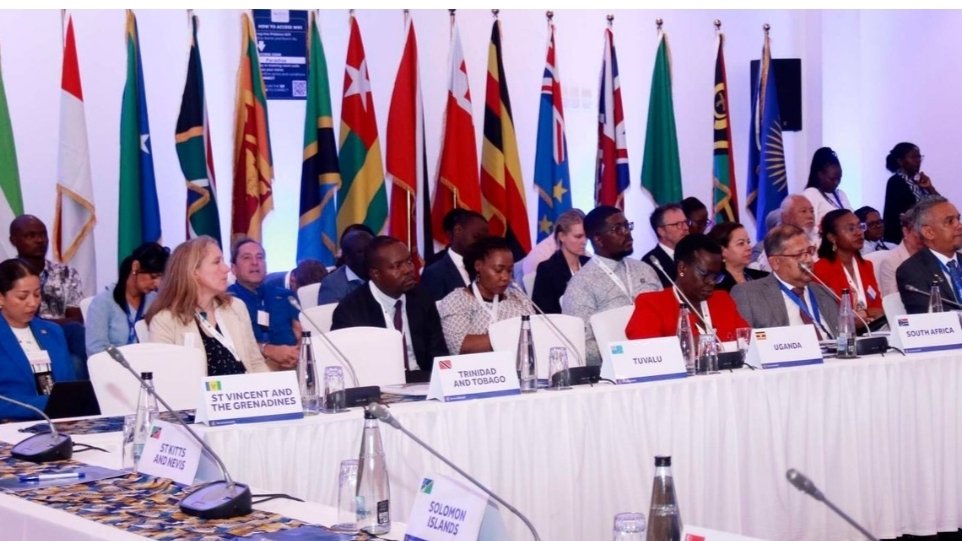

The 11th Our Ocean Conference opened in Mombasa on Tuesday with a strong call for Commonwealth nations to lead global ocean conservation. Former US Secretary of State John Kerry addressed a ministers roundtable on the sidelines of the three-day event running until Thursday.
Kerry, founder of the Our Ocean Conference series, described the Mombasa hosting as historic. It marks the first time a major global ocean-focused gathering is held on African soil. He warned that the world is running out of time to protect marine ecosystems and tackle climate change.
Oceans play a central role in sustaining life and regulating the global climate. Current conservation efforts fall short. Kerry pushed for faster progress on the 30 by 30 initiative that aims to protect 30 per cent of the world's oceans by 2030 through effective measures and marine protected areas.
" The progress on 30 by 30 is real, but it's not enough. We're not doing it fast enough," he said. More than 10 per cent of oceans now have some protection. Only three per cent are fully or highly protected.
He urged countries to ratify and implement the High Seas Treaty. The agreement entered into force earlier this year and provides the first legal framework for protected areas in international waters. "My ask now is very simple, ratify it if you haven't and move immediately to implementation," Kerry said.
Kerry praised African nations for championing transboundary marine initiatives. He cited commitments by Gulf of Guinea countries to sustainably manage all their waters by 2030. "We owe it to future generations to fulfill the promises that have been made. This is the moment to make a difference," he added.
The Commonwealth Ocean Ministers Roundtable discussed priorities including the Apia Commonwealth Ocean Declaration and the Biodiversity Beyond National Jurisdiction Agreement. Mining, Blue Economy and Maritime Affairs Cabinet Secretary Ali Hassan Joho emphasised turning commitments into action.
Joho noted that previous editions of the conference since 2014 have produced over 2,900 commitments worth more than $160 billion. "What we want to achieve here is to close the gap and move into tangible action where conversations are turned into concrete and implementable plans so that communities and Beach Management Units can feel the impact," he said.
Discussions occur against rising threats of pollution, climate change, biodiversity loss and illegal fishing. Joho highlighted plans for a global blacklisting system for vessels involved in illegal, unreported and unregulated fishing. Such vessels would face restrictions across borders.
The conference brings together governments, NGOs, private sector and academia. It offers Kenya a platform to showcase blue economy leadership while learning global best practices. Coastal communities dependent on marine resources stand to benefit from concrete outcomes.
Comments (0)
Leave a Comment
No comments yet. Be the first to share your thoughts!