
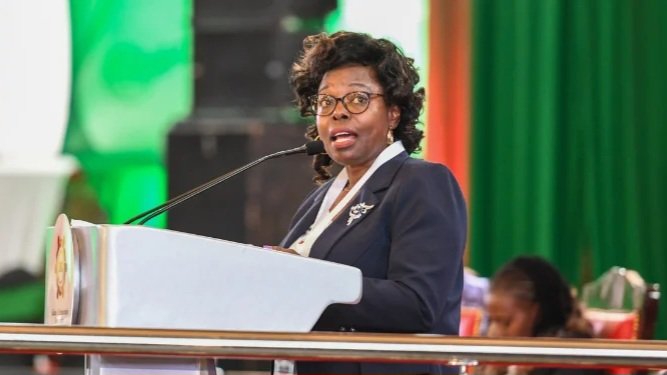

The Controller of Budget, Margaret Nyakang’o, has formally raised concerns regarding the proposed Sovereign Wealth Fund Bill, 2026. She warns that the current investment framework lacks the necessary safeguards to protect public resources.
In a detailed submission to the National Assembly, Nyakang’o pointed out several loopholes that could be exploited if the Bill is passed in its current form. She highlighted that the lack of clear governance structures creates a risk of political interference in fund management.
The Sovereign Wealth Fund is intended to manage Kenya's mineral and oil wealth for future generations. However, the Controller of Budget argues that the bill does not provide enough clarity on how these funds will be shielded from day-to-day fiscal pressures.
Nyakang’o expressed particular worry over the autonomy of the board tasked with overseeing the fund. She noted that without absolute independence, the fund could become a secondary pocket for the government to bypass standard budgetary approvals.
The National Treasury has been pushing for the fund as a way to stabilize the economy and fund long-term infrastructure projects. President Ruto has previously emphasized the need for a national savings culture through such institutional frameworks.
Despite these objectives, Nyakang’o insists that the legislative draft requires significant tightening. She pointed to specific clauses that allow for withdrawals under vague circumstances, which she believes could lead to the depletion of the fund during election cycles.
The office of the Controller of Budget is constitutionally mandated to oversee the implementation of the budgets of both national and county governments. Nyakang’o has often been a vocal critic of high public debt and fiscal indiscipline.
In her report, she suggested that the Bill must include stringent reporting requirements to Parliament. This would ensure that any investment decisions made by the fund managers are transparent and subject to public scrutiny.
She also raised issues with the proposed investment strategy mentioned in the document. Nyakang’o cautioned that investing in volatile international markets without a robust risk management framework could lead to substantial losses for the taxpayer.
The bill arrives at a time when Kenya is grappling with high interest rates and a heavy debt-repayment schedule. Analysts suggest that while the fund is a noble idea, the timing and legal architecture are critical to its success.
Members of Parliament are now expected to review these concerns as the Bill moves to the second reading. The committee on finance and national planning will likely invite more stakeholders to weigh in on the proposed law.
If the recommendations from the Controller of Budget are ignored, Nyakang’o warned that the fund might fail to achieve its primary purpose of wealth preservation. She urged lawmakers to prioritize accountability over the speed of implementation.
The debate over the Sovereign Wealth Fund comes as the government seeks new ways to finance capital-intensive infrastructure. Many of these projects currently rely on external borrowing, which has reached near-sustainable limits according to recent Treasury reports.
Nyakang’o concluded her submission by stressing that public confidence in the fund will depend entirely on its transparency. She called for a total overhaul of the sections governing the withdrawal and reinvestment of dividends.
Comments (0)
Leave a Comment
No comments yet. Be the first to share your thoughts!