
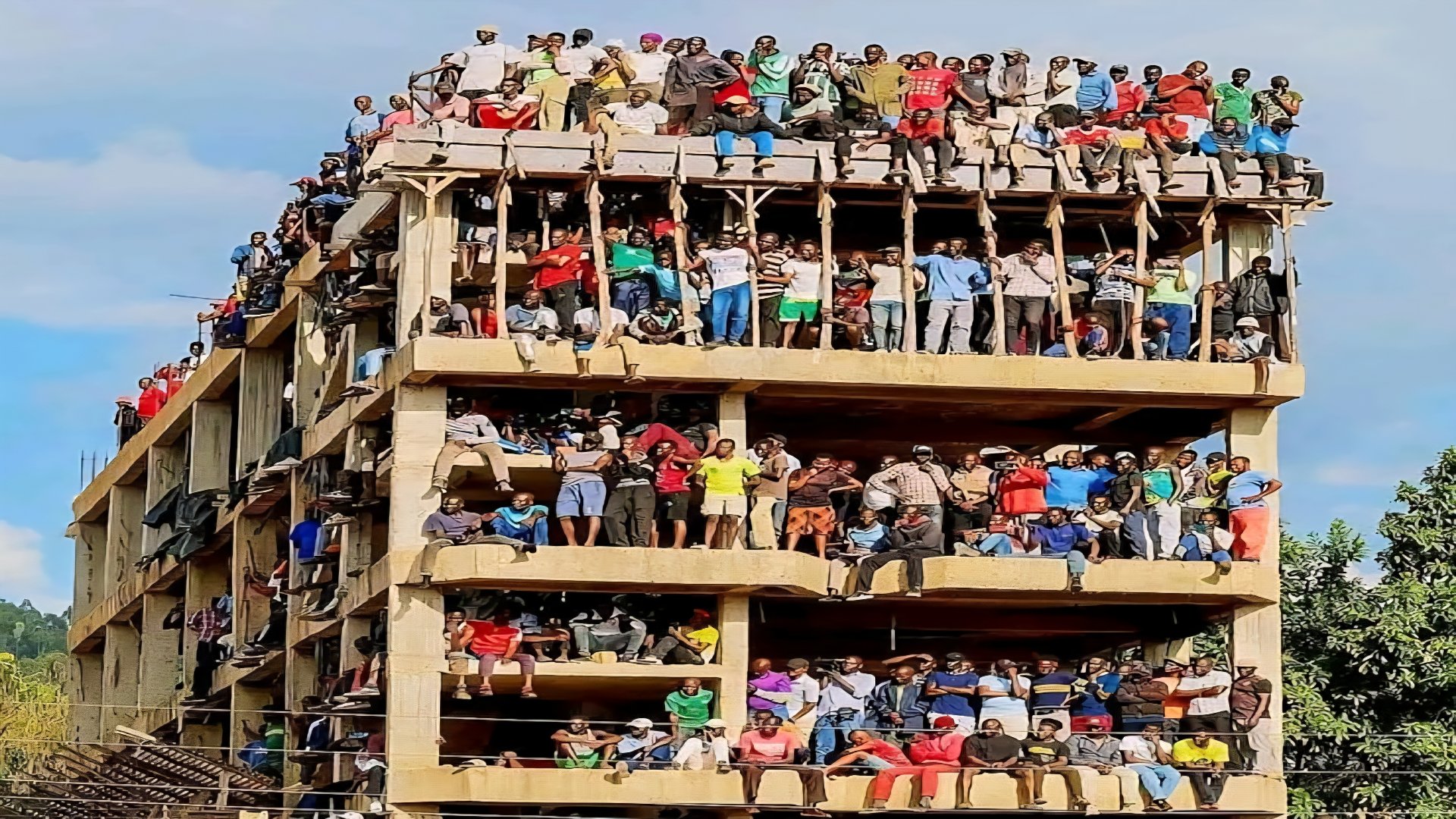

The image, which gained significant traction on April 22, 2026, depicts a four-storey concrete structure under construction, identified by a sign as the Milimani Annex. Every visible level of the open-frame building is occupied by dense crowds, with dozens of people sitting along the edges of the floor slabs and others standing deep within the interior bays.
Commentary accompanying the post by Yator Boss noted that engineers deserve respect, suggesting that the building’s ability to withstand such an unplanned and concentrated load is a testament to its design. While the post framed the situation as a win for engineering, it has simultaneously raised alarms among safety experts regarding the risks of using incomplete sites for public viewing.
In typical construction projects, floor slabs are designed to handle specific live loads, which represent the weight of people, furniture, and equipment. For office or residential buildings, these designs usually account for a distributed weight. However, the density of the crowd seen at the Milimani Annex appears to exceed standard occupancy levels for a building still in its skeletal phase.
Unfinished structures lack the secondary support systems, such as reinforced railings, finished flooring, and interior walls, which can sometimes contribute to the overall rigidity and safety of the environment. The sight of dozens of individuals dangling their legs over the edge of the top-floor slab, which appears to be a fresh pour or at least lacks a perimeter barrier, presents a clear falling hazard regardless of the structural stability of the concrete.
The location, Milimani, is a hub for legal and administrative activities in Nairobi, often drawing large numbers of people for high-profile proceedings. It is common for onlookers to seek elevated vantage points during major public events or court cases, but the use of a construction site as a makeshift grandstand is a violation of standard occupational health and safety protocols.
Engineers often warn that while a structure might hold under static weight, the dynamic movement of a large crowd can create vibrations that stress the connections between beams and columns. If a building has not reached its full cured strength or if the temporary shoring has been removed prematurely, the risk of a progressive collapse increases significantly.
The viral nature of the photo has brought renewed focus to the enforcement of site security in urban construction zones. Ensuring that unauthorized persons cannot access higher floors of a building under construction is a primary responsibility of the site contractor.
As the image continues to circulate, it serves as a stark reminder of the thin line between structural resilience and a potential mass casualty event. While the Milimani Annex held firm on this occasion, the incident underscores the need for stricter site management to prevent the public from turning active construction zones into high-risk viewing platforms.
Comments (0)
Leave a Comment
No comments yet. Be the first to share your thoughts!