
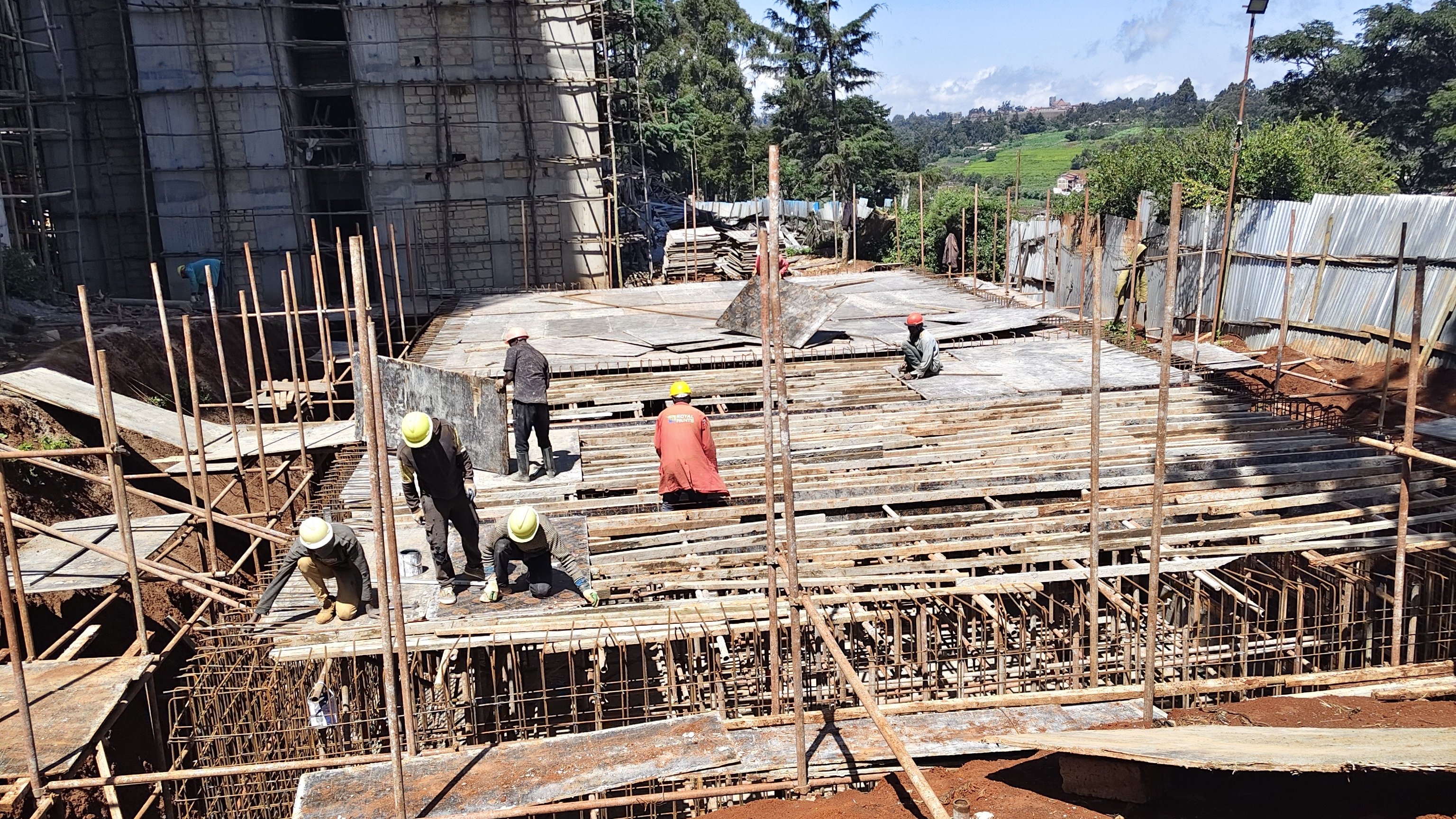

Roads have always been Kenya's biggest development budget line. That changed this year.
A Quarterly Economic and Budget Review Report by the National Treasury shows the State Department for Housing and Urban Development spent Sh90.6 billion in the nine months to March 2026, surpassing the State Department for Roads at Sh88.9 billion. Housing accounted for 19.2 percent of total development expenditure, roads 18.9 percent.
The housing figure represents a more than fourfold increase from Sh21.1 billion in the same period a year earlier. Road spending also grew, rising 11.4 percent from Sh79.8 billion.
The shift did not start this quarter. Housing first overtook roads in the first quarter of the current financial year. The third quarter has now extended and confirmed that trend.
The government is targeting one million affordable housing units by the end of 2027. Currently, 214,057 units are under construction across the country. A further 605 units in Bondeni, Nakuru, 1,080 in Mukuru, Nairobi, and 110 in Homa Bay have already been completed.
Not everyone is convinced the reallocation is wise. Ken Gichinga, chief economist at Mentoria Economics, argues that roads deliver a bigger economic multiplier than housing. His position is that roads reduce transport costs, open market access and lift productivity across agriculture, trade and tourism, benefits that spread wider than housing, which concentrates gains among homeowners and the construction value chain.
A University of Nairobi study reached a similar conclusion, finding that road construction had a statistically significant influence on economic development while government housing expenditure did not.
The government's counterargument is visible in the numbers. The Affordable Housing Levy is generating direct revenue from formal sector workers. Public-private partnerships and securitisation are being used to reduce borrowing pressure. The aim is to deliver at scale without repeating the debt cycle of the previous administration.
Whether that trade-off pays off will become clear well before 2027.
Comments (0)
Leave a Comment
No comments yet. Be the first to share your thoughts!