
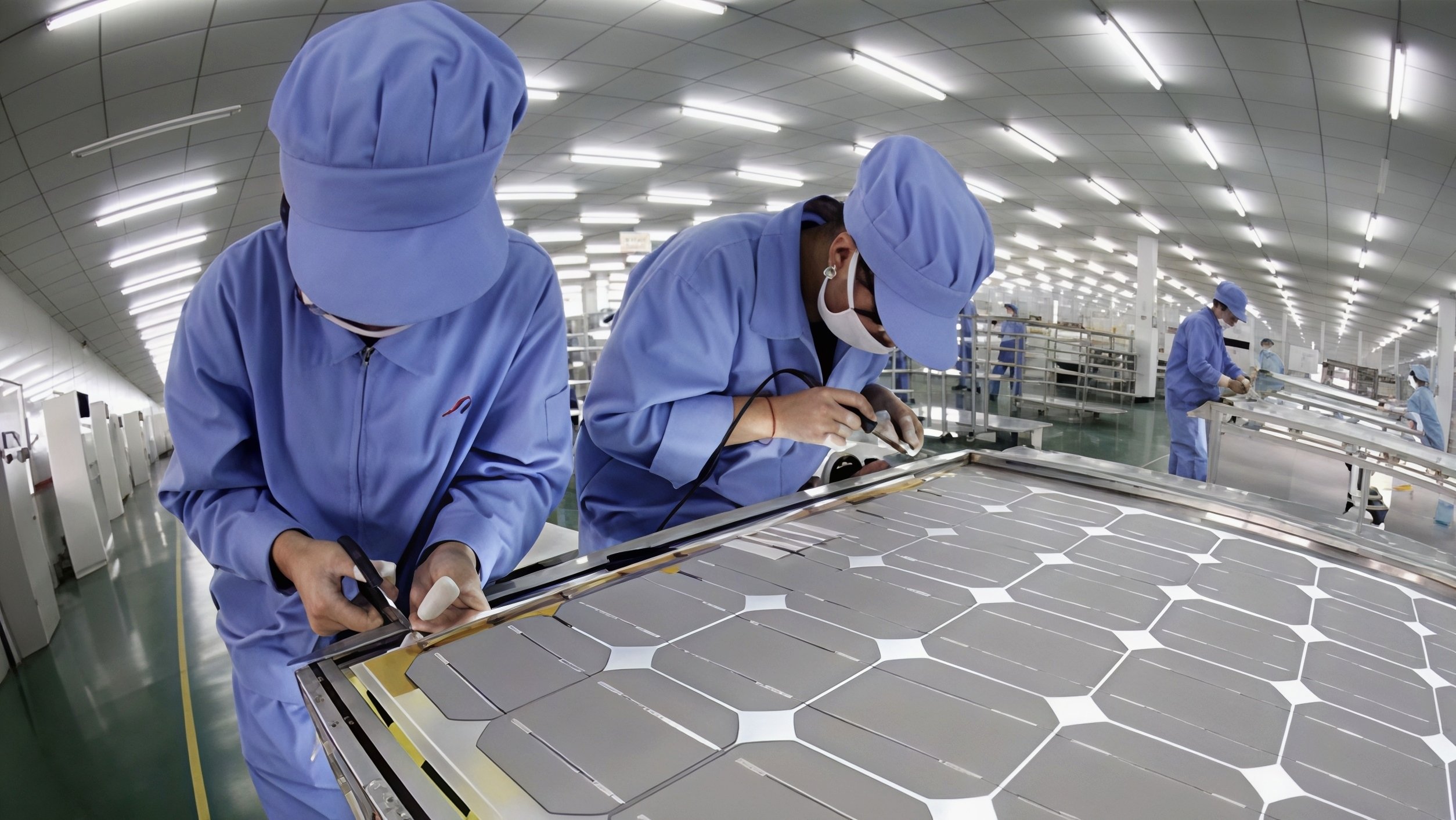

India's Ministry of New and Renewable Energy (MNRE) has expanded its solar manufacturing rules to cover wafers and ingots, components that the country currently imports almost entirely, mostly from China.
Under the policy, new project bids submitted from a specified cut-off date will need to source these materials from domestic manufacturers listed under an expanded Approved List of Models and Manufacturers (ALMM). The mandate, known as ALMM List-III for wafers, takes mandatory effect from June 1, 2028.
The ALMM framework already covers solar modules under List-I and solar cells under List-II. It was introduced to shield domestic manufacturers from the dumping of cheap imported solar products, primarily from China. Adding wafers and ingots extends that protection further upstream in the supply chain.
The rollout carries specific conditions. MNRE will only publish the wafer manufacturer list once at least three independent wafer production facilities are operational in India with a combined annual capacity of at least 15 gigawatts. Companies seeking inclusion on that list must also demonstrate equivalent ingot manufacturing capacity, a requirement designed to ensure vertical integration rather than partial assembly.
Projects bid out on or before the cut-off date, set at seven days after the first wafer list is published, are exempt from the wafer requirement regardless of when they are eventually commissioned. Bids submitted after that window must specify the use of ALMM List-III-compliant wafers in their tender documents.
Vinay Rustagi, chief business officer at Premier Energies, said the move addresses a structural weakness in the sector. "Currently 100% of our demand for solar wafers is met from imports, making the sector highly prone to supply shocks, exchange rate volatility and trade disruption," he said. Rustagi estimated the policy could attract around 500 billion rupees, roughly $5.4 billion, in investment over the next three years. Premier Energies has already announced plans to build 10 gigawatts of ingot-wafer capacity at a cost of 59 billion rupees.
Prashant Mathur, chief executive of Saatvik Green Energy, described the expansion as rewarding companies that invested early in integrated, end-to-end manufacturing rather than relying on imported upstream components.
The wafer mandate builds on an earlier phase of the same localisation push. India had already required the use of domestically manufactured solar cells from June 2026, narrowing the gap between assembly and true end-to-end production within its borders.
For a country pursuing aggressive renewable energy capacity targets, the policy reflects a broader calculation that energy security and manufacturing jobs now carry as much weight as the pace of solar deployment itself.
Comments (0)
Leave a Comment
No comments yet. Be the first to share your thoughts!