
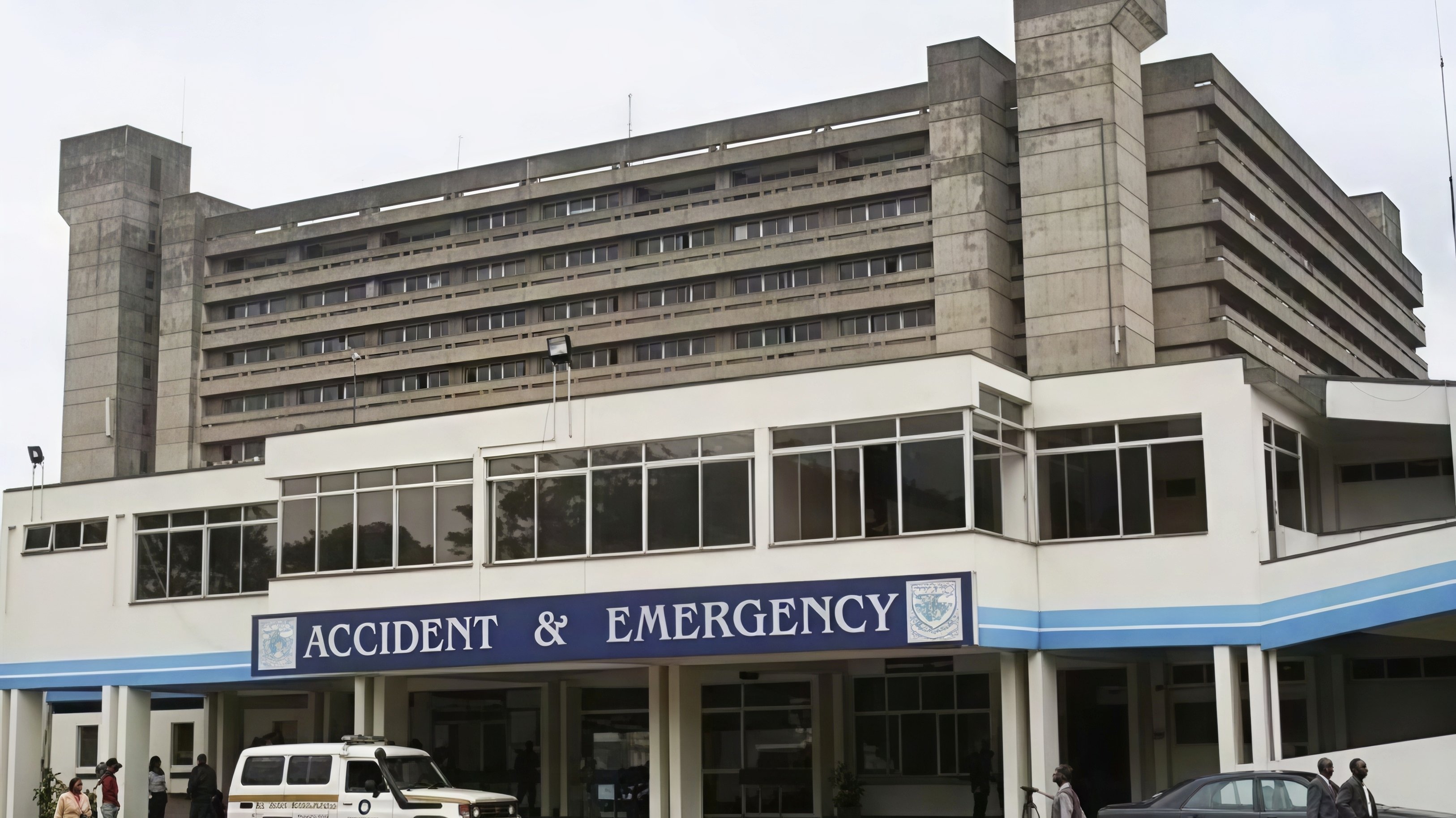

Kenyatta National Hospital has defended its decision to remove several aged African acacia trees from its compound, saying the move was necessary to protect patients, staff, visitors and the marabou storks that had nested in the trees. The removal drew public concern over its impact on the birds' habitat.
KNH Chief Executive Officer Richard Lesiyampe said the affected trees, more than 30 years old, had become decayed and posed a significant safety risk. He said the hospital acted following a technical assessment and ahead of the rainy season to prevent accidents.
The hospital said falling branches and trees had previously damaged steam pipes, landed on parked vehicles, created safety hazards and even caused the deaths of some birds nesting in the trees. Officials described the removal as a preventive measure aimed at protecting people, hospital infrastructure and the storks themselves from further harm.
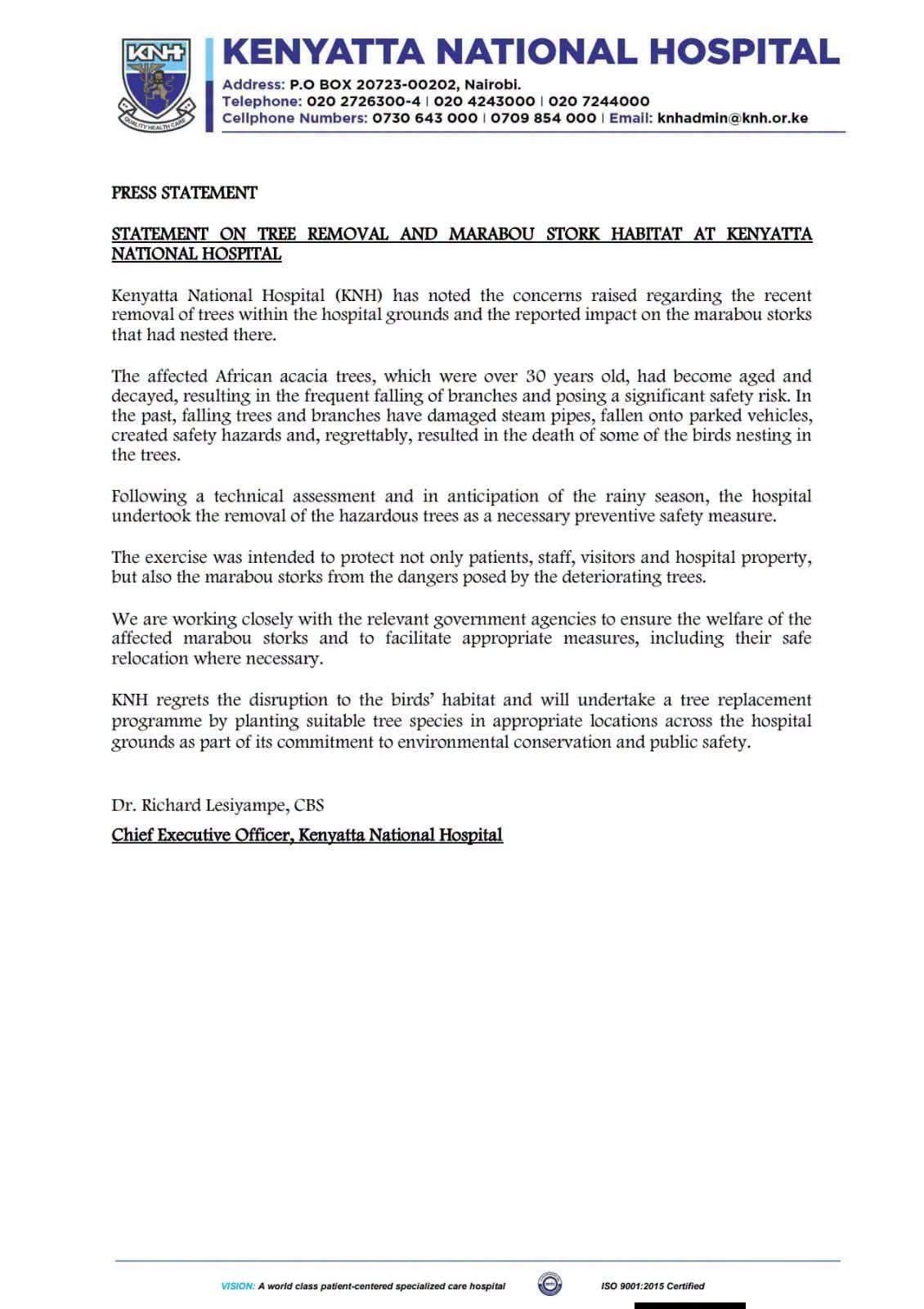
Letter by KNH CEO | KNH
Lesiyampe said the exercise followed a technical assessment and was carried out in anticipation of the rainy season as a necessary preventive safety measure, intended to safeguard patients, staff, visitors and hospital property alongside the marabou storks facing risk from the deteriorating trees.
KNH said it is working closely with relevant government agencies to ensure the welfare of the affected birds and to facilitate appropriate interventions, including safe relocation where necessary. The hospital expressed regret over the disruption to the birds' habitat and pledged to restore the environment through a tree replacement programme, planting suitable species in appropriate locations across its grounds.
Marabou storks are a common sight in Nairobi, often nesting in tall trees near hospitals, markets and dumpsites across the city, where they scavenge for food. The birds are protected under Kenyan wildlife law, and any intervention affecting their habitat typically requires coordination with the Kenya Wildlife Service or the National Museums of Kenya.
Kenyatta National Hospital is Kenya's largest national referral and teaching hospital, established as a state corporation in 1987. It provides specialised medical services, including open-heart surgery, neurosurgery, oncology and kidney transplantation, to patients from Kenya and the wider East and Central African region, while also serving as a teaching and research facility for the University of Nairobi.
Comments (0)
Leave a Comment
No comments yet. Be the first to share your thoughts!