
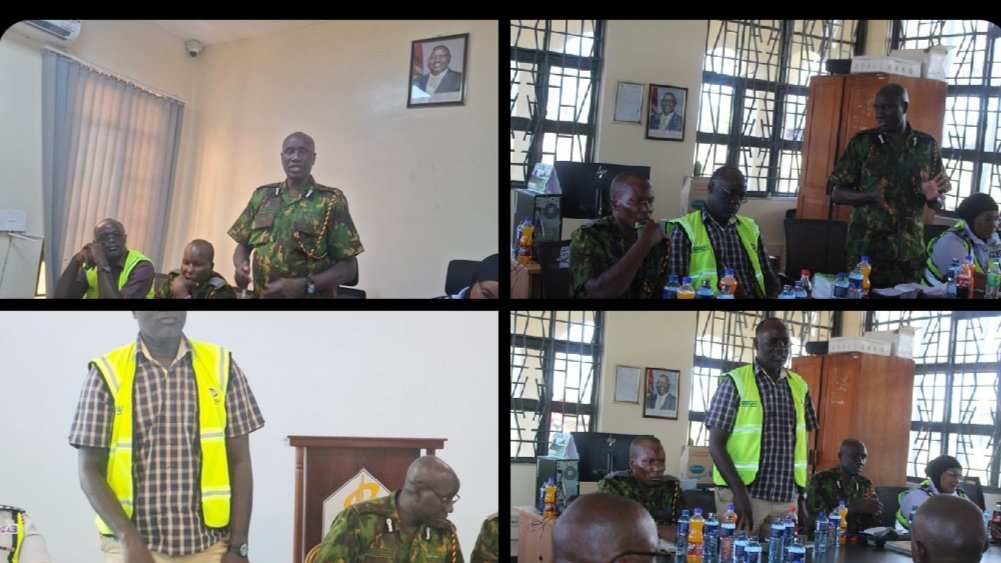

Traffic Commandant Commissioner of Police Benjamin Mwanthi has concluded a familiarisation visit to the Mariakani Weighbridge Cluster. The tour covered the Mariakani, Mtwapa and Dongo Kundu weighbridges and aimed to give first-hand insight into axle load control operations along the Coast corridor.
The Commandant was accompanied by officials from the Kenya National Highways Authority led by Deputy Director for Axle Load Control Eng. Jared Makori, officers from the National Police Service and representatives of Ebenezer Commercial Works Limited. The visit underscored the importance of inter-agency collaboration in strengthening enforcement and protecting Kenya’s road infrastructure.
Addressing officers during the tour, Commissioner Mwanthi emphasised professionalism, discipline and integrity in axle load control. He called for strict compliance with established procedures. KeNHA reaffirmed its commitment to effective and accountable enforcement, noting that sustained partnership with security agencies and private operators remains key to preserving the national road network.
Axle load control is intended to prevent premature damage to pavements caused by overloaded trucks. Excess weight accelerates wear on the carriageway, increases maintenance costs and raises the risk of accidents. Weighbridges along major corridors such as the Mombasa–Nairobi highway form a critical line of defence for public investment in roads.
The Mariakani cluster serves a high volume of freight traffic moving to and from the Port of Mombasa. Consistent application of load limits protects both the infrastructure and compliant transporters who operate within legal weights. Collaboration between KeNHA, the National Police Service and contracted operators helps ensure that enforcement is both rigorous and transparent.
Familiarisation visits by senior officers improve understanding of operational challenges on the ground. They also signal institutional priority for road asset protection. KeNHA continues to work with partners to maintain the integrity of the trunk network and enhance the safety and efficiency of road transport.
Public reporting of overloaded vehicles and related offences supports these efforts. Sustained enforcement, professional conduct and inter-agency coordination remain essential if the benefits of recent road investments are to be preserved over the long term.
Comments (0)
Leave a Comment
No comments yet. Be the first to share your thoughts!