
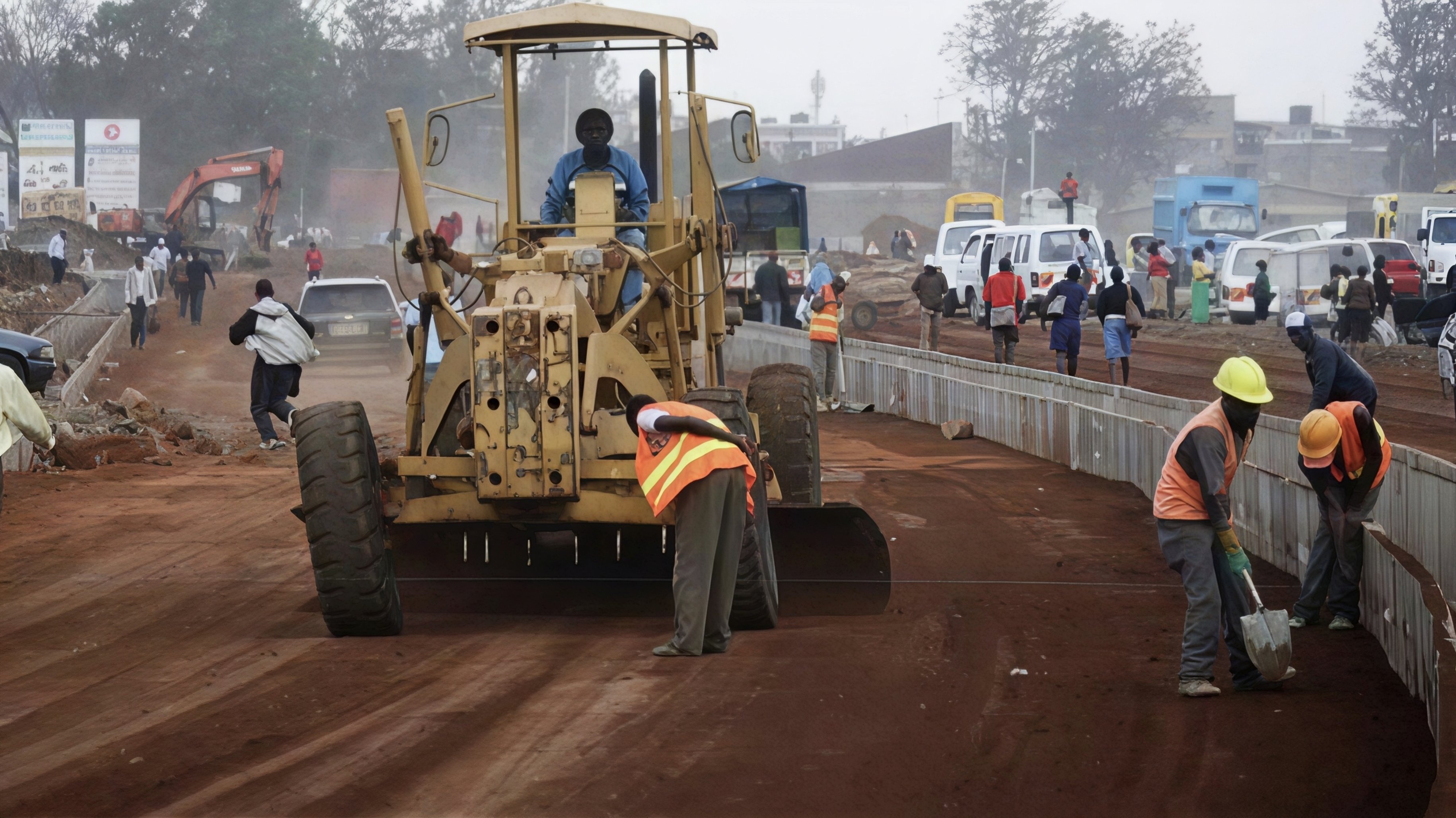

Members of Parliament have directed the government to terminate contracts and blacklist firms found responsible for delaying a major water and sanitation programme spanning 58 towns across the country, raising fresh concerns about contractor performance on publicly funded infrastructure.
The directive came from the National Assembly's Departmental Committee on Blue Economy, Water and Irrigation during a Tuesday sitting attended by Principal Secretary for Water and Sanitation Julius Korir. The session focused on progress under the Kenya Towns Sustainable Water Supply and Sanitation Programme.
Lawmakers accused some contractors of collecting multiple government contracts while failing to deliver, describing the pattern as a recurring drain on public resources. Committee Chairperson David Bowen Kangogo told the meeting that Parliament would no longer tolerate delays that leave communities without access to basic services despite substantial investment.
The programme, jointly funded by the Government of Kenya and the African Development Bank (AfDB), covers 61 water and sanitation projects valued at Ksh 45.5 billion. Beyond infrastructure delivery, the programme is projected to generate approximately 15,000 jobs during and after the construction phase.
Progress, however, has been uneven. Out of the 61 projects, 12 have been completed and commissioned, while 26 others have been finished but are still awaiting commissioning. Another 22 remain under active construction. One project is entirely stalled, held up by ongoing litigation.
Responding to MPs, PS Korir confirmed that the government had already moved to terminate contractors in Mandera and Meru, citing their failure to demonstrate adequate capacity to complete works. He said procurement processes to bring in replacement contractors were underway.
"Kenyans do not deserve stories. That is why the Ministry is incorporating new methods to ensure projects are completed and serve Kenyans within the allocated timelines," Korir told the committee.
Beyond contractor underperformance, MPs identified several other obstacles slowing the programme. These included governance weaknesses within some water service providers, active court disputes over certain projects, and rising construction costs that have complicated contract execution timelines.
Lawmakers also pressed for tighter coordination between national and county governments, particularly on last-mile connectivity, the final links that actually bring water supply into homes and communities. They insisted that every shilling spent on water infrastructure must result in dependable services reaching ordinary citizens.
The session reflects a broader frustration building in Parliament over stalled public projects. In February, the same House committee warned the water ministry against launching new projects while previously funded ones remained unfinished. The ministry had at the time sought a budget ceiling increase from Ksh 56.8 billion to Ksh 120.1 billion, a request that drew sharp pushback from lawmakers who said existing commitments were not being met.
Kenya's stalled projects problem is not confined to water. The International Monetary Fund has estimated that nearly half of over 1,000 government-implemented projects across sectors are currently stalled, with the cost of revival potentially running into the trillions of shillings.
Comments (0)
Leave a Comment
No comments yet. Be the first to share your thoughts!