
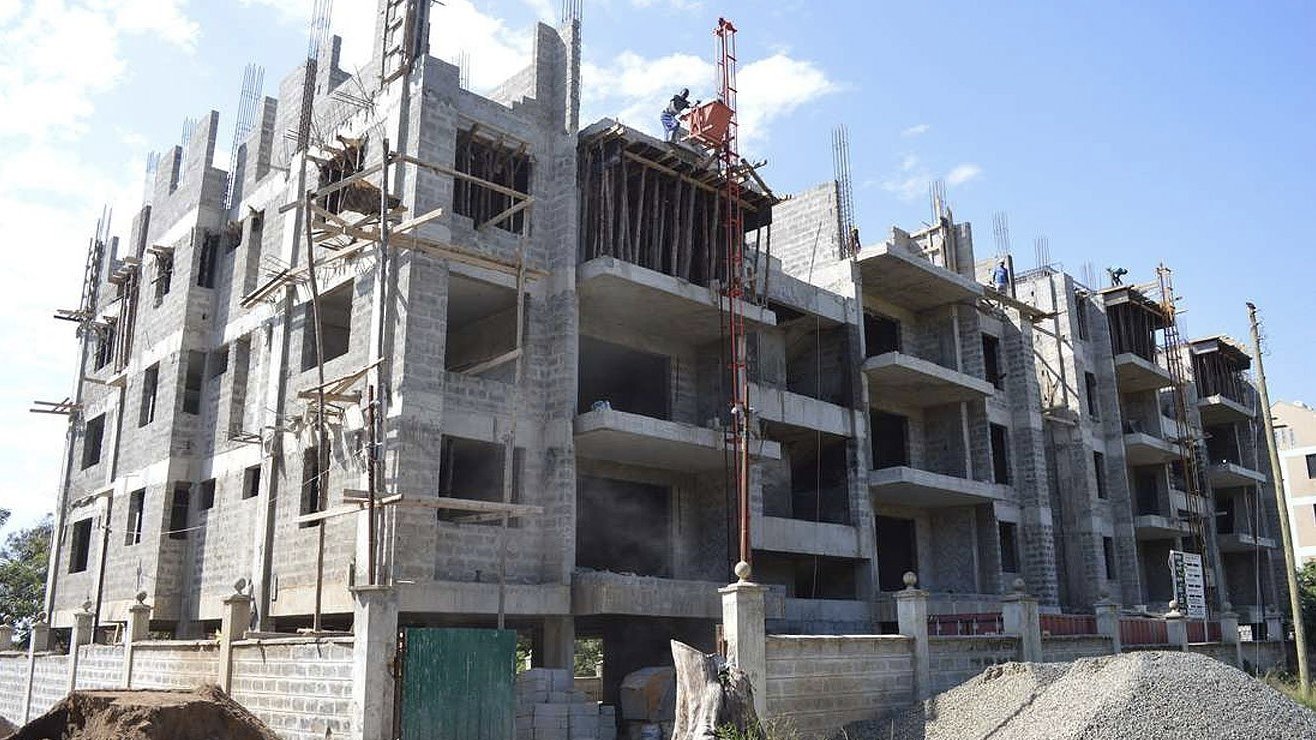

One developer along the Kenyatta Road corridor in Kiambu collected deposits from at least 36 families for homes that were never built. The sales office phones went unanswered. The site went quiet. The money was gone.
That case is not an outlier. It is a pattern.
Kenya's off-plan property market, where buyers pay for units before they are built, has become one of the most fertile environments for fraud in the country. The Ethics and Anti-Corruption Commission lists property-related fraud among the top five reported scams in Kenya. The most targeted victims are diaspora Kenyans and first-time buyers with limited legal knowledge and a powerful motivation to own a home.
The model works like this. A developer acquires land, sometimes with a clean title and sometimes without. They commission glossy renderings, record YouTube walk-throughs of show houses with imported furniture and mountain backdrops, and open sales. Buyers pay reservation deposits of between 10 and 30 percent of the purchase price to secure a unit at the pre-construction price. Construction is supposed to follow.
What follows instead can take several forms. In the most straightforward cases, a developer runs out of financing midway through and the project stalls. Buyers are left holding sale agreements and dwindling hope while watching an abandoned site slowly return to bush. In more deliberate cases, developers collect deposits from multiple buyers for the same unit, take loans against the same land that buyers believe they have secured, or sell units on land where the title does not even correspond to the address being marketed. In a documented case, a court found that a sale agreement described a property on Title Number Nairobi Block 3/90489 while the annexed title referred to Mavoko Town Block 3/90489. The title in either location did not exist at the time of filing.
A February 2026 investigation found buyers of developments along the Kenyatta Road corridor discovering that the homes they received bore no resemblance to the artistic impressions they were shown. Some sites were bare abandoned plots with zero construction. The developers who sold them were unreachable.
The legal framework is largely insufficient. Unlike developed markets where developer escrow accounts and stage-payment releases are mandatory and regulated, Kenya's off-plan market operates with minimal regulatory oversight. The Land Buying Companies Bill, which proposes requiring developers to deposit Ksh 500 million as a licence fee before being cleared for registration, has been discussed in Parliament but has not yet passed into law. In the absence of that regulation, the market continues to self-police at the buyer's expense.
There are practical steps that reduce the risk significantly. A title search on the ArdhiSasa platform, Kenya's digital land registry, costs very little and confirms whether the title number in a sale agreement actually exists and corresponds to the land being sold. An independent advocate, not the developer's recommended lawyer, should review every sale agreement before any money changes hands. Deposits should only be paid into escrow accounts, not directly to developers or agents. Any request for an on-the-spot deposit at a viewing, regardless of urgency, is a red flag.
The off-plan model is not inherently fraudulent. When the developer is credible, the financing is stable and the legal structures are respected, it offers buyers a genuine path to homeownership at pre-construction prices. The problem is that in Kenya's current market, verifying those three conditions requires work that most buyers are not doing, and that some developers are actively working to prevent them from doing.
Comments (0)
Leave a Comment
No comments yet. Be the first to share your thoughts!