
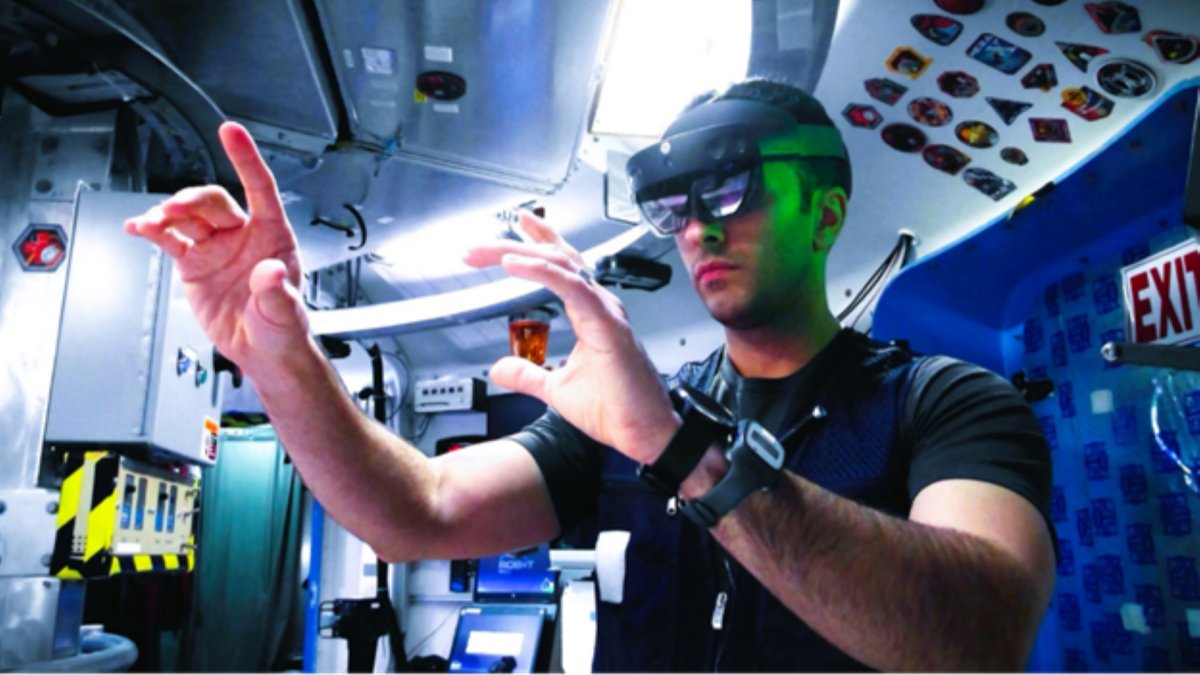

NASA is recruiting participants for the Moon and Mars Exploration Analog mission at its Johnson Space Center in Houston. The yearlong simulation combines elements of previous programs into one integrated campaign for realistic testing of deep space conditions.
Selected crew members will spend 12 months in two different confined habitats. They perform tasks that replicate conditions during transit to another planetary body and operations on its surface.
The transit phase uses a two-story habitat designed to simulate deep-space travel from Earth. This facility includes workspaces, living areas, sleeping quarters and a hygiene module for the crew.
Crew then shifts to a one-story 3D-printed surface habitat that replicates living on the Moon or Mars. The setup features private quarters, communal spaces, a crop cultivation area and a sandbox for simulated planetary walks.
Volunteers may also use a rover module equipped with driver seats and a samples airlock during exploration activities. Researchers study crew performance under the resource limits and mission demands expected on actual planetary surfaces.
The mission provides valuable data for NASA’s Human Research Program. Results help validate hardware, technologies and protocols needed for long-duration deep space missions without leaving Earth.
Applicants must meet specific criteria to qualify. They need to be United States citizens or green card holders between 30 and 55 years old with a maximum height of 74 inches.
Strong technical skills and astronaut-like qualifications form a key part of the selection process. Candidates require a bachelor’s degree in engineering, biological science, physical science or mathematics with quality academic preparation counting heavily.
Advanced STEM degrees can substitute for experience. A master’s degree equals one year while a doctoral degree counts for three years of required background. Military service also qualifies as equivalent experience.
Candidates must demonstrate proficiency in English and commit to about 14 months total including the year in habitats plus training periods. They undergo a multiday selection process and pass physical and psychological assessments.
Four crew members will participate in each mission. The first analog campaign begins no earlier than August 2027 with applications remaining open on an ongoing basis.
This ground-based effort represents a practical step in preparing for human exploration beyond low Earth orbit. Analog missions identify risks and refine solutions ahead of crewed flights to the Moon and Mars.
The habitats create immersive environments where participants use augmented reality tools for astronaut-like tasks. Data collected from these simulations directly informs spacecraft design and operational procedures.
Interest in the program reflects growing momentum in global space infrastructure development as agencies plan lunar bases and eventual Mars expeditions.
Comments (0)
Leave a Comment
No comments yet. Be the first to share your thoughts!