
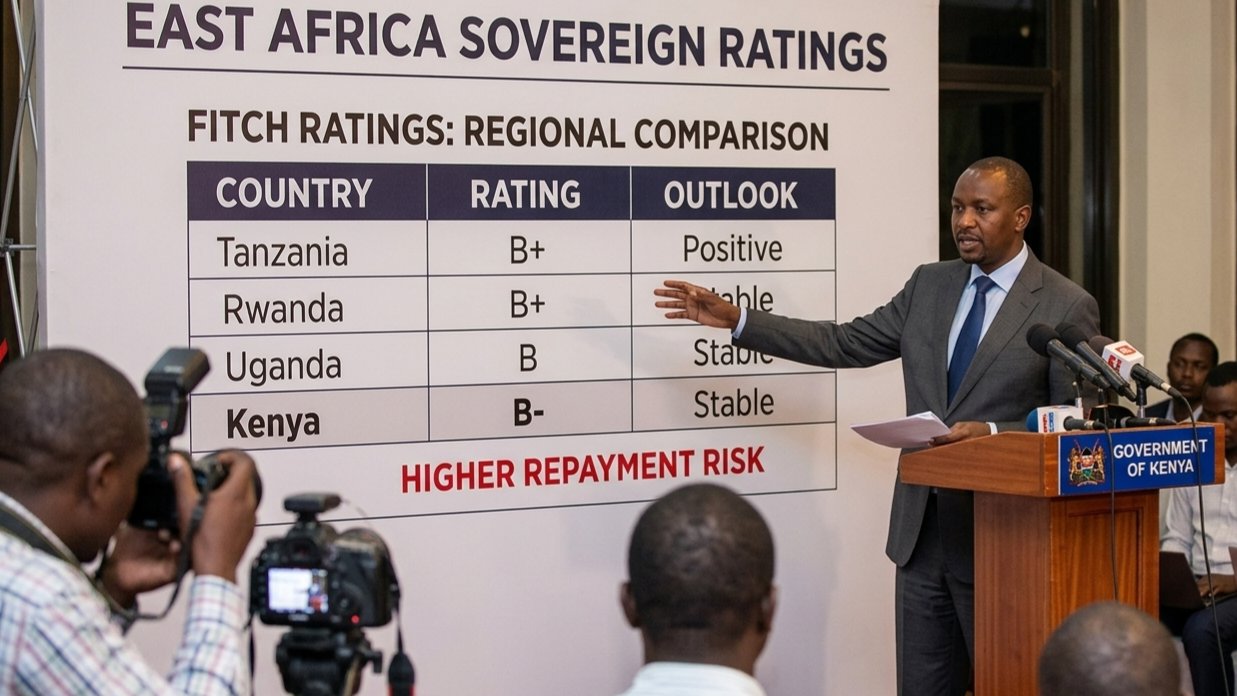

Kenya currently holds the lowest sovereign credit rating among the four major East African nations evaluated by ratings agency Fitch Ratings (Fitch).
Fitch Ratings (Fitch) has assigned Kenya a credit score of B-, indicating that the nation faces a relatively higher risk of encountering difficulties when attempting to meet its scheduled debt obligations on time.
Neighboring economies in the regional block have received higher ratings under the same evaluation criteria. Both Tanzania and Rwanda have secured a rating of B+, while Uganda holds a rating of B from the agency.
The outlook assessments across these regional economies show slight variations. Tanzania maintains a Positive outlook, whereas Kenya, Uganda, and Rwanda currently retain Stable outlooks under the Fitch framework.
Specific fiscal factors contribute to the score assigned to Nairobi. Kenya experiences high liquidity risks, as over 30 percent of its national revenue goes directly toward settling interest payments.
Sovereign credit assessments serve as crucial indicators for international lenders, institutional investors, and global financial markets when evaluating the risk profile associated with lending to national governments.
A lower credit score generally reflects elevated borrowing costs for governments seeking capital in international financial markets. Higher ratings typically indicate lower default risks and better debt sustainability metrics over the medium term.
In the regional context, Tanzania and Rwanda stand two steps higher on the Fitch rating scale than Kenya. Uganda sits one step above Kenya within the same grading scale.
The stable outlook assigned to Kenya suggests that analysts expect the sovereign score to remain relatively steady over the near-term forecast period, despite current debt servicing costs absorbing significant state resources.
National revenue allocation remain a key focus for financial analysts monitoring public expenditure trends. Allocating more than a third of domestic revenue toward debt interest servicing reduces the available budget capacity for direct public investments and capital projects.
The economic standing of East African Community (EAC) member states continues to draw close monitoring from global financial entities assessing debt repayment capacity across emerging markets.
Regional governments regularly rely on internal and external financing structures to fund major national infrastructure programs and administrative expenditures.
Future rating adjustments by global rating agencies will depend heavily on fiscal performance, revenue collection performance, interest rate trends, and overall public debt management strategies adopted by the national treasury over coming financial periods.
Comments (0)
Leave a Comment
No comments yet. Be the first to share your thoughts!