
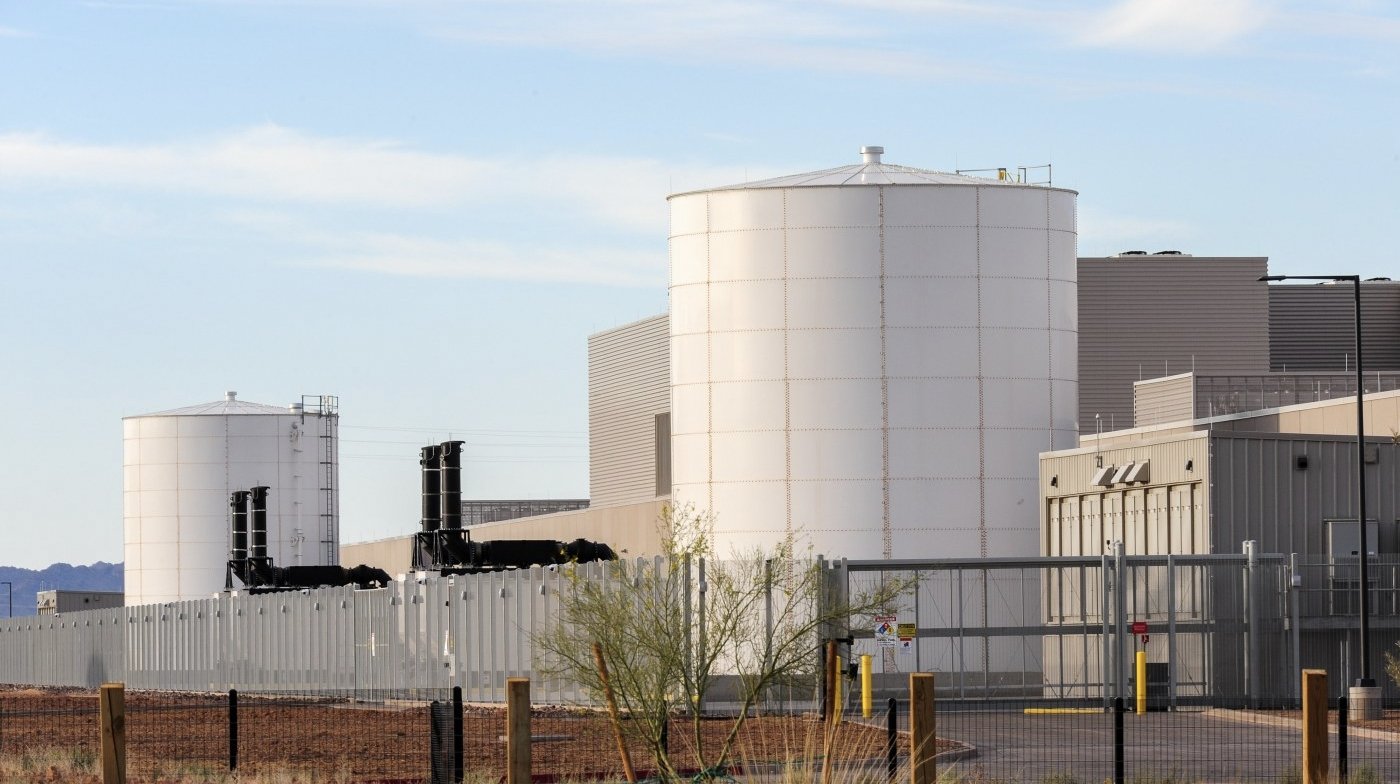

Data centres running artificial intelligence workloads generate enormous heat, and water remains one of the most effective, low-cost ways to keep their servers from overheating. Most facilities rely on evaporative cooling systems, where water absorbs heat and evaporates, functioning much like sweat cools the human body.
The scale of that water use has grown alongside AI's expansion. A typical data centre uses around 300,000 gallons of water a day, roughly the demand of 1,000 households, according to Brookings. Large hyperscale facilities can consume up to 5 million gallons daily, equivalent to a town of 10,000 to 50,000 residents.
Water demand tied to data centres extends beyond what happens on-site. Electricity powering the servers often comes from fossil fuel plants that require their own cooling water, meaning a facility's true water footprint includes both direct consumption and the water used to generate the power it draws from the grid.
More than 160 new AI data centres have been built across the United States in the past three years in areas already facing high competition for water, according to a Bloomberg News analysis of World Resources Institute data. Roughly two-thirds of data centres built since 2022 sit in regions already experiencing water stress.
Phoenix illustrates the strain clearly. A 2025 analysis by sustainability nonprofit Ceres found data centres there currently account for about 3 percent of the city's annual water use, a figure it projected could exceed 20 percent by 2031, approaching the volume residents use to maintain lawns and landscaping citywide.
The timing of water demand can matter as much as the total volume. In Arizona, a data centre's monthly water usage during summer can run nearly twice its average level, spiking precisely when residents and businesses also need the most water for their own use.
Newton County, Georgia, has faced an especially stark version of the problem, with some proposed data centres reportedly requesting more water per day than the entire county currently uses. Local officials there have had to weigh rejecting projects, mandating water-efficient cooling systems, or investing in costly infrastructure upgrades.
Reporting on tech companies' actual water footprints remains inconsistent. Among major cloud providers, only Meta currently discloses water used at the power stations supplying its data centres, in addition to on-site consumption, since no law requires companies to report the full scope of both direct and indirect water use.
Some operators are shifting toward alternatives that reduce reliance on evaporative cooling altogether. Closed-loop cooling systems can cut freshwater use by up to 70 percent, while direct-to-chip and immersion cooling techniques offer further reductions, though industry-wide adoption remains far from universal as AI infrastructure continues expanding rapidly.
Comments (0)
Leave a Comment
No comments yet. Be the first to share your thoughts!