
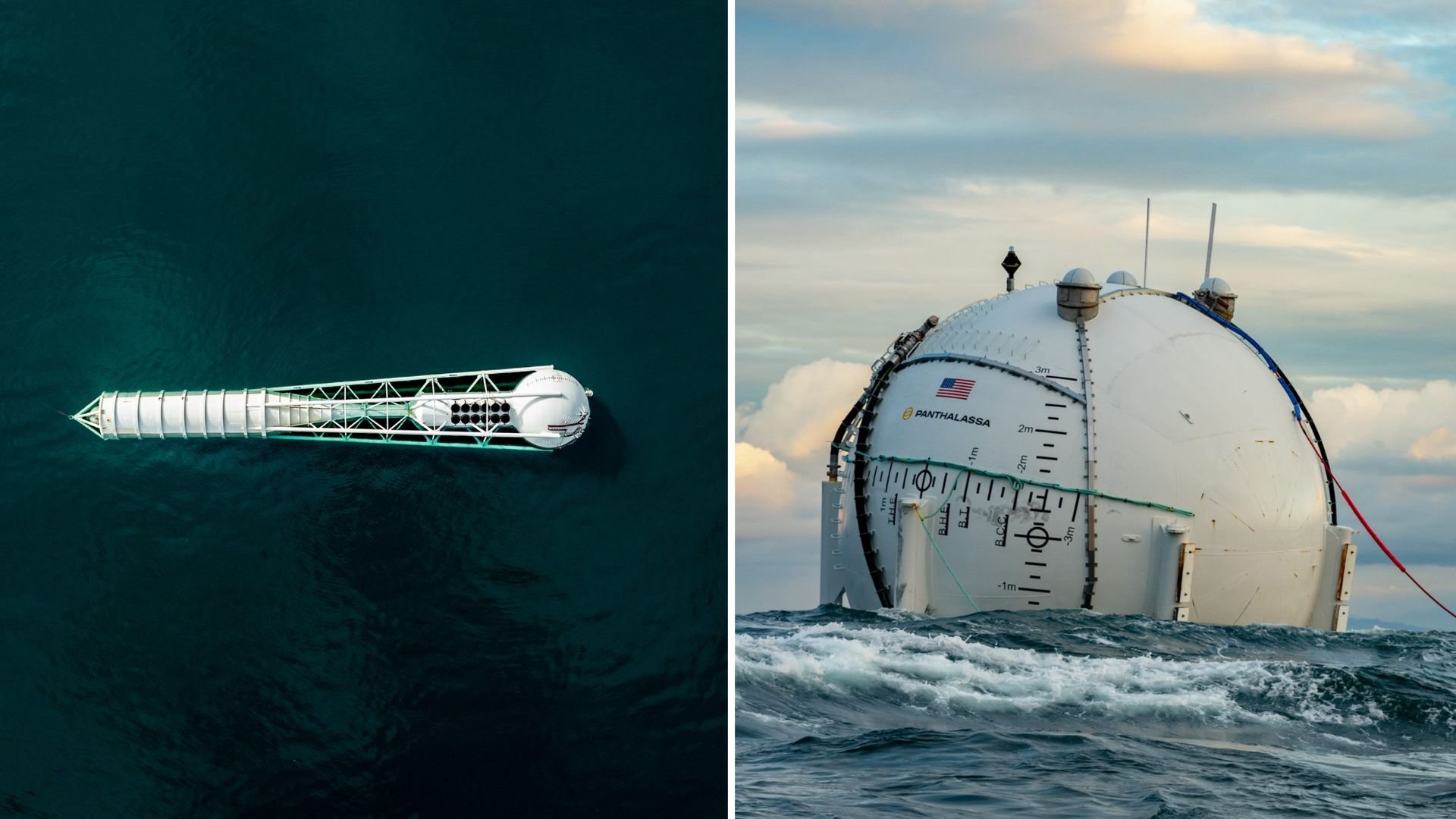

A US startup is preparing to move high-performance computing infrastructure into the open ocean, betting that floating, self-powered data centers can sidestep the grid capacity and permitting bottlenecks slowing land-based projects.
Panthalassa, based in the United States, has closed a $140 million Series B funding round to scale production of what it calls autonomous maritime data platforms. The capital will fund completion of an assembly facility near Portland, Oregon, and a pilot deployment in the northern Pacific Ocean later this year.
"There are three sources of energy on the planet with tens of terawatts of new capacity potential: solar, nuclear, and the open ocean," said Garth Sheldon-Coulson, co-founder and chief executive of Panthalassa.
The platforms are mass-produced from plate steel in coastal factories before being deployed into deep water, where they operate independently of any shore connection. Onboard mechanical systems convert the kinetic motion of ocean waves directly into electricity, providing a continuous power supply that does not depend on sunlight or wind conditions the way conventional renewables do.
Rather than transmitting that power back to land, the platforms consume it on-site to run onboard artificial intelligence (AI) processing hardware. The surrounding ocean functions as a natural cooling system, regulating chip temperatures without drawing on municipal freshwater supplies, a resource increasingly strained by land-based data center cooling demands.
Data moves in and out of the platforms through low-Earth-orbit satellite networks, which relay computing instructions to the nodes and transmit completed AI processing results back to clients on land.
The approach is designed to avoid friction points that have slowed conventional data center construction onshore, including limited grid capacity, water scarcity concerns, equipment supply chain delays, lengthy permitting processes, and local opposition tied to rising utility costs and construction disruption in residential areas.
The upcoming Ocean-3 pilot series follows a decade of development. Panthalassa previously tested earlier platform designs, named Ocean-1, Ocean-2, and Wavehopper, in ocean trials conducted in 2021 and 2024 to validate power generation stability and navigation systems. The coming Pacific trials will focus on running live computing workloads and standardising manufacturing processes ahead of a planned commercial rollout in 2027.
"We've built a technology platform that operates in the planet's most energy-dense wave regions, far from shore, and turns that resource into reliable clean power," Sheldon-Coulson said. "We're now ready to build factories, deploy fleets, and provide a sustainable new source of energy for humanity."
If the model scales as planned, it would represent a distinct departure from conventional data center construction, replacing land acquisition, grid connection agreements, and water-cooling infrastructure with a manufacturing and deployment process closer to shipbuilding than to traditional facility construction.
Comments (0)
Leave a Comment
No comments yet. Be the first to share your thoughts!