
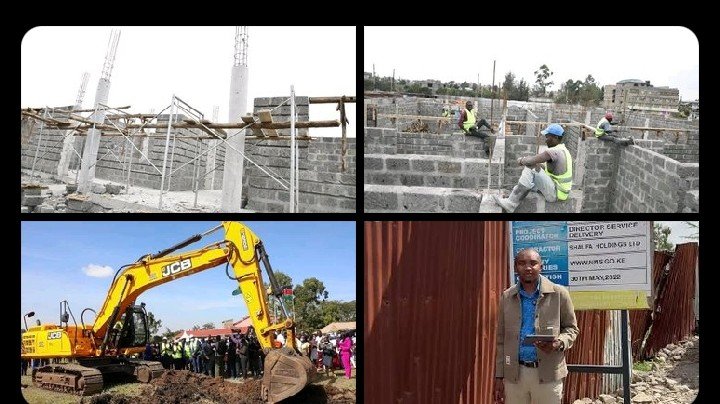

A project aimed at expanding access to justice in Nairobi remains incomplete years after it was launched under the Nairobi Metropolitan Services (NMS) in partnership with the Judiciary. The development was part of a broader plan to establish four Small Claims Courts in Mihang’o, Huruma, Kasarani and Dagoretti, targeting communities that often face challenges accessing formal court services.
The Small Claims Courts were designed to handle civil disputes involving relatively low monetary value. These courts focus on resolving cases quickly and at lower cost compared to regular courts. The initiative was seen as a practical way to ease congestion in higher courts while bringing services closer to residents in densely populated estates. Many people in these areas run small businesses or rely on informal employment and quick resolution of disputes over debts, rent and contracts is often critical to their livelihoods.
Under NMS, work began on the projects as part of efforts to improve service delivery in Nairobi. The courts were expected to reduce travel time and expenses for residents who previously had to rely on central court stations. By situating the facilities within neighbourhoods, the project aimed to encourage more people to seek legal redress when disputes arise.
However, progress was disrupted after NMS was disbanded and its functions transferred back to the Nairobi City County Government and other relevant institutions. In 2023, the incomplete court projects were formally handed over to the Judiciary. The transition marked a new phase of responsibility, but construction work stalled soon after the handover.
The reasons for the slowdown have been linked to administrative and procurement processes. In February 2024, a tender was advertised for the completion of the stalled project. Contractors were invited to submit bids to finalize construction and make the facility operational. The move was expected to revive the project and bring it closer to completion.
Despite the advertisement, the procurement process did not proceed as planned. All the bids submitted were deemed non-responsive, leading to the cancellation of the tender. Non responsive bids typically fail to meet mandatory requirements set out in tender documents, whether due to missing documentation, failure to comply with technical specifications or other procedural shortcomings. As a result, no contractor was awarded the job.
According to the latest audit reports, no new procurement process has been initiated since the cancellation. This has left the project in limbo, with the incomplete structure standing unused. The delay has raised concerns among residents and stakeholders who had hoped the courts would begin operations soon.
The continued stalling of the project has implications beyond the physical structure. Small Claims Courts play a key role in reducing backlog in the judiciary by handling straightforward cases through simplified procedures. Their absence in targeted areas means that residents must continue to rely on existing court stations, which may already be dealing with heavy caseloads.
Access to justice remains a significant issue in many urban settlements. Travel costs, legal fees and long waiting periods can discourage individuals from pursuing legitimate claims. The establishment of local courts was intended to address some of these barriers by providing a more accessible and affordable option.
The situation also highlights the challenges that can arise during institutional transitions. When projects shift from one managing authority to another, delays may occur due to changes in budget allocation, oversight structures and procurement processes. Ensuring continuity in such transitions is essential to prevent public projects from stalling.
For now, the future of the incomplete Small Claims Court project depends on the initiation of a new procurement process and the allocation of funds to see it through. Stakeholders within the Judiciary are expected to review the previous tender process and determine the next steps to ensure compliance with procurement regulations while moving the project forward.
Residents in Mihang’o, Huruma, Kasarani and Dagoretti continue to wait for the promised facilities. The original vision of bringing justice services closer to communities remains relevant, particularly in areas with growing populations and increasing commercial activity. Completion of the project would not only provide a physical court space but also reinforce efforts to strengthen the justice system at the grassroots level.
Until concrete steps are taken to restart construction, the project serves as a reminder of the importance of effective planning, smooth transitions and transparent procurement processes in public infrastructure development.
Comments (0)
Leave a Comment
No comments yet. Be the first to share your thoughts!