

A version of this article appeared on Eng. Kefa Seda’s professional updates.
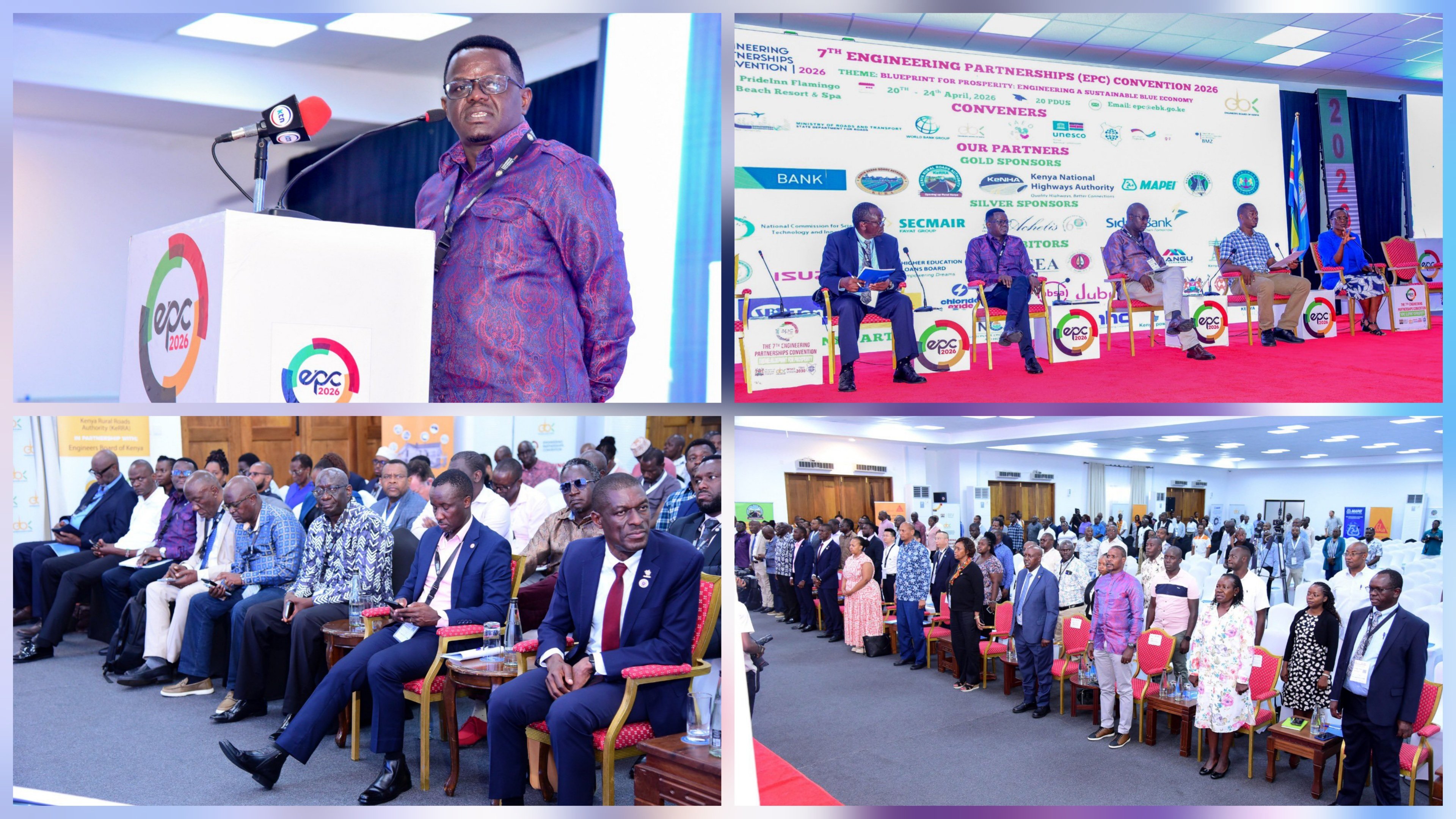
Addressing the Engineering Partnerships Convention 2026 in Mombasa, Eng. Kefa Seda detailed a framework for connecting production systems to global markets through specialized marine infrastructure. The convention, themed "Engineering a Sustainable Blue Economy," focused on the technical and financial architecture required to sustain maritime assets.
The proposed strategy involves a shift in how port infrastructure and coastal industrial platforms are configured. According to Eng. Seda, these assets must be anchored to specific production geographies. This approach ensures that maritime investments are not isolated but are instead integrated into defined cargo flows and export corridors.
A multi-modal logistics system remains the backbone of this vision. Road and rail networks are being positioned as the logistical spine that links inland production areas to the coast. The objective is to maintain a continuous movement of cargo, which increases the reliability of regional and domestic trade corridors.
Financing these large-scale developments has historically been a challenge for the public sector. Eng. Seda pointed to the Public Private Partnerships (PPP) Act, 2021, as a critical tool for the industry. The legislation provides a formal framework to attract private capital for blue economy projects that might otherwise lack immediate exchequer funding.
Under the 2021 Act, infrastructure projects are structured based on the strength of their underlying cash flows. This allows the government to align private capital with long-term revenue frameworks. The law also embeds risk allocation within enforceable contracts, providing the discipline and certainty required by international investors.
Engineers at the convention discussed the necessity of viewing the entire supply chain as a unified economic continuum. By connecting production centres directly to processing hubs and onward to maritime terminals, the industry aims to deliver measurable economic output with higher precision.
The convention highlighted that the successful execution of the blue economy blueprint depends on the capacity of Kenyan engineers to lead these technical engagements. Strengthening the link between policy leadership and engineering execution is expected to streamline the delivery of an integrated value chain.
Comments (0)
Leave a Comment
No comments yet. Be the first to share your thoughts!