
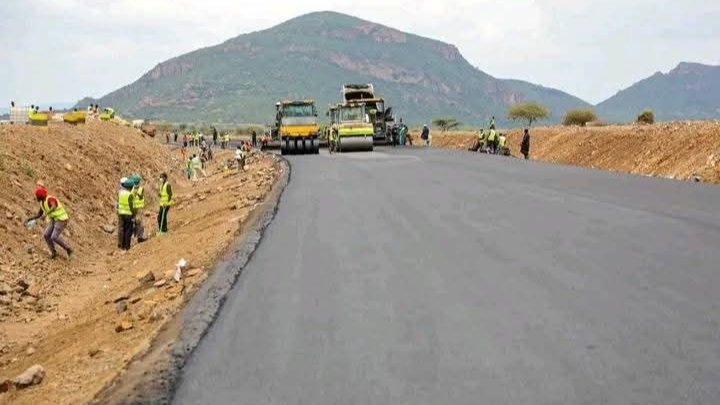

The Ministry of Roads and Transport has officially revised the completion date for the ongoing 740-kilometre Isiolo-Mandera highway to 2030, moving the target one year later than previously expected. The announcement, made on June 10, 2026, confirms a delay in what is Kenya's longest single road project.
The highway traverses north-eastern Kenya, linking Isiolo Town through Meru County, Wajir County, and ending in Mandera County. It connects Kenya to Ethiopia and Somalia, aiming to improve trade, security, and mobility in historically marginalised regions.
The project was initially expected to be completed by 2029 under World Bank funding. KeNHA confirmed receiving $750 million USD (about Ksh96.75 billion) from the International Development Association for the expansion. The funding was to be implemented in parts, with the last allocation expected in 2029.
Deputy President Kithure Kindiki inspected ongoing works in May 2025, pledging delivery within two years. At that time, the first 77-kilometre section was nearing completion. The project was split into 11 sections awarded to seven contractors.
Interior Cabinet Secretary Kipchumba Murkomen reaffirmed the government's commitment to schedule completion in January 2026. He noted security measures along the corridor had been significantly bolstered to guarantee safety of personnel and equipment.
The road passes through major centres including Isiolo, Kulamawe, Modogashe, Samatar, Wajir, Tarbaj, Kotulo, Kobo, Elwak, Garre, Rhamu and Mandera. It will connect five counties: Meru, Isiolo, Garissa, Wajir and Mandera.
The project is being implemented under the Horn of Africa Gateway Development Project. Officials say it will enhance regional trade, improve connectivity, and strengthen security in the region.
Construction costs were initially reported at Ksh100 billion. The highway aims to unlock hidden potential in northern Kenya by opening the region to agriculture and other key sectors.
Security remains a critical factor. The government deployed a multi-agency security ring including the Military, Interior, and KDF to protect engineers and heavy machinery along the fragile corridor.
The delay to 2030 reflects the humongous scale of the flagship initiative and ongoing challenges in the north-eastern part of Kenya. Transport Ministry officials did not provide detailed reasons for the one-year push beyond the project's complexity.
Comments (0)
Leave a Comment
No comments yet. Be the first to share your thoughts!