
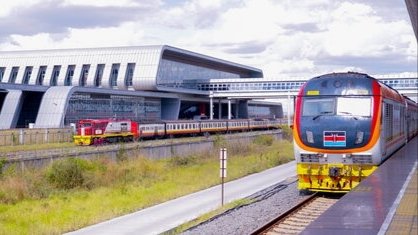

Kenya Railways Corporation has announced plans to acquire electric trains for the Nairobi commuter rail network under the Kenya Urban Mobility Improvement Project.
The Ksh65 billion initiative is financed through a partnership between the Kenyan government and the World Bank. It aims to modernise commuter services and ease traffic within the Nairobi Metropolitan Area and surrounding counties.
Electrification of the Nairobi Commuter Railway Network forms a central part of the project. This will enable deployment of modern electric-powered passenger trains offering faster journeys, higher capacity and lower emissions than conventional diesel options.
The trains will serve routes linking Nairobi to towns in Kiambu, Machakos, Kajiado and Murang’a counties. Destinations include Dagoretti, Karen, Embakasi, Ruiru, Thika, Kikuyu, Ngong, Bulbul, Kitengela and Syokimau.
Besides electric trains, the corporation will also acquire Diesel Electric Multiple Units to support overall expansion and modernisation of services.
Additional infrastructure works include construction of station access roads and multi-modal transfer facilities. These will improve connections between rail and other transport modes.
The project encompasses building maintenance workshops for the new fleet and developing local manufacturing capacity for railway spare parts and components. A concrete sleeper manufacturing plant is also planned.
Another key element is construction of the Likoni Road railway bridge together with associated road approaches. Acquisition of specialised maintenance rolling stock such as locomotives and wagons rounds out the package.
The overall objective centres on better urban mobility and improved land-use planning along commuter corridors. It is expected to encourage transit-oriented development around railway stations.
To prepare for implementation, Kenya Railways has called private sector stakeholders to a consultative meeting on June 24, 2026, at the Railway Training Institute in South B, Nairobi.
The session will allow industry players to review project details, procurement plans and technical requirements. Feedback on design, sustainability and market conditions will help shape the procurement strategy.
Construction and engineering firms, rolling stock suppliers and consultants are expected to take keen interest as the project moves forward. Works will involve civil engineering for tracks, bridges and stations alongside systems integration for electrification.
This forms part of broader efforts to position rail as the backbone of sustainable public transport in the capital region. Delivery of the electric trains and supporting infrastructure will mark a notable shift in Nairobi’s commuting landscape.
Comments (0)
Leave a Comment
No comments yet. Be the first to share your thoughts!