
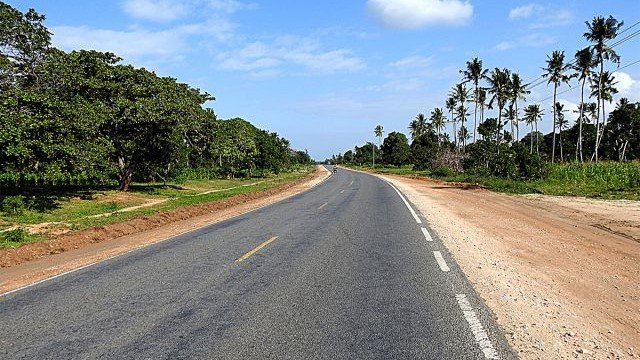

The major upgrade of the Mombasa-Kilifi Highway is currently underway, marking a monumental transformation that is set to redefine connectivity and commerce along Kenya’s coastline. As one of the busiest routes in the region, this road has long been a vital link for trade, tourism, and daily commuting between two major counties. Its expansion is therefore not merely about easing congestion; it represents a new phase of economic growth and opportunity for the entire coastal region.
This significant undertaking is valued at around and is jointly funded by the Government of Kenya and the African Development Bank. The project involves the dualling of a stretch that has become notorious for traffic bottlenecks and unpredictable delays. Although the final commissioning is expected in the coming months, several key sections have already been opened to traffic, giving local commuters an initial, welcome taste of the smoother, faster journeys that lie ahead.
This initiative is a comprehensive modernization effort. The plans include brand new flyovers to eliminate existing intersection headaches, dedicated pedestrian walkways to improve safety, and upgraded drainage systems specifically designed to withstand challenging coastal weather conditions. One of the most striking components of the development will be the planned bridge over Mida Creek, which is expected to not only significantly improve mobility but also stand as a major landmark in the region's infrastructure, reflecting the ambition to set a higher standard for road development across Kenya.
For decades, the single-lane highway between Mombasa and Kilifi has been a constant source of frustration for all road users. Long traffic jams, particularly at the congested Nyali Bridge, have slowed movement and created costly uncertainty for businesses and travelers alike. Trucks ferrying essential goods from the Port of Mombasa to northern towns frequently faced unpredictable delays, while tourists heading to Kilifi or Malindi often endured extended travel times. The new dual carriageway directly addresses these long-standing challenges, promising to drastically reduce travel times and enable a far more efficient flow of goods and services.
Crucially, the benefits of this project stretch far beyond simple transport convenience. Improved road infrastructure is widely expected to stimulate growth in key economic sectors, notably tourism, agriculture, and fishing. For instance, farmers and fishermen in Kilifi County will find it easier and faster to move their fresh produce and daily catch to Mombasa’s larger markets. Similarly, the hospitality sector will benefit directly from the greater accessibility for both domestic and international visitors. By enhancing mobility on this scale, the project strengthens the region’s overall position as an economic hub, laying essential groundwork for long-term prosperity.
Naturally, a project of this size and complexity has encountered its share of challenges. Issues surrounding land acquisition and the necessary relocation of utilities, such as water and power lines, have unfortunately caused intermittent delays. These obstacles underscore the inherent complexities of executing large-scale infrastructure projects in rapidly growing urban and peri-urban areas. Nevertheless, progress has continued steadily, reflecting the government's unwavering determination to modernize the transport infrastructure and deliver a lasting solution for the coast. The dualling of the Mombasa-Kilifi highway is thus a true “mjengo” project—both in its physical scale and its future economic impact. It is more than just a new road; it is a symbol of progress and forward planning that will improve safety, save countless hours, and vigorously support economic activity, leaving a lasting imprint on the lives of coastal communities. As the project nears full completion, excitement is building for the highway that will not only solve decades-old transport headaches but also usher in a completely new era of growth and opportunity, connecting the people of Mombasa and Kilifi to a brighter, more mobile future.
Comments (0)
Leave a Comment
No comments yet. Be the first to share your thoughts!