
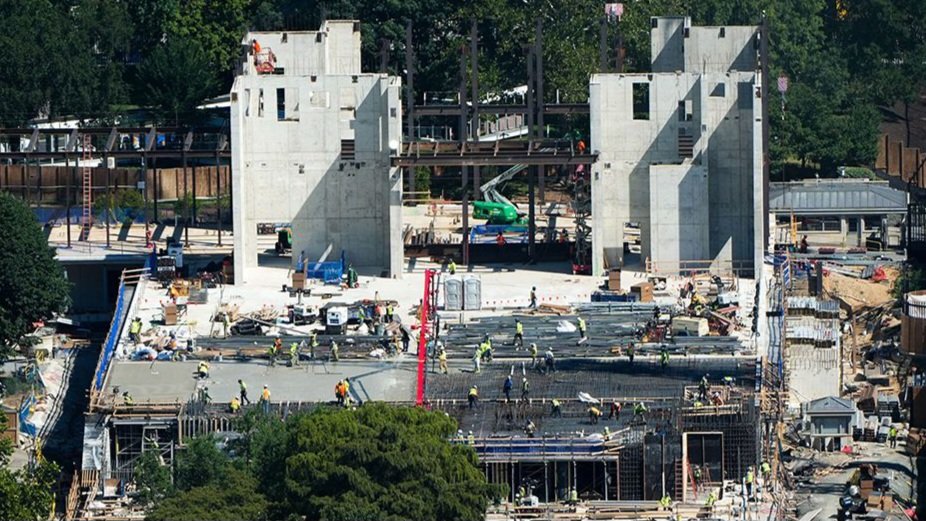

The Supreme Court of the United States (SCOTUS) has temporarily allowed President Donald Trump to continue construction work on a massive new ballroom complex at the White House, freezing a lower court ruling that would have forced crews to stop operations at midnight on Friday.
Chief Justice John Roberts issued an emergency administrative stay on Friday afternoon, granting the administration additional time while the nine justices consider a broader request to pause adverse judicial decisions indefinitely. The order contains no reasoning, vote count, or dissent, as is typical for emergency administrative stays handled individually by the chief justice.
The legal dispute centers on whether the executive branch possesses the authority to undertake major structural overhauls on the historic property without explicit authorization from Congress. Two lower courts previously concluded that President Trump acted unlawfully when ordering the demolition of the historic East Wing last year to clear land for the new facility, ruling that legislative approval was required.
Work on the site has progressed at an accelerated pace. Legal filings submitted by the administration to SCOTUS indicate that a 250-person construction crew is currently operating on 20-hour daily shifts, seven days a week, bringing the overall complex to approximately 65% completion.
Solicitor General John Sauer argued in the emergency application that the project is essential to national security because it incorporates a sophisticated underground military bunker alongside the aboveground gathering space. The filing asserted that the president holds legal authority to secure and renovate the executive residence without requiring approval from legislative bodies.
In response filings, attorneys representing the National Trust for Historic Preservation (NTHP) urged the court to enforce the injunction, arguing that the administration is attempting to complete the structure rapidly to bypass judicial oversight. Preservation groups pointed out that the lower court order permitted ongoing work on the underground security bunker while halting aboveground ballroom construction.
The temporary stay issued by Chief Justice Roberts sets no fixed expiration date, meaning building crews can remain active on the White House grounds until the full court issues a formal ruling on the emergency stay request.
Beyond the White House complex, several other capital infrastructure projects initiated by the administration have faced legal scrutiny from historical and environmental groups. These include proposed overhauls to the Lincoln Memorial Reflecting Pool and surrounding public parklands, though the ballroom litigation is the first such project to reach the nation's highest court.
Financing for the project remains a point of public discussion. While initial statements framed the ballroom as a privately funded venture, court documents and media reports indicate that significant federal funds have been allocated to the overall site development.
Contractors on site continue work using specialized heavy materials, including high-strength concrete mixes formulated for critical infrastructure. The Supreme Court is expected to review the full briefing from both legal teams before deciding whether to extend the stay through the remainder of the appeals process.
Comments (0)
Leave a Comment
No comments yet. Be the first to share your thoughts!