
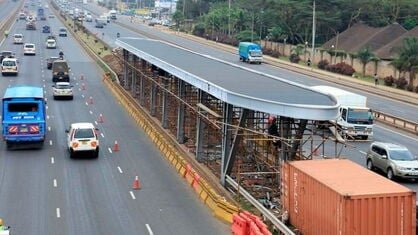

South Korea will take charge of building Bus Rapid Transit Line 5, a dedicated corridor connecting Nairobi's Central Business District directly to Jomo Kenyatta International Airport. The announcement follows high-level discussions between Kenyan officials and Korean counterparts, with Nairobi Governor Johnson Sakaja confirming the commitment after recent talks.
The project falls under Kenya's broader Bus Rapid Transit network, where Line 5 targets improved public transport access to the airport. Funding comes through a KSh7.6 billion ($59 million) loan from the Export-Import Bank of Korea. The Kenya Urban Roads Authority handles implementation, and procurement has been restricted to South Korean firms, a condition tied to the financing.
Earlier reports indicated the project reached final approval stages, with construction originally slated to start in January 2025. Recent updates suggest ongoing processes, including tendering, though a court challenge briefly halted aspects of the Outer Ring Road-related tender in early 2026 over procurement clauses.
Line 5 aligns with efforts to ease Nairobi's chronic traffic congestion, particularly on routes feeding the airport. The corridor will feature dedicated bus lanes, stations, and supporting infrastructure such as bridges and drainage. While exact routing details remain focused on linking the city centre to JKIA, related BRT developments along Outer Ring Road include a 10.5-kilometre stretch with two lanes, three river bridges, two overpasses, 13 stations, and new footbridges.
This line forms part of Nairobi's revised strategic transport plan, which identifies multiple BRT corridors to reduce reliance on private vehicles and matatus in high-demand areas. The CBD-to-JKIA connection addresses a key gap, offering airport workers, travellers, and residents a reliable alternative to the existing expressway and jammed roads.
South Korea's involvement extends beyond construction. The partnership includes support for a smart traffic management system in Nairobi, covering coordination of lights at dozens of junctions and establishment of an integrated transport headquarters. Samsung Construction has been linked to elements of that traffic upgrade.
Public reaction to the BRT announcement has been mixed. Some commuters question the priority given existing infrastructure like the Nairobi Expressway already serves the airport route, while others see value in dedicated public transport lanes amid rising urban mobility demands.
The Kenya Urban Roads Authority has invited bids for related BRT works, with eligibility limited to Korean companies under the loan terms. Officials describe the project as a step toward modernising Nairobi's mass transit, drawing on Korea's experience in efficient urban bus systems.
Delays in similar BRT phases in the past have stemmed from funding gaps and procurement issues, but the tied Korean financing aims to provide stability. Completion timelines have not been firmly restated in recent statements, though the overall network rollout remains phased.
The initiative ties into wider bilateral cooperation between Kenya and South Korea on infrastructure. Ambassador Kang Hyung-sik has been involved in advancing the talks, underscoring mutual interest in sustainable transport solutions for the capital.
Comments (0)
Leave a Comment
No comments yet. Be the first to share your thoughts!