
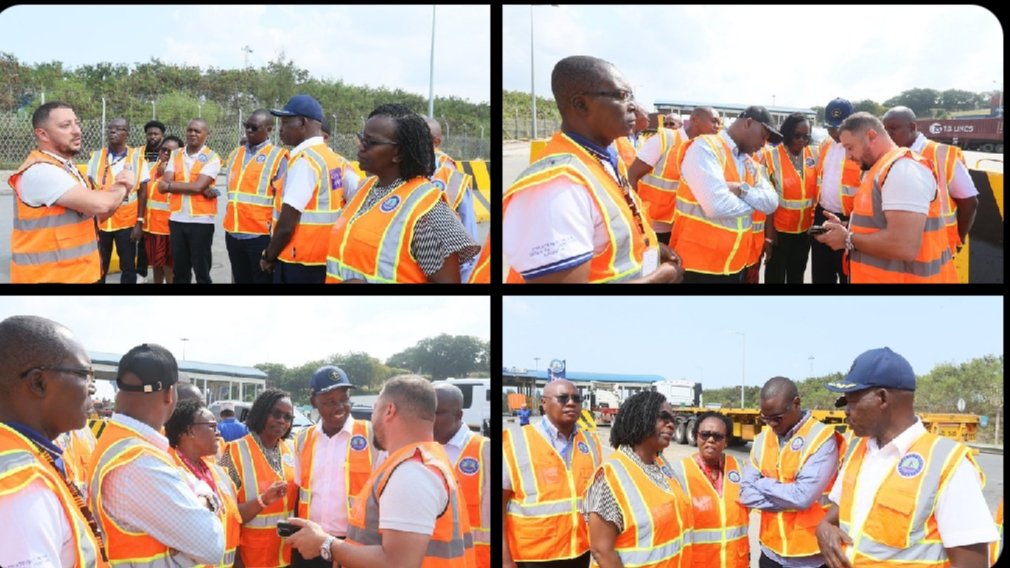

The Kenya Ports Authority Board conducted a site visit to the Port of Mombasa to assess progress on key infrastructure projects. Accompanied by senior management, the board members examined developments designed to strengthen the port’s capacity as East Africa’s primary maritime gateway. Cargo throughput has continued to increase, placing greater demands on existing facilities and making timely expansion essential.
Among the highlights of the inspection was the newly installed Smart Gate System. This technology-driven solution automates cargo and vehicle access processes. Officials expect it to reduce processing times, minimise congestion at entry points, and improve overall security and efficiency within the port area. Such digital upgrades form part of a broader modernisation drive at Mombasa.
The board also received detailed briefings on the construction of Berth 19B. When completed, the new berth should allow the port to handle larger vessels more effectively. It will increase overall vessel-handling capacity and help shorten waiting times for ships calling at the facility. These improvements are viewed as critical as shipping lines deploy bigger vessels on routes serving the region.
The visit focused on strategic projects expected to transform cargo handling operations. Easier traffic flow inside the port and faster turnaround times for vessels should enhance competitiveness. Mombasa faces growing pressure from other regional ports seeking to capture transshipment and hinterland cargo. Maintaining an edge requires both physical upgrades and operational efficiencies.
KPA leadership used the occasion to reaffirm commitment to delivering projects on time and within acceptable standards. The authority’s long-term strategy emphasises modernisation of infrastructure, improvement of service delivery, and development of a resilient logistics hub. This approach aims to support not only Kenya’s economy but also trade flows into neighbouring countries that rely on Mombasa as their main gateway.
Port of Mombasa has long served as the backbone of East African trade. It handles the majority of cargo destined for Kenya, Uganda, Rwanda, South Sudan, and parts of the Democratic Republic of Congo. Any capacity additions or efficiency gains therefore have multiplier effects across the region. Recent years have seen steady growth in container volumes, driven by recovering economies and expanding regional integration efforts under frameworks such as the African Continental Free Trade Area.
Berth expansion projects like 19B address a specific constraint. Larger ships require deeper drafts and longer quay lengths. Without adequate infrastructure, the port risks losing business to competitors. The Smart Gate System, meanwhile, tackles land-side bottlenecks that often frustrate truckers and shipping agents. Reducing dwell times for cargo and vehicles can lower overall logistics costs for importers and exporters.
The KPA has pursued a series of interconnected investments in recent times. These range from dredging and quay wall strengthening to digital systems that improve transparency and reduce opportunities for delays. Coordination between different departments and external stakeholders remains important for success. The board’s direct involvement in site inspections signals the priority attached to these initiatives at the highest governance level.
Challenges in port development are well known. They include funding availability, environmental considerations, community relations, and integration with road and rail networks. Mombasa’s location within a busy urban area adds layers of complexity to expansion works. Yet steady progress on multiple fronts suggests the authority is navigating these issues with some success.
Looking ahead, the port’s ability to adapt will influence Kenya’s broader trade performance. Efficient maritime gateways support manufacturing, agriculture exports, and import of essential inputs. They also position the country as a logistics hub rather than just an endpoint for cargo. The ongoing works at Mombasa form part of that ambition.
The board visit aligns with KPA’s stated business objectives. By focusing on measurable improvements in capacity and service quality, the authority hopes to deliver tangible benefits to port users and the national economy. Continued oversight and adaptive management will be necessary to ensure these projects realise their full potential.
Comments (0)
Leave a Comment
No comments yet. Be the first to share your thoughts!