
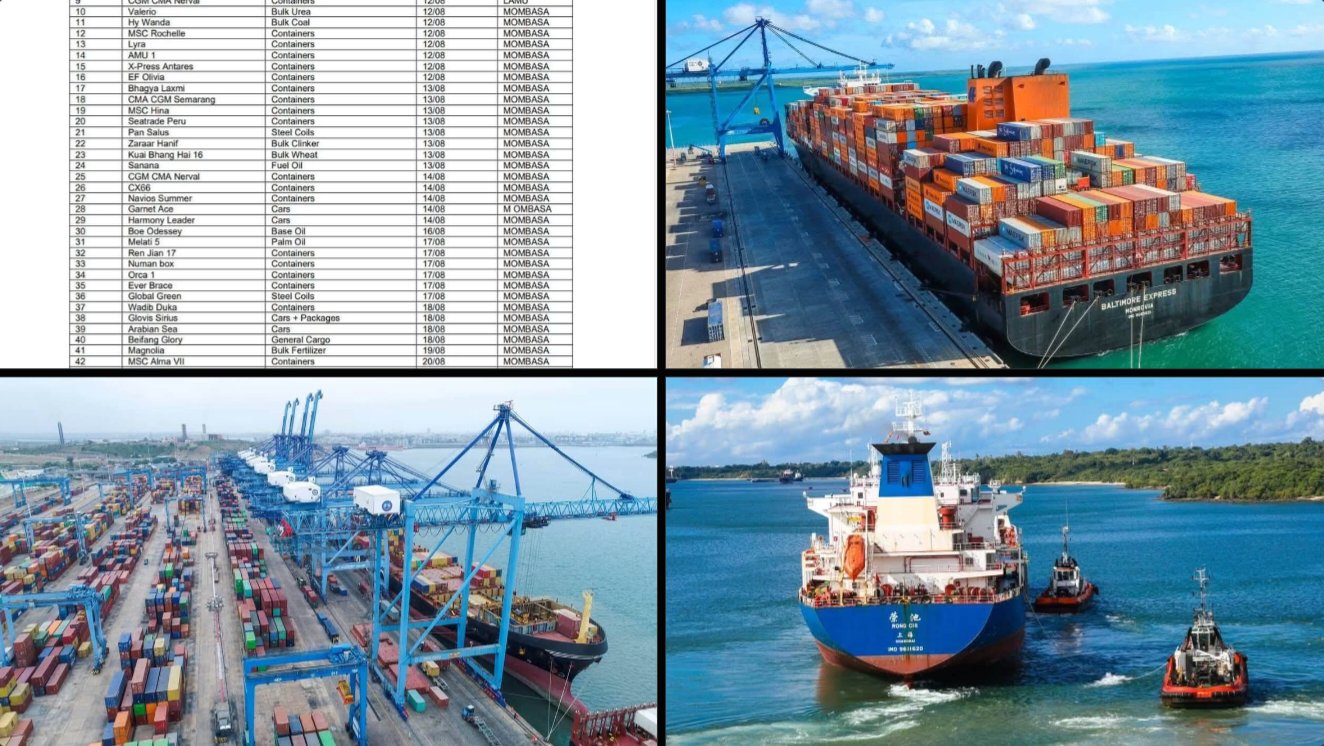

Maritime operations across Kenya face an active fortnight following official docking schedules released by port managers. Commercial shipping activity will concentrate around the main coastal maritime hubs in the country.
The Kenya Ports Authority (KPA) expects a total of 57 vessels to dock at the ports of Mombasa and Lamu over the next two weeks. Officials published the arrivals manifest on their primary communication channels.
The Port of Mombasa (POM) will receive the vast majority of the scheduled maritime traffic during this 14-day window. Facilities there are preparing to berth 52 separate merchant ships.
Breakdown data shows the Port of Mombasa (POM) will handle 27 container ships alongside 16 conventional vessels. Operations will also cover four oil tankers carrying bulk liquids.
Five car carriers are scheduled to discharge rolling cargo at Kilindini Harbour in Mombasa. Port management continues to coordinate quay space to ensure efficient turnarounds.
Further north along the coastline, the Port of Lamu (POL) is scheduled to receive five container vessels during the same period. The facility serves as a key component of regional trade corridors.
The upcoming arrivals highlight ongoing cargo movement through East Africa's primary maritime gateways. Trade traffic at Kenya Ports Authority (KPA) facilities remains central to regional supply chains.
Container traffic remains the largest single category of cargo handled across these public port terminals. Specialized gantry cranes and yard stackers will clear arriving import boxes continuously.
Conventional vessels will offload general cargo, dry bulk commodities, and heavy industrial machinery across dedicated quays. Petroleum import berths will service the incoming liquid fuel tankers.
Maritime authorities track incoming vessel schedules to align harbor pilotage, tugboat services, and berth assignments. Proper coordination prevents delays for shipping lines waiting in anchorage areas.
The dual arrival schedules underscore the operational roles assigned to both coastal facilities. Mombasa continues to handle heavy import volumes, while Lamu expands its commercial shipping profile.
Port operators monitor weather conditions, channel depths, and equipment readiness ahead of the peak vessel movements. Harbor pilots remain ready to bring the incoming ships safely into berth.
Logistics firms, freight forwarders, and transport operators rely on these published manifests to schedule trucks and cargo trains. Timely discharge at the berths keeps landside clearance moving smoothly.
Marine engineers and dockworkers will manage round-the-clock shift rotations throughout the two-week period. Continuous operations help maximize quay utilization and maintain steady cargo throughput.
The arrivals list reflects scheduled commercial calls across both major maritime facilities through the middle of the month. Port officials anticipate steady operations across all cargo handling sectors.
Comments (0)
Leave a Comment
No comments yet. Be the first to share your thoughts!