
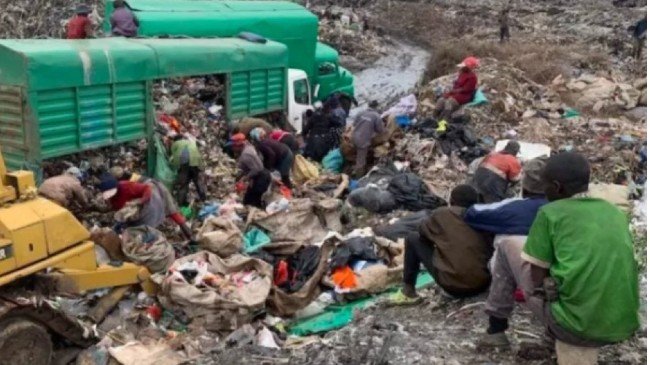

Nairobi County to pay 25.8 million shillings to Dandora waste pickers after the Environment and Land Court at Milimani found that their constitutional rights were violated due to prolonged exposure to air pollution. The award will benefit 1,032 waste pickers who work at the Dandora dumpsite and who have for years raised concerns about unsafe working conditions and serious health risks linked to the environment at the site.
In its ruling, the court held that the waste pickers were subjected to an unhealthy and unsafe environment for a long period without adequate protection from the authorities. Dandora dumpsite has served as Nairobi’s main waste disposal site for decades, but it has also become a source of pollution affecting workers and surrounding communities. The court found that the county government and other responsible agencies were aware of the risks but failed to take effective action to prevent harm.
The petitioners explained that their daily work involves sorting through large volumes of unsegregated waste, including household refuse, industrial waste and medical materials. Fires frequently burn at the dumpsite, producing thick smoke that lingers in the air. According to the waste pickers, constant exposure to this smoke has led to breathing difficulties, persistent coughs, eye irritation, skin problems and other health complications that interfere with their ability to work and live normal lives.
In considering the case, the court relied on constitutional provisions that guarantee every person the right to a clean and healthy environment. It also examined the rights to human dignity, health, and fair labor practices. The judge noted that while waste picking is an informal activity that provides income to many people with limited options, this does not excuse the failure by authorities to protect workers from known dangers.
The court emphasized that Nairobi County has a responsibility to manage waste in a way that does not expose citizens to avoidable harm. This includes controlling air pollution, preventing open burning of waste and ensuring that people who work at waste disposal sites are not left to face health risks without support. The ruling stated that the long-standing conditions at Dandora dumpsite showed a lack of proper planning and enforcement of environmental and public health standards.
The award of 25.8 million shillings was made as compensation for the violation of the waste pickers’ rights. The amount will be shared among the 1,032 petitioners. While the court acknowledged that money cannot reverse the health effects already suffered, it noted that compensation serves as recognition of the harm caused and as a signal that constitutional rights must be respected, regardless of a person’s social or economic status.
The case has also brought renewed attention to the wider environmental challenges linked to Dandora dumpsite. For years, environmental experts and civil society groups have warned about the dangers posed by poor waste management at the site. These include air pollution from burning waste, contamination of soil and water, and the risk of disease for both workers and nearby residents.
For many waste pickers, the judgment represents more than financial relief. Some said it was the first time their struggles had been formally acknowledged. They expressed hope that the ruling would lead to real changes, including better safety measures, improved waste handling and meaningful engagement with workers who depend on the dumpsite for survival.
The decision is also expected to influence future cases involving environmental rights and vulnerable workers. It reinforces the idea that public authorities can be held accountable when they fail to protect citizens from environmental harm. The court made it clear that economic activity, even in the informal sector, must take place within the framework of the Constitution.
As Nairobi continues to grow and generate more waste, the pressure on existing systems will increase. The ruling highlights the need for long-term solutions, such as improved waste segregation, safer disposal methods and alternative livelihood options. While the compensation marks an important legal step, lasting change will depend on whether Nairobi County acts to prevent similar violations in the future.
Comments (0)
Leave a Comment
No comments yet. Be the first to share your thoughts!