
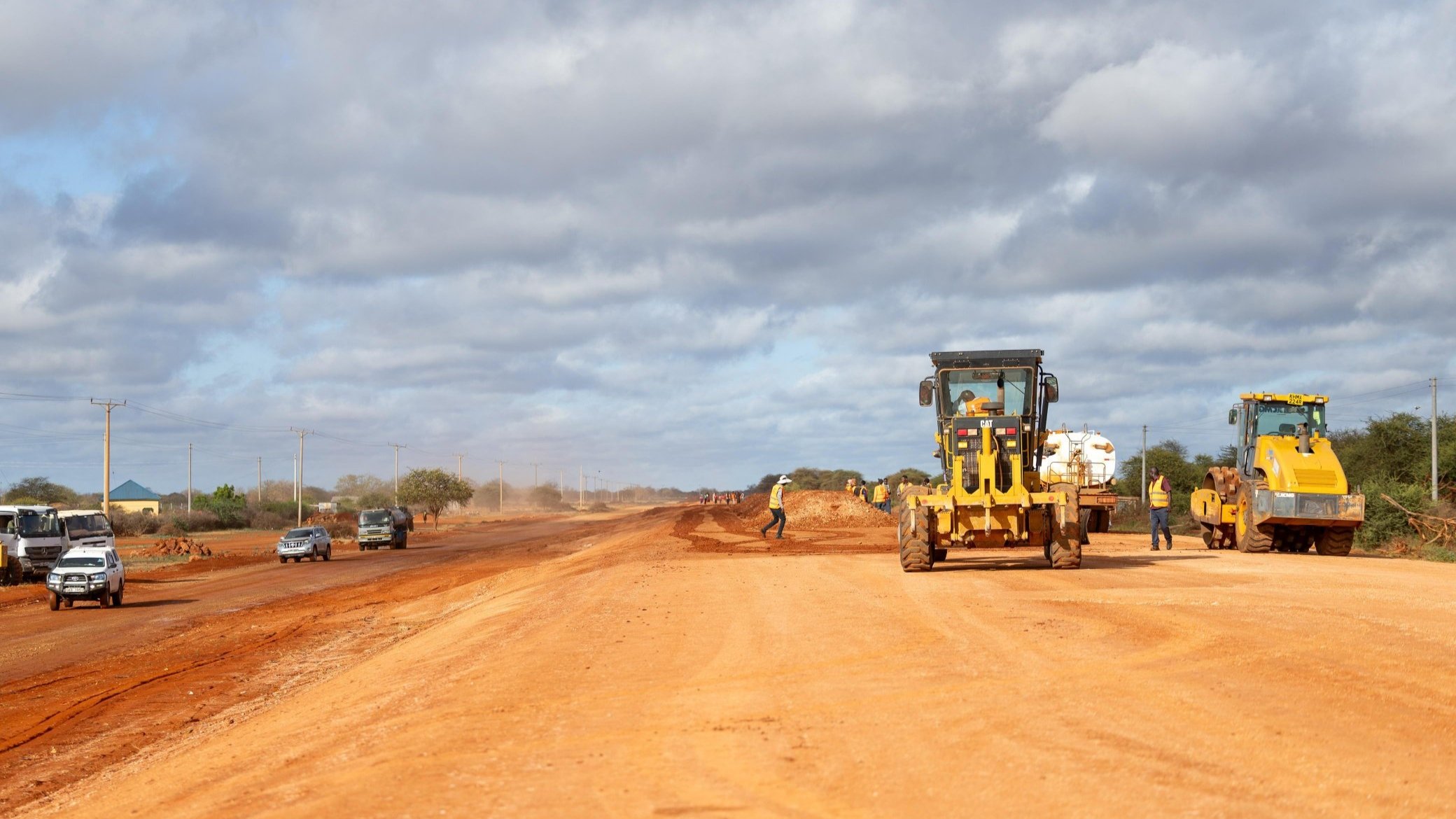

President William Ruto has inspected construction progress on a key section of the ambitious Horn of Africa Gateway Development Project. The 750km road corridor runs from Isiolo through Wajir to Mandera at an estimated cost of KSh100 billion.
The visit covered the 64km Tarbaj-Kotulo stretch in Tarbaj Constituency, Wajir County. More than 11 contractors are now working on different sections to meet the delivery timeline.
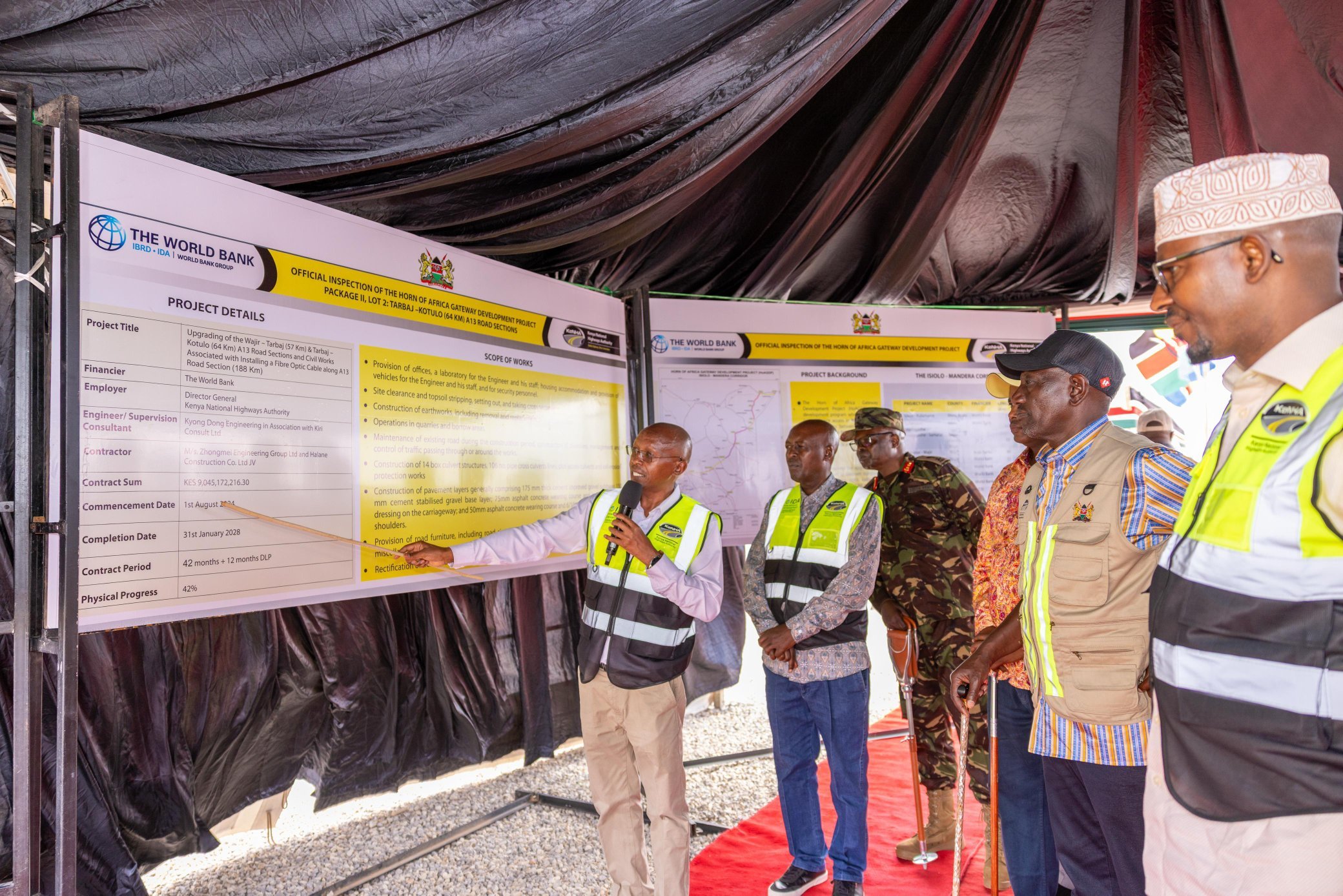
Site inspection brief/Handout
Ruto noted that improved security in Northern Kenya has created conditions for residents to pursue economic activities. The road forms part of efforts to unlock the region's potential through better connectivity.
The corridor passes through Isiolo, Meru, Garissa, Wajir and Mandera counties. It strengthens internal links in Northern Kenya while connecting the country to Ethiopia and Somalia.
Project benefits focus on practical gains for trade and movement. The road is expected to ease transport of people and goods, reduce costs, widen market access and support cross-border commerce. Livestock trade, a major economic driver in the region, stands to gain significantly.
From a construction perspective, delivering a 750km corridor across arid and semi-arid terrain presents distinct engineering challenges. Contractors must manage long distances, limited water sources, extreme temperatures and variable soil conditions typical of Northern Kenya.
Multiple contractors working in parallel on separate sections is a common strategy for large linear infrastructure projects. It allows faster overall progress but requires strong coordination on standards, material supply and quality control.
The inspected Tarbaj-Kotulo stretch represents one active front in the rollout. Road construction in this zone typically involves earthworks, base and sub-base layers, surfacing and drainage structures suited to the local climate.
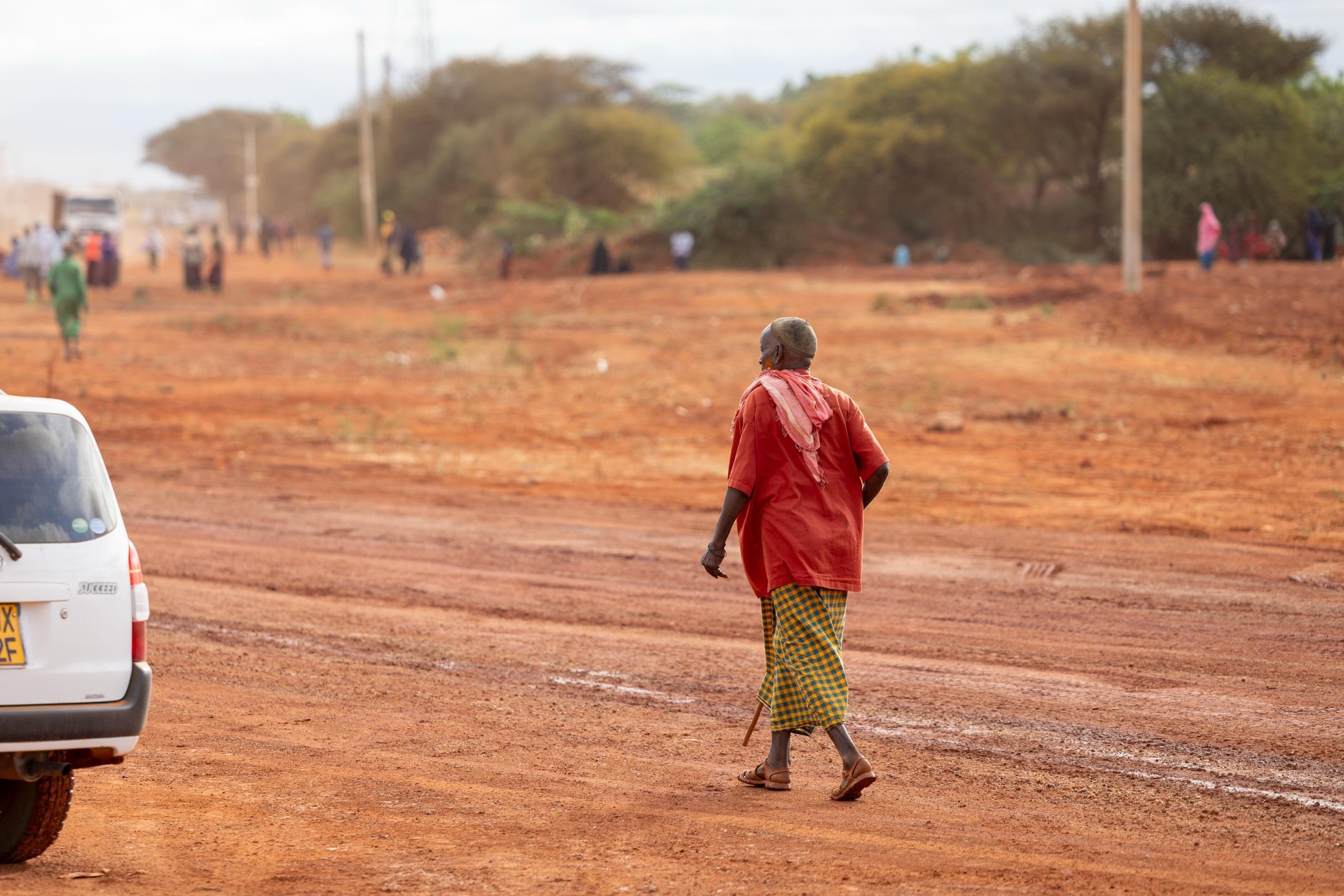
Site photo /Handout
Security improvements cited by the president have direct implications for project delivery. Stable conditions enable consistent site access, equipment movement and workforce deployment. Contractors operating in previously insecure areas often factor risk premiums and logistics buffers into timelines and budgets.
The corridor forms part of broader regional integration goals. Better roads support livestock movement to markets in Ethiopia and Somalia, while also facilitating import and export flows. For construction firms, such projects create sustained demand for equipment, aggregates, bitumen and skilled labour over several years.
Northern Kenya has seen incremental infrastructure investment in recent years, including roads, water points and energy links. This corridor adds a major artery that could catalyse secondary developments such as trading centres, rest stops and light industrial nodes along the route.
Ruto's inspection comes as the government emphasises visible delivery on flagship projects. Multiple contractors on site signal an accelerated push, though public commentary on social media has questioned past timelines and visible progress on similar announcements.
For the wider construction sector, the project illustrates how large-scale road programmes in marginalised regions combine security, economic and engineering objectives. Success depends on sustained funding flows, effective contractor management and adaptation to local environmental conditions.
Details on exact completion dates, specific pavement designs or ancillary facilities such as weighbridges and border infrastructure have not been released in recent statements. The focus remains on the scale of the corridor and the number of contractors mobilised.
The Horn of Africa Gateway Development Project represents one of the largest single road investments in Kenya's recent pipeline. Its cross-border dimension adds layers of coordination with neighbouring countries on standards and trade facilitation.
As sections advance, attention will turn to maintenance planning and how local communities benefit from improved access. In arid zones, roads can also influence settlement patterns and resource use, requiring complementary planning for water, grazing and services.
Ruto's tour of the Tarbaj-Kotulo stretch underscores ongoing site-level oversight. With 11 contractors engaged across the full length, coordination remains critical to avoid bottlenecks in material supply or quality variations between sections.
The project aligns with Kenya's push to integrate Northern counties more fully into the national economy. For contractors and suppliers, it offers multi-year work volumes in a region where infrastructure gaps have historically limited activity.
Comments (0)
Leave a Comment
No comments yet. Be the first to share your thoughts!