
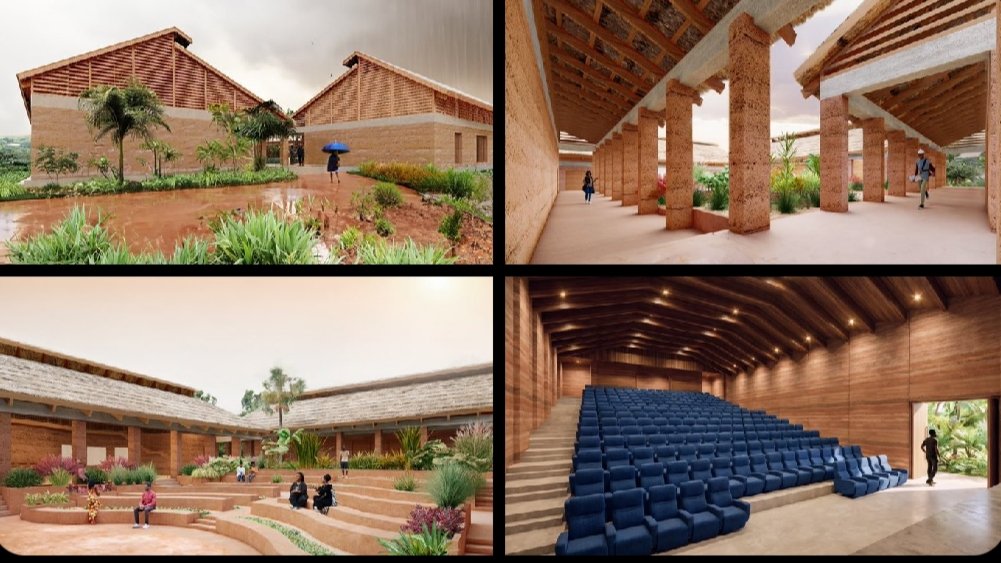

In the rolling landscapes north of Accra, a fresh vision for African cinema is taking shape. Studio NEiDA has designed The Falcon, a purpose built cinema and community space in Berekuso that promises to become a hub for film lovers, creators, and critics across the continent. This project stands out not just for its cultural mission but for its thoughtful approach to architecture that respects the local environment and heritage.
The design draws heavily from traditional Asante architecture. Four main buildings arranged around a central courtyard create a sense of community and openness. Earth materials form the walls while palm leaf thatch covers the roofs. These choices go beyond aesthetics. They provide natural insulation and promote passive ventilation that keeps the spaces comfortable even in Ghana's warm climate without heavy reliance on air conditioning.
Visitors will find two screening rooms seating 250 and 150 people respectively. There is also a restaurant, an archive for film reels, communal gathering areas, and an outdoor cinema space. Future plans include adding residence quarters for filmmakers so they can live and work on site. This setup aims to do more than just show movies. It seeks to preserve Africa's cinematic history by bringing scattered reels back home and creating a dedicated place where they can be properly stored and studied.
For many in Kenya and across Africa, this project sparks important conversations about how we build. In a region where construction often leans toward concrete and imported materials, The Falcon shows the power of going local. Earth construction offers lower costs, reduced environmental impact, and better harmony with the surrounding landscape. The use of renewable thatch and passive cooling techniques could inspire Kenyan builders facing similar climate challenges.
Berekuso sits near Ashesi University in a growing suburb. A planned road will improve access while keeping the site peaceful and away from heavy city traffic. This location makes it ideal for focused film screenings, workshops, and discussions. The project team, led by Studio NEiDA, includes architects who focused on context from the start. Their work earned recognition in the 40 under 40 Architecture and Design Awards in 2026.
One of the most exciting aspects is the emphasis on African and diaspora films. The Falcon will screen contemporary works alongside archival pieces and place them in historical context. This matters at a time when streaming services dominate viewing habits. A physical cinema like this offers something special. People can gather, debate films, and experience stories on the big screen in a space built for that purpose.
Kenyan construction professionals might see parallels with local efforts to promote sustainable building. Many developers here are exploring rammed earth, improved traditional techniques, and climate responsive designs. Projects like The Falcon prove these methods work beautifully at scale. They also show how architecture can support cultural goals. A cinema dedicated to African narratives strengthens identity and creates opportunities for young talent.
The courtyard layout encourages interaction. People can move between screenings, grab a meal at the restaurant, or relax outdoors. This flow turns the venue into a true community center rather than just a theater. For filmmakers in residence, the setup provides inspiration and resources close at hand.
As Africa continues to urbanize rapidly, thoughtful projects like this become models. They balance growth with respect for tradition and environment. The Falcon is still in the design phase with completion projected for 2027, but it already generates excitement across the continent.
For Mjengo Hub readers in Kenya, this story offers practical lessons. Local materials can deliver high quality results when paired with skilled design. Passive strategies reduce running costs for building owners. Most importantly, tying construction to cultural needs creates spaces that truly serve communities.
The Falcon reminds us that good architecture tells stories. In this case, it helps tell Africa's stories through film while building in ways that honor the land and its people. As similar initiatives emerge across Kenya and beyond, we can look to examples like this for inspiration on blending heritage with forward thinking design.
Comments (0)
Leave a Comment
No comments yet. Be the first to share your thoughts!